STORY and PHOTOS by Tam Nguyen, Nguoi Viet
FULLERTON, Calif. ― Sometimes we eat something that we think falls into the “healthy” category, but doesn’t. Other times, what we thought to be a no-no is part of a balanced daily diet.
Class instructor Lori Funke showed a variety of food samples from the five food groups.

For a group gathered Wednesday at the Fullerton Community Center, nurse Lori Funke set the record straight. Her talk was part of a four-week program, called Healthier Living, sponsored by Adult Public Health Nursing Services and the Orange County Health Care Agency.
Funke used Wednesday’s class to show those in attendance how to build a healthy meal using the five major food groups, as well as how to improve our daily intake of nutrients.
She showed the visual called My Plate, a picture of how to incorporate the five food groups into a “familiar mealtime visual,” she said. My Plate has replaced the original food pyramid as the recommended meal guideline.
Funke gave these tips on how to eat right whole properly consuming the proper amount of protein and vitamins every day.
- Balance calories. Enjoy your food, but eat less. “Learn to eat to be full and not overstuff yourselves,” she said.
- Avoid oversized portions. Restaurants often will serve double what you might serve yourself at home, she said. “You do not have to finish the whole meal thinking that the meal is one serving of your daily nutrients.”
Example of restaurant portions from the present (left) and of the past (right).
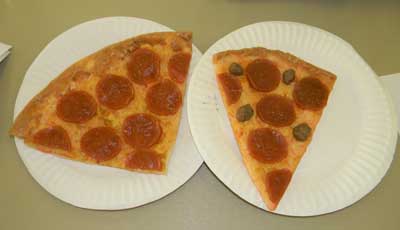
- Fill your plate with fruits, vegetables and whole grains. “Make sure to read the labels at the grocery stores to see if they are whole or not,” Funke said.
- Switch to fat-free or low-fat milk. It has the same amount of calcium and vitamin D as whole milk without the fat, she said.
- Cut out salt where possible. “To be safe, choose the food with the lowest number of sodium on the label before putting it in your shopping basket,” Funke said.
- Drink plenty of water and stay away from sugary drinks, such as sodas and sports drinks. “Sports drinks are for people who are really active physically. You can have sports drinks when you sweat a lot or are dehydrated,” she said.
She also gave ideas on how much of each food type should be part of your daily food intake, based on a 2,000-calorie diet:
- Grains: 6 ounces a day, making sure to have at least 3 ounces of whole grains.
- Vegetables: 2½ cups a day, such as dark green vegetables, beans or peas.
- Fruits: 2 cups a day, either whole or cut fruits. Eat more fruits instead of drinking fruit juice. If you decide to drink fruit juice instead, make sure it is 100 percent juice.
- Dairy: 3 cups a day. Remember that low-fat or non-fat milk has the same amount of calcium and vitamin D as whole milk but fewer calories. Soy milk helps for those who are lactose intolerant.
- Protein: 5 ½ ounces a day. Keep meat and poultry small and lean, such as taking the skin off the chicken. Beans and nuts also are a good source of protein. Seafood can be incorporated into the diet twice a week for protein as well.
Classes are free, but preregistration is required to attend. Register at the front desk of the Community Center at 340 W. Commonwealth Ave., or call (714) 738-6305. The next classes are scheduled to be held Feb. 19, March 5 and March 19 from 10:30 to 11:30 a.m. The topic of the Feb 19 session is learning to prepare healthier meals in your own kitchen.