From PopSugar
There’s a whole wide world of ramen knowledge to know. At Eat Drink SF’s ramen workshop over the weekend, we learned some invaluable facts about the Japanese noodles from Thy Tran (the Wandering Spoon blogger) and Ken Tominaga (Pabu SF’s ramen chef). The two shared their tips for making and eating ramen. Number nine is essential, be forewarned.
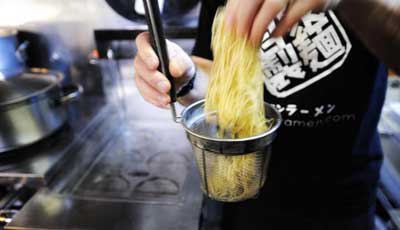
Fresh ramen noodles. (Photo by Robert Gilhooly/Bloomberg via Getty Images)
Five Things to Know About Making Homemade Ramen
1. Ramen doesn’t get its yellow color from eggs: A traditional ramen recipe consists of hot water, kansui, salt, and wheat flour. No egg!
2. Kansui is everything: Traditionally, ramen noodles were made using well water, which is naturally alkaline. Today, recipes call for kansui, an alkaline, mineral-rich water sold in Asian markets. The kansui reacts with the flour to give ramen its yellow color, springy texture, and earthy (borderline funky) scent. It may also be labeled as potassium carbonate or sodium hydroxide.
3. More gluten equals more chew: For a chewier ramen noodle, use a higher protein (gluten) flour. Use 00 flour (a finely ground flour) for a silkier noodle.
4. Coat the noodles in potato starch To keep the noodles from sticking together as you cut them, liberally sprinkle them with potato starch.
5. Cook them in the biggest pot you own Bring a (very!) large pot of salted water to a boil. To keep the noodles from sticking together, delicately sprinkle them in. They need lots of room to “dance.”
Read the full article from PopSugar.