Cindy Sui/BBC News
Betel nuts may be a tradition in many countries across Southeast Asia, Vietnam included, but there is more to this palm nut than the red stained lips you see mostly among the elders: cancer.
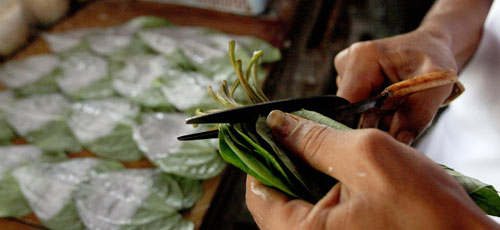
A man prepares betel leaves to sell at his road-side stall in Yangon on August 26, 2009. (Photo: STR/AFP/Getty Images)
Researchers have found that chewing the betel nut can cause abrasions in the mouth and lips, making betel nut chewers more susceptible to the disease. This is especially alarming in Taiwan, as a new crop of users — working class men who use it to stay awake, are reporting more cases of oral cancer.
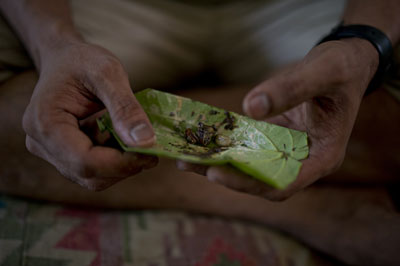
A man prepares betel leaves at a Buddhist temple in Kuala Lumpur. (Photo: Mohd Rasfan/AFP/Getty Images)
These nuts are harvested from the Areca palm and are chewed for their warming glow and stimulating properties. The betel nut can be consumed dried, fresh or wrapped up in a package known as a quid. Although it varies from region to region, the quid is usually a mix of slaked lime, a betel leaf and flavorings such as tobacco or cinnamon. Close to 5,400 Taiwanese men lare diagnosed with oral cancer or pre-cancerous lesions and an estimated 80 to 90% of those chew betel nuts.
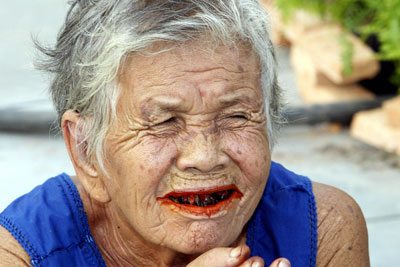
An elderly begger while chewing betel leaves and nuts wait for
alm at a temple on Makha Pucha Day. (Photo: Saeed Khan/AFP/Getty Images)
An early symptom includes white or red lesions inside the mouth, but this can rapidly progress to grotesque flesh-eating tumors.
To read the full article, click here.