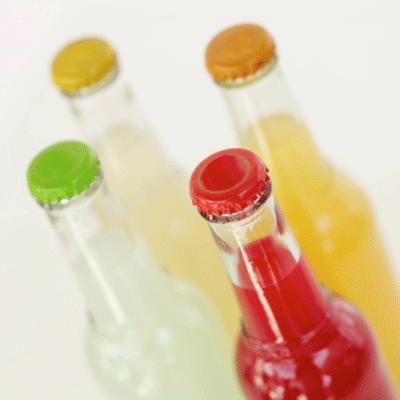
Photo courtesy of Getty Images
Under the ordinance, grocery stores, markets, and other vendors that sell beverages would pay the business license fee and monitor ounces sold per year. If residents approve the measure,
“I would like us to use the tax revenue in programs that prevent childhood obesity, like healthy school gardens and nutrition classes and cooking classes in the schools,” said Richmond City Councilman Jeff Ritterman, who led the push for the tax and is also a doctor. “We’d also like to provide adequate sports fields and teams for our children as well as programs that fight against childhood obesity.”
Ritterman even brought in props to the meeting to support his point about the damage done to the body by high fructose corn syrup and refined sugar. Pointing to a water cooler container near the front podium that was filled almost entirely with sugar, he stressed Americans’ annual intake contributed directly to higher rates of heart disease, high blood pressure and blocked arterial passages.
With more than 200
“I see more and more kids with Type-2 diabetes being admitted to the hospital,” said Dr. Lydia Tinajero-Deck, who works at Oakland Children’s Hospital. “I also see more 11-year-olds that weigh over 200 pounds, and we’ve had two deaths over the last few years that were linked to childhood obesity.”
Local business owners in the audience, however, expressed concern over the difficulty of monitoring how many ounces of sugar-sweetened beverages are sold per year and how much tax should be paid to the city. The measure could generate between $2 million and $8 million in additional annual revenue, according to a city staff report.
“The increased costs of soft drinks would adversely affect employment in
Council members Corky Booze and Nat Bates also oppose the tax, arguing that it will have little effect on consumption and will primarily target African American and Latino communities.
“It’s clear that African Americans are being used as a stepping stool to get this tax approved,” Booze said. “Are we going to start taxing Twinkies and cakes too because they aren’t good for us?”
Audible booing from opponents of the tax could be heard in the audience as Ritterman spoke about how the funds raised from the tax would go toward health awareness and sports programs.
The Rev. Kenneth Davis of
“This tax is a poor folks’ tax and a racist ploy to steal money for the slush fund,” said
Since 2009, Pepsi, Coca-Cola, and the American Beverage Association have spent more than $70 million on lobbying and issuing ads against the soda tax initiative. Coca-Cola went so far as to publish a report: http://www.thecoca-colacompany.com/citizenship/obesity-position-statement_december2011.pdf, “Our Position on Obesity,” which cited scientific evidence contradicting claims that soda is a primary cause of the epidemic.
According to statistics, two-thirds of adults and one-third of children in the
So far, more than 30 states are working on levying their own soda taxes. In
Reactions among audience members at Tuesday’s meeting were mixed.
“It’s a complex issue,” said Melvin Willis, a local resident. “Coke tastes good, but it’s not good for you and it’s also not food. This should be about whether or not an individual has a healthy relationship with food.”
“I think when people go into the stores and see that the price is higher for soda, it might make them think twice about getting it,” said