By Winyan Soo Hoo, Washington Post
Banh mi sandwiches can be found all over these days, behind shop counters, from food trucks such as BONMi , fast-casual restaurants such as the newly opened Four Sisters Grill in Clarendon and even more-upscale establishments, such as Dickson Wine Bar on U Street NW. Originally a quick meal for the Vietnamese working class, the sandwich resembles an Asian-style hoagie.
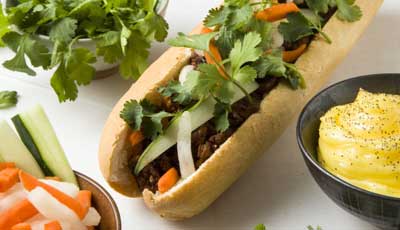
Banh Mi Sandwich at Mr. Banh Mi in Rockville, MD. 2014. Vietnamese Sandwich filled with Pork, Cucumber, Cilantro, Pickled Carrots, Daikon Radish and Secret Sauce. (Photo by Greg Powers For The Washington Post via Getty Images)
During their country’s lengthy French colonial era, the Vietnamese used native spices and ingredients to incorporate items such as coffee, pât é and baked goods into their culinary specialties. Banh mi is a prime example. The literal English translation of banh mi (pronounced “bun-mee” in Vietnamese) is “bread,” the focal point of the sandwich.
“What makes banh mi a ‘real’ banh mi is the French-style baguette,” says Tony Trinh, co-owner of the new Mr. Banh Mi cafe in Rockville. “It’s nice and golden, soft on the inside, with a bit of a crunch on the outside.” Trinh and his brother Phil also own the Pho 95 noodle shop one door over, where they hatched a plan to bring their family-approved banh mi recipe to the area.
Read the full article by Winyan Soo Hoo, Washington Post.