STORY and PHOTOS by Tam Nguyen, NGUOI VIET
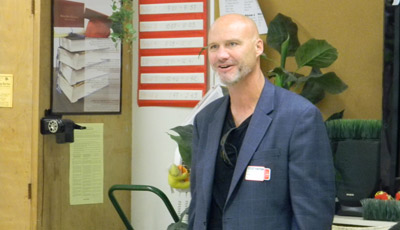
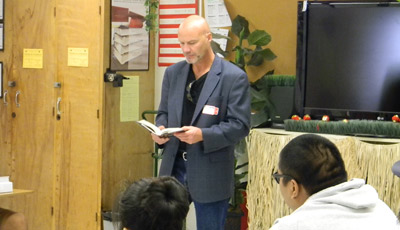
Students had many questions for the author. Dunivan reads an excerpt from the book to students at Garden Grove High School.
At age 14, Viet Nguyen endured hard times at the hands of communism. Years later, after his escape from a communist-run prison camp, he relocated to a Vietnamese community in the East End of London.
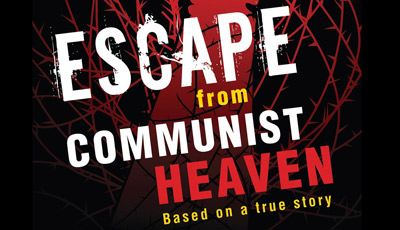
There, he met trained journalist Dennis W. Dunivan, who knew he wanted to tell Nguyen’s story. And he has, in “Escape from Communist Heaven,” released last month. On Monday, he spoke to a class full of students at Garden Grove High School, the majority of them of Vietnamese heritage, about what he learned from Nguyen.
The students’ teacher, Robert Nguyen, had given the students an assignment: find out from their parents about their resettlement in the United States. Between that assignment and reading Dunivan’s book, they were full of questions and feedback, as well as anecdotes from their families.
For many students, Robert Nguyen’s assignment was the first time they really had talked to their parents about their personal escapes from communism. They shared with Dunivan what they had learned.
“The communists did a good job of telling the people from the south they were traitors, and my parents almost believed them,” said one student. (Students cannot be named in accordance with school policy.)
Another student whose parents went to reeducation camps said the communists’ brainwashing made them think, at that moment, that communism was the proper way of life.
Robert Nguyen said through the classroom assignment and reading the book, his students now have a better understanding of just where their families came from.
“One student came back in tears and said she never realized how tough it was for her parents to risk their lives and come here,” he said.
Even years later, some parents who fled Vietnam still didn’t want to share their experiences with their children.
“My parents refused to tell me how they got here, but when I read this book, I have a little taste of where they came from,” one student said.
According to another: “I believe it was a sad event, and my parents not wanting to share is understandable. It’s like we would not want to remember the past either and start anew.”
Dunivan’s story details Viet Nguyen’s journey, describing how as he was trying to raise money to flee Vietnam, he was arrested and became one of 300,000 people sent to labor camps. He watched people die around him in the camp. Not wanting to be one of the statistics, he tried again to escape communism.
To chronicle the story, Dunivan lived with Nguyen and his family for several months, recording the tales Nguyen told him along the way.
“Viet told me his story of when he was in Vietnam, and I thought this would be a good story to write,” he said. “I spent countless hours interviewing Viet when I met him in London. I also interviewed other refugees in the Vietnamese community” and also journeyed to Vietnam, Dunivan said.
The book is a lasting legacy for generations of Vietnamese.
“I believe the grandchildren of refugees need to know their heritage,” he said. “With this story, the readers may learn or add more of their knowledge on how their parents escaped.”