From ASIAN AMERICAN PRESS
Shepard Lowman, who died earlier this month at his home in Virginia, had a long and fulfilling career as a diplomat with the U.S. State Department, and is being remembered as a humanitarian and a friend of Viet Nam and the Vietnamese community.
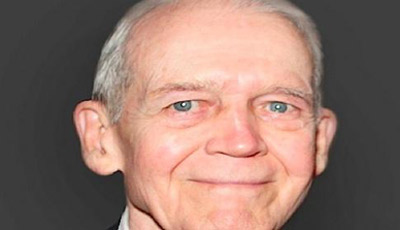
Shepard Lowman. Photo courtesy of Asian American Press.
Born on Sept. 21, 1926, “Shep,” as he was known to friends and family, is survived by his wife, Hiep Lowman, sons Thomas Trinh, Dinh Phuc Nguyen, John Trinh and Mark Nguyen, and daughters Kate, Mary, Lina and Lisa.
After law school at Harvard University, Lowman went into the foreign service and, after a number of appointments in several countries, was sent to Viet Nam in 1966. He fell almost instantly in love with the country and its people. At the celebration of Tet in 1968, he was in Chau Doc, where he met his future wife.
In 1974, Lowman was back in Viet Nam as a political officer at the American Embassy in Sai Gon. In that capacity, he was put in charge of helping thousands of family members of American citizens and Vietnamese “at-risk” personnel leave Viet Nam in the last frantic days of the evacuation from Sai Gon in April 1975. The majority of these evacuees eventually made their homes in the United States.
Originally, the U.S. intended to take in only 37,000 refugees from Viet Nam. But President Gerald Ford decided to raise the admission number to 137,000 and appointed Julia Vadala Taft to oversee the initial operation of transplantation of these refugees into the U.S.
Taft was ably assisted by the so-called “three Saigon cowboys” at State: Lowman, Lionel Rosenblatt and Hank Cushing. They struggled with the bureaucracy to come up with the budget necessary to run several new arrivals camps ― Camp Pendleton in California, Fort Chaffee in Arkansas, Indiantown Gap in Pennsylvania and Eglin Air Force Base in Florida) and pay for transition grants to voluntary agencies involved in the resettlement of these refugees.
The resettlement of refugees, beginning in 1975 and enduring for more than a decade, “was not a glamorous job but it was in this work with refugees that Shep Lowman found his calling.” says historian Lacy Wright, By 1981, he had become the deputy assistant secretary in the State Department Bureau of Refugee Programs where he worked not only on Indochinese resettlement in the U.S. but other major crises, such as the Cambodian exodus into Thailand.
In his various roles at the state department, he worked with several Vietnamese American organizations to organize themselves to help their own compatriots. One characteristic approach of Lowman was to involve earlier arrivals in the resettlement of later arrivals. Speaking at the North American Vietnamese Games held at the University of Maryland in the summer of 1987, he said: “While you are competing, please remember that there are thousands of young people like you in the camps of Southeast Asia yearning for the day when they can play and compete just like you.” This was the beginning of many self-help projects and initiatives launched by the students returning from those games.
In the Washington, D.C., area, Lowman helped the Buddhist Congregational Church of America secure a subcontract with the American Council of Nationalities Services, which led to the creation of the Buddhist Social Services. That agency helped in the resettlement of some 3,000 Indochinese refugees to the Washington metropolitan area.
When Lowman’s State Department career came to an end, he was not finished. From positions at the U.S. Conference of Catholic Bishops, the Jesuit Refugee Service and Refugees International, he continued his advocacy for the admission of Indochinese refugees.
Today, untold numbers of Vietnamese-, Cambodian-, and Lao-Americans owe their families’ admission to the United States to Shep Lowman. Their success is his epitaph.
“Shep was not a firebrand,” Wright said, “but a modest man with no taste for ostentation. He had a good sense of humor, mostly directed at himself. His friends will remember him for his intense loyalty to his family, his seriousness of purpose and his unwavering honesty. His passing is an occasion of sadness.”