By Cu Huy Ha Vu, Washington Post
Facing mounting pressure by the international community and seeking trade and security commitments, the Vietnamese government recently released five prisoners of conscience. I was one of them.
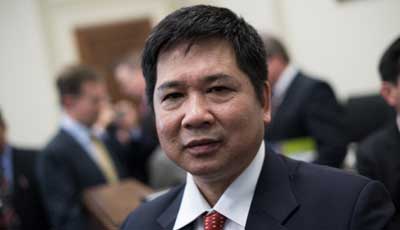
Cu Huy Ha Vu. (Photo: NICHOLAS KAMM/AFP/Getty Images)
Such releases are always welcome, but they should not be confused with actual human rights improvements. There are an estimated 400 prisoners of conscience in Vietnam. Even as a handful of dissidents were released, a larger number were detained or sentenced to prison terms. Many in Southeast Asia believe that Vietnam has replaced Burma as the region’s worst violator of human rights.
The international community often focuses on pressing Vietnam for more prisoner releases. While I benefited from such attention, it often backfires as a diplomatic approach. The Vietnamese government treats prisoners of conscience as commodities to barter with the United States and other Western countries for security and trade benefits as well as foreign aid. Vietnam has stocked a reserve of prisoners of conscience for future bargaining.
After Vietnambecame a member of the World Trade Organization and gained permanent normal trade relations with the United States in early 2007, the Vietnamese government launched a brutal crackdown that has swept up intellectuals, artists, bloggers, journalists, labor activists and religious leaders. It goes on to this day.
Governments in the free world should demand that the Vietnamese government dismantle its arsenal of instruments for repression — starting with the repeal of Articles 79, 88 and 258 of its penal code — and link future trade and security benefits to such legal reforms. It is not too much to ask: These laws are not only a violation of the International Covenant on Civil and Political Rights — to which Vietnam has been a party since 1982 — but also contradict the Vietnamese constitution.
The sole purpose of these laws is to ensure the survival of the regime of the Vietnamese Communist Party. Article 88, which prohibits “propaganda against the State of the Socialist Republic of Vietnam,” silences critics of the party — journalists and bloggers and other dissidents. This is a direct violation of Article 16 of the constitution, which says “no person shall be discriminated against in political life” — in other words, no one may be harassed or persecuted, much less arrested or jailed, because of political views that are contrary to the views of the state.
Read the full article by Cu Huy Ha Vu from Washington Post.