From Business Standard
Scientists have found that it’s our gut bacteria that turns a nutrient found in red meat into metabolites, which enhances the risk of developing cardiovascular disease.
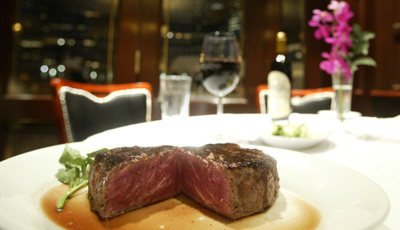
A rare sirloin steak at Abe & Louie’s Steakhouse on Tuesday November 15th 2005, Boston MA. (Photo by Dominic Chavez/The Boston Globe via Getty Images)
Previous research led by Dr. Stanley Hazen had revealed a pathway by which red meat could promote atherosclerosis, or hardening of the arteries. Essentially, bacteria in the gut convert L-carnitine, a nutrient abundant in red meat, into a compound called trimethylamine, which in turn changes to a metabolite named trimethylamine-N-oxide (TMAO), which promotes atherosclerosis.
Now Dr. Hazen and his team have identified another metabolite, called gamma-butyrobetaine, that generates to an even greater extent by gut bacteria after L-carnitine gets ingested, and it too contributes to atherosclerosis.
The researchers found that gamma-butyrobetaine gets produced as an intermediary metabolite by microbes at a rate that was 1,000-fold higher than the formation of trimethylamine in the gut, making it the most abundant metabolite generated from dietary L-carnitine by microbes in the mouse models examined. Moreover, gamma-butyrobetaine could itself be converted into trimethylamine and TMAO.
Read the full article HERE.