From Uncover Michigan
There is no need to be a seasoned professional football player to suffer from the repeated effects of concussions, says a novel study. Study researchers stated that even after playing one season of American football, some teenagers can exhibit changes in their brains. The researchers have noticed abnormalities akin to the effects of mild traumatic brain injury in the players, who were not concussed during the season.
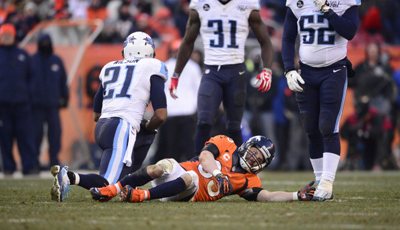
Denver Broncos wide receiver Wes Welker (83) after getting a concussion on a hard hit in the second quarter. The Denver Broncos take on the Tennessee Titans at Sports Authority Field at Mile High in Denver on December 8, 2013. (Photo by AAron Ontiveroz/The Denver Post via Getty Images)
For the study, researchers examined 24 players. The players were of the age of 16-18 and their head impacts were measured by devices on their helmets. The study was presented at the annual meeting of the Radiological Society of North America.
In recent years, a number of reports have shown concern about the possible effects on young, developing brains of playing contact sports. These studies have tended to concentrate on brain alterations as an outcome of concussion.
This study concentrated on the results of head impacts on the brain even also when players did not experience concussion at any point at the time of the season. With the help of detailed scans of the players’ brains before the season started and then after it ended, the researchers identified minor alterations to the white matter of the brain. White matter has millions of nerve fibres, which work as communication cables between the brain’s regions.
Read the full article HERE.