From The Week
Nine top pieces of financial advice — from Sprint’s half-off bills to a budget for holiday spending.
Sprint’s deal seems good, but be sure to read the fine print. (Joe Raedle/Getty Images)
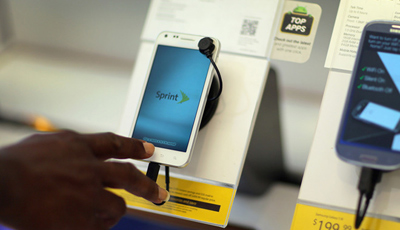
Sprint’s half-off bills
Sprint has “kicked the wireless industry’s price war up a notch,” said Ryan Knutson at The Wall Street Journal. The carrier said last week it will let AT&T and Verizon subscribers pay half what they currently pay “in perpetuity if they switch from those carriers.” The half-off Sprint plans “would offer unlimited text and talk and however much data the subscribers were buying” from the rival telecoms. While there’s plenty of fine print — customers must turn in their old phones and buy new ones, for example — the move signals how desperate the country’s third-largest carrier is to “add subscribers after years of losing customers and money.” It also “ratchets up the pressure” on other carriers to slash prices and offer promotions of their own.
Resisting retailers’ credit cards
Don’t let yourself get bullied into opening a store-branded credit card you don’t need this holiday season, said John Wasik at Forbes. Retailers push these deals a lot this time of year and sweeten the sign-ups with discounts, betting that “many of us can’t resist this chance to save money.” But nearly half of consumers say they later regret their decision to open store cards. That’s no surprise, since the cards carry fees and interest rates that are often higher than those of ordinary credit cards, “so whatever money you would’ve saved on a purchase is consumed in interest on your monthly balance.” When considering a store card, stick to retailers where you shop “on a regular basis” and don’t open one if you plan to apply for a mortgage or car loan in the next six months. You can also compare retailers’ offers at Credit.com.
The drawbacks of mobile deposits
Depositing a paper check via a smartphone has become “one of the most popular features of mobile banking,” said Ann Carrns at The New York Times, but there are a few downsides. Some banks, for instance, don’t allow immediate access to the funds or cap how much you can deposit as a way to limit fraud. While such fraud is rare, it can be a headache. Consider endorsing your checks with the phrase “for mobile deposit only,” which “helps reduce the chance that someone could — intentionally or by accident — try to cash or redeposit the check.” Be careful with the leftover paper checks, too: Consult your bank’s rules about how long to keep them after making a mobile deposit, and put them in a safe place to guard against loss or theft.
Save money on winter heating
“Americans could save a fortune this winter, if only they understood their thermostats,” said Chris Mooney at The Washington Post. Residential thermostats control an incredible 9 percent of all U.S. energy use, but even though money-saving programmable thermostats have been available for decades, only about 3 in 10 households have them installed. And many of those consumers “just don’t understand how to use” them. Thankfully, the latest generation of smart thermostats moves “beyond the realm of merely ‘programmable,'” automatically adjusting to a homeowner’s location. Honeywell’s Lyric thermostat, for instance, can be operated remotely from your phone, and Google’s Nest “‘learns’ your behavioral patterns — and self-programs to save you energy.”
Year-end tips for retirement savers
Before we ring in the New Year, “retirement savers of all ages need to check their to-do lists,” said Mark Miller at Reuters. If you’ve already retired, make sure you take your required minimum distribution, which must be taken from all retirement accounts starting at age 70 and a half. “It’s important to get this right: Failure to take the correct distribution results in an onerous 50 percent tax — plus interest — on any required withdrawals you fail to take.” If you are near retirement, “consider moving part of your annual contribution” to a Roth IRA. Your after-tax savings will then grow tax free. And if you are young, make a resolution to increase your 401(k) savings for 2015. “Getting an early start is the single best thing you can do” for your future.
Read the full article HERE.