Note: U.S. Ambassador to Vietnam, Ted Osius, writes this letter to wish a happy new year to the readers of Nguoi Viet Daily News and to summarize the achievements since the diplomatic normalization between Vietnam and the U.S. in 1995. Mr. Osius was appointed Ambassador to Vietnam in 2014 but worked previously in Hanoi and Saigon right after 1995. In this letter, he also touches on a symbolically important icon: Bien Hoa Cemetery. We publish the letter in its entirety.
 |
|
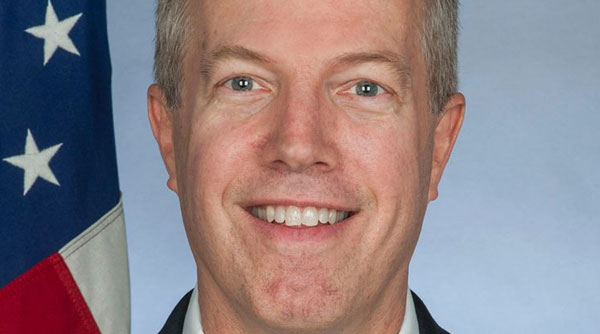
U.S. Ambassador to Vietnam, Ted Osius, writes to the readers of Nguoi Viet Daily News to wish them a happy New Year. (Photo: Ted Osius Facebook) |
***
Chuc Mung Nam Moi!
It’s my pleasure to wish all the readers of Nguoi Viet Daily News and their families a new year full of health, prosperity, and success. Tet is the perfect time to pause, reflect on the past, and look to the future. In that spirit, I thought it might be helpful to review the status of the relationship between the United States and Vietnam.
Our nations are building stronger ties, which I believe will benefit all of us, Vietnamese and Americans alike. In this endeavor, the Vietnamese-American community can play a vital role.
First, some facts about where we’ve been, where we are, and where we hope to go. Our governments reconciled in 1995 after years of negotiations. I served in Hanoi and Ho Chi Minh City shortly thereafter. I remember we had little economic trade to speak of, less than $500 million a year.
The number of Vietnamese youth studying at U.S. universities numbered in the hundreds. Our people-to-people ties had been cut off for so long that our governments knew little of each other. POW/MIA efforts were underway, and those built trust, but it was incredibly difficult.
Since my return just over one year ago, I’ve marveled at how Vietnam has changed and grown. The United States is now Vietnam’s number one export destination. We enjoy nearly $40 billion in two-way trade. Our scientists work side-by-side on global health and climate change, and our militaries cooperate on peacekeeping, maritime security and disaster response.
In 2015, nearly 19,000 Vietnamese students attended school in the United States, most among ASEAN countries. Vietnam today is filled with people — especially young people — who look to the United States as an economic and cultural model. They want closer ties.
We seek to build on these accomplishments. However, several challenges exist, including the need for greater transparency and rule of law in Vietnam, full access to the human rights guaranteed in Vietnam’s constitution, and pulling out the deep roots of corruption. We work every day to show Vietnam’s leaders why it is in their country’s interest to tackle these issues head-on. And we offer U.S. support to do so.
Another deeply important challenge lies in addressing the legacies of the past. This can be extraordinarily difficult, because for many it is both a personal and national issue, one anchored in decades of history.
For many Americans, addressing this legacy means honoring the sacrifice of relatives. For others, it is about healing lingering wounds, physical and spiritual. Still others are ready to contribute to Vietnam’s economic development, but feel rebuffed by conditions that make investing, living, and working in Vietnam difficult,particularly for Vietnamese-Americans.
I have never felt the weight of this history as keenly as I did when I visited Bien Hoa Cemetery last October in order to pay respects to the ARVN soldiers buried there. I lit incense at the memorial, and I looked at the graves laid out before me, some in a state of disrepair. We recognize that it is important to many Americans to obtain permission to improve cemetery conditions and to re-inter the remains of ARVN soldiers previously buried elsewhere. We will support efforts to engage with Vietnamese authorities on these issues.
The U.S. government cannot resolve every war legacy issue and heal every wound. However, we can encourage and facilitate dialogue in an effort to increase mutual understanding. As Ambassador, I am committed to doing just that.
My belief is that by coupling dialogue with our efforts to convince Vietnam to increase transparency, integrate internationally, and guarantee fundamental human rights, we can show how all sides will benefit. As we deepen our people-to-people ties, we create bridges between our countries that make it easier for collaboration to occur in every field, from business to the arts and from medicine to military cooperation.
The U.S. goal for the bilateral relationship is clear and consistent: We support a strong, prosperous, and independent Vietnam that promotes the rule of law and human rights.
As we journey toward this goal, stronger ties between our peoples will speed the process and benefit both countries.
I hope that next year during Tet, we will look back and see that together we made progress, overcame challenges, and grew closer, engaged on the past with eyes set on the future.
—-