From Lonely Planet
People think they know Los Angeles, even, sometimes especially, if they’ve never been: a land of starstruck dreamers, Tinseltown magic, traffic-numbed freeways, silicone-inflated bimbos and jacked-up himbos.
A view of the Hollywood sign from a street in a residential Hollywood Hills section of Hollywood, California. (ROBYN BECK/AFP/Getty Images)
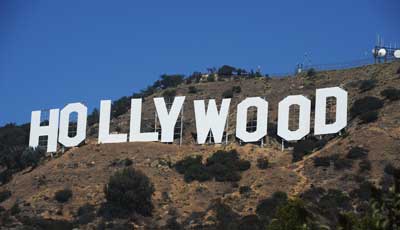
But dig deeper and your first trip will be a lot more surprising – and rewarding. America’s second-largest city offers a mini-UN of cultures and a natural backdrop just as diverse: from beaches for swimming, sunning and surfing, to mountains for hiking, skiing and city- or star-gazing. Once downtrodden neighborhoods are being regenerated with new museums, concert halls and eateries to entertain and feed the visitor. And the expanding transit system is making it all easier to reach than ever before.
Stats
Population: around 10 million (county), 4 million (city)
Visitors per year: around 42 million (2013), most from within the US
Languages: English, with Spanish a close second; also Korean, Russian, Chinese, Tagalog, Thai and about 135 others.
Daily budget: $200 including mid-range hotel and restaurant meals
Best time of year to go: Apr-Sep
Neighborhoods & sights
LA defies the notion of a traditional city. Rather, think of it as a series of small cities connected, and sometimes separated, by famously wide boulevards and 12-lane freeways. There’s a bewildering amount to see in this massive county, but the following neighborhoods will give you a good start.
Hollywood
If the name Hollywood evokes the very essence of glitz and glamour, the neighborhood Hollywood may be a bit of a shock; the glitz disappeared decades ago, but, like the best of starlets, it’s slowly making a comeback. Grauman’s (now TCL) Chinese Theater has been the epicenter of that glamour since it opened in 1927, with stars’ foot- and handprints in the cement, while the legendary, 17,000-seat Hollywood Bowl remains an eternal attraction. A jumble of props, costumes and photos from classic films makes up the Hollywood Museum, housed in the building where makeup impresario Max Factor turned Marilyn Monroe and Lucille Ball into icons.
If that’s old Hollywood, you’ll find new Hollywood in the Dolby Theatre where today’s stars sashay up the red carpet for the Academy Awards. Next door, peek at the Hollywood Sign through the archways of the Hollywood & Highland Center, filled with places to eat from steaks and seafood to cream puffs. Old and new meet masterfully in the renovated 1920s movie palaces El Capitan and Egyptian Theater. Or for a hike with a view over the urban sprawl, drive to Griffith Park and its famous observatory.
Stay at the venerable Hollywood Roosevelt Hotel, where the first Academy Awards ceremony was held in 1929. 25 Degrees Burger Bar 25degreesrestaurant.com/los-angeles here piles ‘em high and tasty. Or sleep at the Loews Hollywood Hotel where today’s stars cavort, party and meet the press on Oscars night.
Charlie Chaplin used to knock back vodka gimlets and Raymond Chandler penned scripts at Musso & Frank, Hollywood’s oldest bar and eatery (1919). Twenty-first-century pretty people get their LA glam on beyond the velvet rope at Emerson Theatre, with prohibition cocktails, scantily clad burlesque dancers and hip-hop.
Santa Monica & Venice Beach
Santa Monica and adjacent Venice offer the quintessential LA beach scene: surf dudes, volleyballers, skate punks, string bikinis, latte-sipping bohos, yoga freaks, cyclists, psychics and street performers are all found along this stretch of sublime coastline. Santa Monica Pier, the end of the iconic Route 66, is dominated by an old-school amusement park, while a mile or so south, the Venice Beach Boardwalk is an LA must: a wacky carnival alive with everything from hula-hoop magicians and bodybuilders, to sellers of Mexican Day-of-the-Dead crafts and, at times it seems, the entire rest of the world.
The stylishly renovated Palihouse Santa Monica (circa 1927) offers apartment-sized rooms and a lobby of terracotta floors, beamed ceilings and a coffee bar. Santa Monica’s landmark farmers markets (Wednesdays and Saturdays) offer some of America’s best produce; the rest of the time, browse dozens of restaurants around Third Street Promenade, the commercial hub and pedestrian paradise.
Venice’s Hotel Erwin has a surf-cool vibe steps from the beach; its ground floor restaurant, Hash, and rooftop lounge, High, are local gathering spots. Nearby Abbot Kinney Boulevard was recently named GQ’s coolest street in America, filled with tip-top shops and trendy restaurants.
Read the full article HERE.