From Wall Street Journal
WASHINGTON—U.S. payrolls grew modestly while the unemployment rate fell in October, readings that mark the longest stretch of consistent job creation since World War II but come only days after voters signaled unease about the breadth of the recovery.
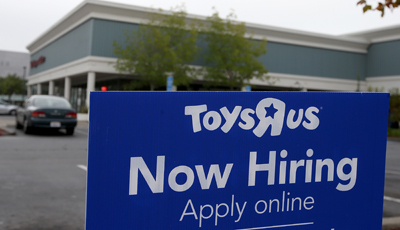
A now hiring sign is posted in front of a Toys R Us store on November 7, 2014 in San Rafael, California. According to a U.S. labor department report, employers added 214,000 jobs in October, lowering the national unemployment rate to 5.8 percent. (Photo by Justin Sullivan/Getty Images)
Nonfarm payrolls grew a seasonally adjusted 214,000 last month, the Labor Department said Friday. The economy has added better than 200,000 jobs each month since February, the best such streak since 1995. It marked the 49th straight month of positive job growth, the best stretch on records back to 1939.
The unemployment rate, obtained from a separate survey of households, fell to 5.8% last month. That’s the lowest level since 2008.
October’s reading continued a streak of steady, but not accelerating, hiring. Revisions showed the economy added 31,000 more jobs the prior two months than previously estimated. Employers added 256,000 jobs in September and 203,000 in August.
The figures come just days after voters flipped control of Congress to the Republican Party, in part due to their concern about the state of the economy.
One missing ingredient needed for stronger economic gains: wages. Friday’s report offered a mixed view on that front.
Average hourly earnings for private-sector workers were up 2% in October compared with a year earlier. That’s in line with the pace recorded for most of the year and barely above the mild pace of inflation. Consumer prices rose 1.7% in September from a year earlier.
“The quality of job creation remains insufficient to translate into wage pressures,” said Lindsey Piegza, economist at Sterne Agee Group.
But the number of hours Americans are working is rising, and that’s helping boost incomes. Average weekly earnings advanced 2.6% from a year earlier, the best 12-month increase since January 2012.
There are other signs that slack in the labor market is diminishing.
Read the full article HERE.