By Megan Davis, Times Dispatch
Aly Curry (foreground) and other students use laptops, iPads or smartphones as they work on preparing their International Baccalaureate assessment during an English class at Lee-Davis High School in Mechanicsville. Photo by Daniel Sangjib Min/TIMES-DISPATCH.
When investing in the future, as Chesterfield County Public Schools is with the adoption of a laptops program, not everyone will be pleased, for it is easy to see shortfalls in the ambiguity of the unpredictable. Yet, as a student, I see this program as an effort to put Chesterfield students ahead of the curve.
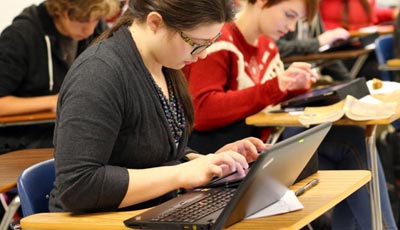
Let’s face it; most students are already extremely literate when it comes to technology —perhaps more so than teachers. As one of my teachers commented, the moment a student walks out of school, he or she is almost guaranteed to be using a device of some sort. However, most students are clueless as to how to use technology to further their education. A laptops program would encourage technology not to be an outlet simply for gaming and social media, but as a tool to supplement schooling. A plethora of knowledge is amassed on the Internet, and teaching students how to find and analyze qualified information conveniently would grant all students a basic ability in research and comprehension.
I have talked to several students from Henrico and other school systems. Where a laptop program was successfully implemented in an organized fashion, it is wildly popular. Where it is disorganized, over-regulated, under-regulated or poorly maintained, it has created problems. But the consensus is wide: Technology is imperative to the classroom. It is simply where education is headed in the 21st century.
It has been consistently shown that technology improves test scores and provides essential skill sets useful through one’s educational and professional careers. Long-term laptop programs such as Maine’s, which has been around for more than 10 years, have produced positive feedback in the classroom, engaging students and personalizing their teachers’ ability to teach. Though improvements in test scores are only as good as the teachers who implement the program, it is largely believed that the program provides a brand new skill set in technology immeasurable by standardized testing. The point of the laptops program is to bring this advantage to the students as soon as possible and to ensure the future is truly theirs to mold. A sculptor can’t carve success without her chisel.
Read the full article by Megan Davis from Times Dispatch.