By Jami Farkas, NGUOI VIET
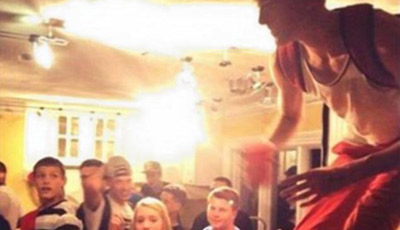
Brian Halloway Brian Halloway (white jersey) played for the New England Patriots of the National Football League. Photo taken inside Brian Halloway’s house during the party.
Usually, we reserve our space here for stories of Vietnamese Americans or issues of general interest to the Asian community. Today, instead, I ask you to read the story of Brian Holloway, a mountain of a man who spent the 1980s playing professional football. His story knows no cultural boundaries. Plus, you will walk away after reading about him with a great topic of discussion for your family dinner, whether you are a parent, a grandparent or a teenager.
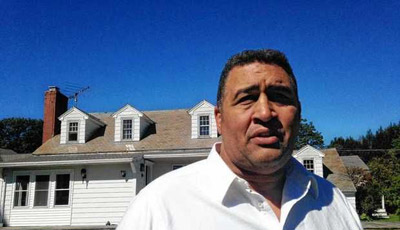
Holloway, 54, the son of a Vietnam veteran, has made national news this week. The topic hasn’t been about what he’d probably like to talk about – the picnic he’s hosting on Saturday for active and retired military personnel and their families at his second home, a 197-acre ranch in Stephentown, N.Y. It’s a tribute, he said on his website, to “honor our heroes.” The fact that he hasn’t called off the party for an expected 1,000 people is a tribute to his character.
See, over Labor Day weekend – as their last stand of summer – an estimated 300 teenagers broke into his home on the bucolic property nestled against the Massachusetts border in the shadow of the Berkshire Mountains. They threw the mother of all parties – and posted the escapades all over their social media sites.
According to local media reports, the teens broke windows, urinated on the carpets, scratched the hardwood floors as they dragged kegs across them and spray painted walls. For good measure, they stole some of the contents of the property, including the gravestone marker (since recovered) for his grandson who died at birth – then left all their garbage at the site. In all, the teens did an estimated $20,000 worth of damage to the home.
Holloway, who makes his full-time home in Florida, learned about the party from one of his eight children. That child attends college in Florida and watched the events unfold on social media sites, then alerted his father, who looked on in disbelief as to what was happening more than 1,000 miles away.
Holloway played in the National Football League before the days of big paydays; his first year, his paychecks were $1,221.73 a week for just the 16 weeks of the season. It was more money than he had ever seen in his life, he writes on his website, “Help Me Save 300.”
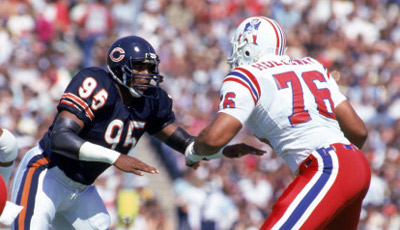
His parents were disciplinarians who lived on a tight budget; his father’s military pay was just $6,500 a year. At age 10, he got a job to help out around the house and has worked since. Eventually, football took him to Stanford University. After graduation, the New England Patriots drafted him in the first round, and as a transplant to the East Coast, he found Stephentown and fell in love with it.
Today, he and his wife spend most of their time in Florida because the climate is better for the severe pain from which he suffers due to football injuries. Walking is tough – cleaning up the property has been even tougher – but he still keeps a full work schedule and will for the rest of his life, he says.
A man who believes in the value of education. Of hard work. And of being an active parent, staying involved in his kids’ lives.
Holloway has shared these personal bits of information on a website he has created in the wake of the party. He called it “Help Me Save 300” because he said he wants to begin a dialogue with the 300 or so kids who trashed his house. He has included screen shots of their Twitter feeds and social media posts. (Warning: If you go to his website, be prepared. Some of the language is profane.)
Essentially, he has named names of the kids involved – not to scold them, he says, but rather because he worries about them and also as a reward to the students who weren’t involved. He wants the community at large to address with these almost-adults the issues of personal responsibility. He wants to make this party of a lifetime a turning point in their lives.
He writes about how he has worked for 30 years with governors and community leaders to “provide the support, education and leadership to students who are at risk; peer pressure is real. Students do die from drugs and alcohol. It’s the most painful thing in the world. Like all parents: every time I have looked down at the caskets of my children’s classmates … I am haunted by a single question. Could I have done something to prevent this?”
Few of the students or their parents have turned out to help with the cleanup, offer an apology or offer any restitution. In fact, according to national media reports today, Holloway instead has heard from parents who want him to remove their child’s photo from his site, contending he is jeopardizing their chances of getting into a good college. (They probably did that on their own.)
Use Brian Holloway’s story as a chance to launch a discussion with your children or grandchildren about personal responsibility, about respect, about underage drinking, about how what they put on social media can come back to haunt them. And although you likely never will cross paths with Holloway, send a silent thanks his way for giving us all a reminder that parenting is a lifelong job.
To watch a video interview from CNN with Brian Holloway, go to YouTube.