By Genevieve Flaven, Business of Fashion
For many years, Chinese designers looked West. Today, more and more fashion companies, from couture houses to premium brands, are reviving and capitalising on China’s own cultural heritage.
HANGZHOU, China — In Wong Kar-wai’s In the Mood for Love, released in 2000, the main character played by Maggie Cheng wears more than 20 different qipao. These close-fitting dresses with a high neck emphasize her fragile beauty and convey an unforgettable sense of melancholic elegance and sentimental reserve. The qipao’s restrained grace certainly contributes to the overall aesthetic of the movie and may have, incidentally, played a part in restoring China’s pride in its own fashion history.
Source: Tamsoon
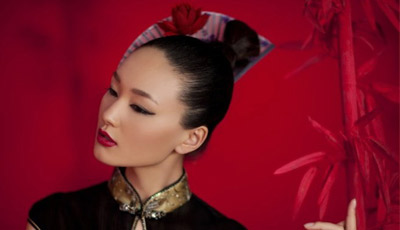
Ten years later in Hangzhou, Tamsoon, a premium Chinese fashion brand, has built a successful business around the qipao. Head designer Qiu Xiaojing aimed to rejuvenate a dress that originated in 1920s Shanghai and was made fashionable by socialites and other women of the upper classes. Of course, Qiu Xiaojing is not the only designer to find inspiration in China’s fashion heritage, but Tamsoon is probably one of the country’s first premium labels to update this tradition for middle class consumers.
Before this, new interpretations of China’s fashion history were the domain of couturiers to government officials and modest street tailors, while outside of China, street markets across the globe displayed a caricature of Chinese style in the form of low-priced slippers and polyester négligées.
Aversion to Chinese Goods
For many years, fashion brands designed in China were unappealing to Chinese consumers. In China, most people still equate high prices with high quality and cheap products tend to push consumers away. As status remains an essential driver of consumer behaviour, the country’s affluent consumers, as well those aspiring to join their ranks, prefer well-known, expensive international fashion brands, which they believe reflect their social superiority.
According to a 2012 report by Bain & Company, a consulting firm, the most popular fashion brands among Chinese consumers were Louis Vuitton, Chanel and Gucci. The pull of foreign brands is even stronger when it comes to purchasing gifts. Many Chinese say they could never buy a Chinese brand to honour a friend or client because of the loss of “face” this would bring them. Indeed, a packaging design agency we spoke with reported having to stick a conspicous “imported” label on boxes of fine China sent as gift to Chinese government officials.
This general aversion to Chinese brands explains why over the past few decades, most of China’s premium womenswear labels have tried to mimic French, Italian, Spanish, American, Japanese or Korean brands. They have borrowed their names, copied their styles and lifted their logos. Some even pretended that they were collaborating with obscure fashion studios in Milan or Paris, which probably never existed but helped to justify premium prices in the eyes of Chinese consumers.
Read the full article by Genevieve Flaven, Business of Fashion.