By Mario T. García, National Catholic
Aug. 29 marked the 44th anniversary of the historic Chicano Moratorium anti-war march in East Los Angeles in 1970. This was the largest protest manifestation of the Chicano Movement of the late 1960s and 1970s. The movement was the largest and most widespread civil rights and empowerment movement by Mexican-Americans in American history.
The march, organized by the National Chicano Moratorium Committee, witnessed perhaps as many as 30,000 people, mostly Chicanos or Mexican-Americans, marching against the Vietnam War. It was also the largest anti-war protest by any minority group in the country, including African-Americans.
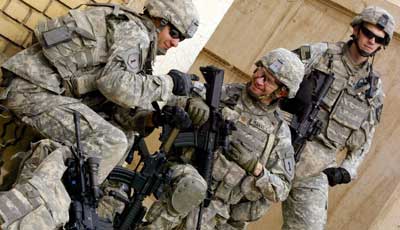
US soldiers share a moment as they patrol a popular market in Baghdad’s Dora district, 21 November 2007. The Bush administration clashed with Congress over Iraq war funding yesterday with the Pentagon warning of looming lay-offs and base shut downs, dismissed by Democrats as scare tactics. (ALI AL-SAADI/AFP/Getty Images)
Chicanos protested against the Vietnam War and the United States’ involvement in it because Chicanos were disproportionately being drafted into the military as the canon fodder for the war. In the Southwestern states, where most Mexican-Americans lived at the time, they represented approximately 10 percent of the population of these states, yet represented 20 percent of the casualties in the war. Moreover, needed funds that might have helped Chicanos in education and jobs were being siphoned to pay for the war. This was a war that made no sense for Chicanos, and they joined millions of other Americans in protesting it.
My thoughts on the anniversary of the march emphasize to me that we as a country today have to be very cautious about allowing the Obama administration to get us back into a new war in Iraq and Syria. It’s one thing to protect American lives and civilians who might be slaughtered by the Islamic State and another to begin an endless bombing campaign that will undoubtedly increase the number of American military “advisers” into the conflict.
Read the full article HERE.