THE ASSOCIATED PRESS
DONG HA, Vietnam ― In mid-August 1973, the United States flew its final bombing mission over Southeast Asia, ending the country’s direct military involvement in the war. Forty years later, a grim legacy continues to claim victims.
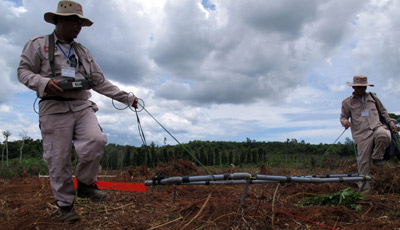
In this Wednesday, July 31, 2013 photo, two deminers use a large metal detector to search for unexploded bombs or other munitions left over from the Vietnam War, in Liem Cong Dong, Vietnam. Aug. 15 marks the 40th anniversary of the end of American bombing operations in Indochina. But in one of the grimmest legacies of the conflict, victims are still falling. In 2012, there were at least 500 casualties in Vietnam, Laos and Cambodia from unexploded bombs and other ordnance, according to activists and government databases. (AP Photo/Chris Brummitt)
Last year alone, there were at least 500 casualties in Vietnam, Laos and Cambodia from unexploded bombs and other ordnance, according to activists and government databases.
The most heavily contaminated province in Vietnam is Quang Tri, where fighting between U.S. and Vietnamese forces was at its fiercest. The region is now one of the poorest in the country. Prices of steel and copper are continually rising, maintaining incentives for collectors to search even as much of the lightly buried scrap has already been harvested.
The United States dropped 7.8 million tons of munitions over Vietnam, more than it unleashed in World War II on Germany and Japan combined. It also fired off as much ordnance again from land and sea. An estimated 800,000 tons failed to detonate, contaminating about 20 percent of its land.
More than 100,000 people have been killed or injured since 1975, the government said. But it doesn’t give out detailed information publicly, and many casualties go unrecorded. Curious children picking up small cluster munitions make up a significant percentage of those killed or injured.
Collecting scrap is not illegal in Vietnam, but handling unexploded ordnance is. Many collectors say they now leave dangerous items in the field and concentrate on the tons of other war remnants such as exploded bomb casing, machinery and vehicles. Scrap metal dealers also say they refuse live munitions.
The United States said it had spent more than $65 million since 1998 in trying to make the country safe, and it was planning an increased focus on “U.S. origin” unexploded ordnance in Southeast Asia in coming years. Washington is keen on expanding ties with Vietnam as part of its strategic focus toward Asia and China’s rising might.