By Michelle Persad, Huffington Post
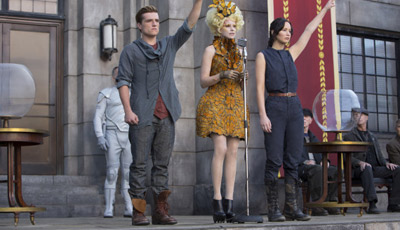
If you haven’t already blocked off your calendar, bought your ticket and planned your outfit for the November 22 release of “The Hunger Games: Catching Fire,” you had better hop to it. The highly-anticipated sequel starring Jennifer Lawrence hits theaters this week, and if there weren’t already enough reasons to go and see it, the gorgeously whimsical costumes should have you convinced.
Costume designer Trish Summerville headed up wardrobe for the film — yes, the woman responsible for Rooney Mara’s transformation into Lisbeth Salander in 2011 movie “The Girl With the Dragon Tattoo” — and we couldn’t be happier about her new role. Lucky for us, we had a chance to chat with Summerville and grill her on designing costumes for the Capitol and dressing all 5,800 extras. Here’s what she had to say:
Having not been the costume designer on the first “Hunger Games” film, what was that like coming in and working on the sequel?
We lucked out with this one because the Capitol and the world of the Capitol changes and evolves so quickly. They have an insatiable appetite, so we didn’t really have to stay locked into [or] carry over much of what was in the first film. I mean, I wanted to honor the hunting jacket and the hunting boots that Katniss wears, so with that, we just did slight modifications. We aged it down a bit more, we wore it in a bit more. And then in this film we have winter, where in the first film you only have spring and summer, so we could layer them up a bit more. The world of the Capitol could change completely because the Capitol changes fashions at least every season, if not sooner.
So I didn’t really feel a lot of pressure to keep things the same from the first film. But I did read a lot of fan sites and blogs to see what were particular items from the second book that the fans were eager to see.
‘The Hunger Games: Catching Fire’ boots
How much autonomy did you have in terms of re-imagining the pretty strong visuals presented in the book?
The thing with the book is we all get to have our imaginations, our own idea of what things can be or look like. But when you try to literally translate a book to film is when you start to run into certain issues of what does work and what doesn’t work. I mainly worked with Francis Lawrence, the director, and [asked] what was his vision and his overall feel for the film and then did tear sheets and built boards of what the inspirations were. It was mainly with him that I worked closely with and discussed ideas. I didn’t have to go through a lot of different channels.
You go from high fashion in the Capitol to designing for the actual games to the various districts. How did you approach these very different challenges ?
With the Capitol, you have to maintain the amount of color and lavishness that the book conveys, [but] I also wanted to incorporate trends. But I didn’t want everyone to look like they shopped from the same store. And then with the districts, I really wanted to incorporate and get the feeling for what each district does for the Capitol — what they produce or what they manufacture for the Capitol. So Finnick’s district is the fishing district, so a lot of their clothes were sunny yellows, ocean blues and greens and light colors, I incorporated a lot of… things that look like fishing nets and crochets, and seashells. I feel like any of the spin-off things, or things that aren’t shipped to the Capitol, they can somehow incorporate into their own clothes. Like with the textiles districts, I incorporate a lot of color, a lot of pattern, a lot of tapestries. It’s more of an ethnic feel in that district. And then I asked the makeup department if they would stain some of the people’s hands because I thought they are the ones who dye all the fabric and send it to the capitol, so their hands would be dyed.
Read the full article by Michelle Persad from Huffington Post.