By Jesse Pizarro Boga, Minda News
A Vietnamese rendition of the Philippines’ national costume is one of the featured dresses in Vietnam’s first Ao Dai Museum.
Part of the Ao Dai Museum in Saigon. Photo: Tuoi Tre
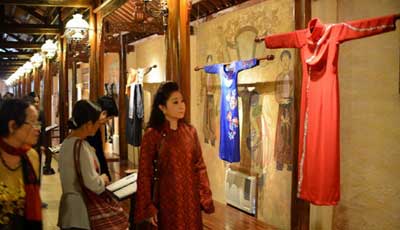
The Terno-inspired Vietnamese dress is created by renowned Vietnamese designer Le Si Hoang. He is the founder and director of the museum, which just opened on January this year.
The designer first showed admiration for the Terno in 2011 when he was commissioned by Vietnamese ambassador to the Philippines Nguyen Vu Tu to specially design dresses to showcase in a celebration that marked 35 years of diplomatic relations between his country and the Philippines. He’s kept the dresses since then.
“I really like the [Philippine] Terno,” Hoang said in this interview. “I like its butterfly sleeves and its elegance.”
Hoang said that aside from the Vietnamese ambassador’s request to (re)introduce the Vietnamese national costume to Manila at that time, he also wanted to create dresses to honor the historic diplomatic occasion. (Hoang is an iconic designer in Vietnam whose creations have been worn by celebrities and politicians in Vietnam and abroad; during this interview, he claimed to have designed dresses for three of the current Philippine President’s sisters.)
The Vietnamese ambassador sent Hoang a sample of the Terno, which he then studied. Seven designs came out of his creative genius–all of these were made of silk and complete with intricate embroidery and beadwork.
The basic elements of the Vietnamese and Philippine dresses harmoniously fused into Hoang’s elegant pieces. The ingenious play of the Ao Dai’s sleek flaps and the Terno’s bold butterfly sleeves both root the gowns in their respective cultural identities. The reconstruction of the Ao Dai’s raglan sleeves with Terno butterflies lends the dress commanding elegance, while subtly keeping oriental flair.
The immaculate white Ao Dai Terno is the one that is currently on display in the museum (this dress proved to be a surprise to an unsuspicious Filipino visitor like this writer).
The other Ao Dai Ternos are carefully kept, along with the others, in the Hoang’s archive–a collection of about 500 Ao Dai dresses, with some that date back to the 1930s (a Le Mur dress, or the first-ever reconstructed Ao Dai created by painter Cat Tuong).
Read the full article by Jesse Pizarro Boga from Minda News.