By Austin Ramzy, Sinosphere
The reporters’ trip with the Vietnamese Coast Guard started with a meal, and the meal started with toasts.
Vietnamese Coast Guard crew members guided their vessel outside Da Nang harbor on their way to a Chinese oil rig located in disputed waters near the Paracel Islands.Credit Gilles Sabrie for The New York Times
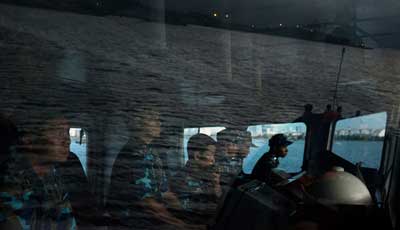
Lt. Col. Tran Quang Tuan, the deputy chief of the Vietnamese Coast Guard for the central northern part of the country, toasted each group of reporters by nationality — United States, Britain, France, Japan and Vietnam — with a glass of iced beer. It was shortly after 10 a.m., and the visiting journalists wondered with a little concern whether Colonel Tuan would also be captaining our ship. (He wouldn’t.)
From early May to mid-July, Vietnam faced off against its larger, stronger neighbor, China, over the placement of a Chinese oil rig in waters claimed by both countries in the South China Sea.
Like China, Vietnam can be extremely secretive about the functions of its government, its military and its coast guard. But with little leverage against the Chinese, Vietnam tried to plead its case to the outside world. In a rare display of openness for the authoritarian state, it invited groups of foreign reporters to embed with its coast guard vessels.
In mid-July, Gilles Sabrie, who is a photographer, and I joined the fourth such trip, along with eight other journalists representing foreign news outlets including the BBC, Reuters and The Guardian.
Eight hours after the iced-beer banquet, our group, joined by 30 representatives from Vietnamese news outlets, set sail from the port of Da Nang on a blue-hulled, 300-foot Vietnamese Coast Guard patrol boat, the CSB 8003. An officer threw fake money into the water for good luck, and the ship’s horn blasted three times as the vessel set sail. Its guns wrapped under tarpaulins, the ship was bristling instead with snapping photographers’ cameras as it left the dock. The ship was so jammed with journalists that some coast guard personnel slept in the halls.
For the foreign reporters, the trip was scheduled to take about five days. The Vietnamese reporters, who dispersed onto other ships over the next day, were prepared for a longer haul. Pham Cao Cuong, a journalist with the state-owned Tuoi Tre newspaper, said he planned to spend as long as a month at sea. Two days in, after the Vietnamese Coast Guard confirmed that the Chinese oil rig had moved out of disputed waters, the trip was cut short and we returned to Da Nang.
China said the rig had completed its task of searching for oil and gas deposits south of the Paracel Islands, which the Chinese call the Xisha Islands and the Vietnamese the Hoang Sa Archipelago. Analysts continue to debate why China moved the rig a month ahead of its previously announced departure time, and about what effect outside pressure and the arrival of seasonal storms had on the decision. But the episode made clear that China had the will and ability to put a rig in disputed waters and protect it from interference. And that it was likely to do so again.
The trip to the rig made clear the vastness of the 1,400,000-square-mile sea. From Da Nang, it took at least 10 hours to reach the cobalt blue waters south of the Paracels. The rings of Chinese protective ships meant that Vietnamese vessels could approach no closer than eight to 10 miles from the rig.
On our voyage out, the first Chinese vessels, a small fishing fleet, were spotted about 45 miles west of the rig. An hour later, the first Chinese Coast Guard vessel appeared.
Read the full article by Austin Ramzy from Sinosphere.