From Hungry Huy
My grandmother is a child raising machine. As if raising nine of her own kids wasn’t enough of a challenge, she had her hands in raising almost all of the grand-kids too. Between cleaning up our messes and playing referee to our disputes, it seemed like she never skipped a beat in the kitchen.
Bánh cam. Photo from Hungry Huy.
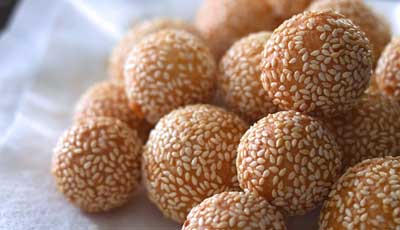
In the very rare cases something wasn’t bubbling on the stove, grandma sometimes fed us a pulverized mix of roasted sesame seeds and salt (muối mè) over rice. Sounds like peasant food, right? Tasty peasant food. This is when I probably had my first taste of sesame seeds. It’s kind of funny that to this day, I don’t really know where sesame seeds come from (Any Mitch Hedberg fans?). These crunchy little teardrop-shaped seeds cover the snack we’re going to be making today–bánh cam (sesame balls).
The name bánh cam literally means “orange cake” because these balls simply resemble oranges, not because there are any actual oranges in it.
There’s wonderful harmony in bánh cam. The outer shell is a warm golden brown color covered in white sesame seeds. The exterior has a satisfying crispiness to it from frying. On the other side of that surface is a lightly chewy or springy glutinous rice dough and a sweet ball of mung bean. Fans of bánh cam can get pretty picky about this balance between the crisp and chew.
Although they look very similar, there are differences between bánh cam from the South and bánh ran from the North. Both styles can be found throughout the country though. My parents recount the differences in these fried desserts back home:
North Vietnam – Bánh Rán
Northerners call it bánh ran, or “fried cake”. These are made with a Jasmine flower essence for a nice aroma. A sugary drizzle on these fried goodies can be found on them depending on the vendor. Another difference in the north is that when they are covered in sugar, the dough is made only with sweet rice flour and no rice flour, sesame seeds, or potatoes.
South Vietnam – Bánh Cam
In this post, I make it in the Southern style. There is no essence of flower added to this. The most popular flavor added to the mung bean filling is with drops of vanilla extract. Only in the South will you find freshly shredded coconut in the filling too, but that will vary by vendor. If you add coconut to your recipe, do yourself a favor and use only freshly grated coconut!
CLICK HERE FOR THE RECIPE!!!!!