Căn bệnh vô cảm đang có nguy cơ bùng phát

Alhambra students share their immigration stories
BY NASRIN ABOULHOSN, Alhambra Source
San Gabriel Valley, Calif., real estate developers Sam and Jackie Wong approached Alhambra Source last winter with one question: How can we motivate San Gabriel Valley students to explore their roots and ethnic background? The Wongs were interested in helping students pursue higher education, and together we organized a scholarship that asked Alhambra students to answer questions about their name, heritage, and growing up as a child of immigrants in the San Gabriel Valley. The resulting essays were astounding.

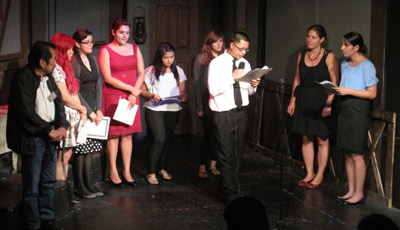
Sam & Jackie Wong-Alhambra Source Scholarship winner Huy Nguyen reads from his essay. Photos by Alfred Dicioco
We were taken aback by the diverse set of experiences and cultures we read about in the submissions. Our essay applicants trace their lineage to Vietnam, Mexico, Cuba, El Salvador, China, Cambodia and France — a world of rich stories and life lessons. Because of the Wongs’ generosity, we awarded students this week $1,500 and publication on the Alhambra Source website.
“The stories are amazing,” said Linda Yamauchi, wife of Alhambra Councilman Gary Yamauchi and one of the scholarship judges. “Some of the imagery is beautiful.”
Community judges from various fields in Alhambra — including social services, education, city staff, the police department and the media — helped us narrow down our list of 13 applicants to nine scholarship and publication winners. Below are excerpts from the winning stories.
Taking first place for her essay about the two stages of shame that come from being a child of immigrants was UCI student Shannon Ho, who received a scholarship in the amount of $500. Her story:
I didn’t feel as though I looked “American.” I, like almost every other girl who was born in the early 90s, was a huge fan of Britney Spears and the Olsen twins. Heartbroken, I realized that I didn’t look like them, nor would I ever. Being an American-born Chinese girl wasn’t ever too big of a deal for me before this. I was born in Monterey Park and lived in Alhambra with my family, went to a Chinese church, and lived my life surrounded by Chinese people and Chinese culture. But now, I wished for blonde hair, blue eyes, and long legs because I wanted to be an “American” girl.
In second place for her essay about accepting her upbringing and background, Syracuse University student Yvonne Lee received a scholarship in the amount of $400:
I realized that for so long, I had been trying to emulate this version of “American,” that in order to be successful I needed to move away from my modest, first-generation upbringing. It wasn’t until I was in New York that I began to embrace where I come from. I had worked very hard to leave home, but I realized that my parents had made these opportunities possible for me and that it was important to recognize that. I realized that no matter where I went, I would always be a product of my parents’ traditionalism and would forever recognize the Asian foot massage parlors and dim sum restaurants of the San Gabriel Valley as home.
Mt. San Antonio College student Vanessa Solis placed third for her essay about ethnic labels and identity for American-born Latinos, receiving a scholarship in the amount of $300:
In Alhambra, I am lucky to live among a rich mix of Asian and Latin American communities, where I can interact with people like me, people whose families can reach into the recent past and find immigrants seeking a new life here. We share similar stories of difficult immigration journey, strong families, and the search for opportunity.
In fourth place for her essay about overcoming domestic violence in the Latino community was East Los Angeles College student Jessica Ramos, who received a scholarship in the amount of $150:
Being an American born to Mexican American parents, I have learned to adapt to both ethnic backgrounds. I learned by observing, absorbing and appreciating the diverse ethnicity that my parents’ culture provided for me. As I was growing up, my mother taught me many valuable lessons, but mostly to stand up for what I believed was right and never allow anyone to belittle me. She said, “You should be proud to be an American and never forget where you came from.”
The final scholarship recipient was Alhambra High School graduate Valerie Cabral. For her essay about keeping her immigrant status a secret, Cabral received a scholarship in the amount of $150:
I grew up watching all the American superhero movies. I saw how Superman and Batman had to keep their true identities a secret so they wouldn’t be singled out for not being normal. As I grew older I began to relate to these superheroes because I was forced to keep a secret identity as well. Every time I left my home I was reminded by my mother, “Si te preguntan algo, no contestes,” meaning, “If someone asks you anything, do not answer.”
Four additional students were selected by the judges and Alhambra Source editors as publication recipients. First was San Gabriel High School graduate Dara Dan for his essay on battling poverty in Cambodia:
It was not long ago when I lived in Cambodia. When I visit, I notice things never seem to improve for the commoners. Many people continue to face poverty. Being born and raised there for nine years, I know that many families do not put a major focus on education and community service due to the lack of opportunity.
Our second publication recipient was East Los Angeles College student Jane Fernandez for her essay on growing up the child of Cuban immigrants:
Being the child of immigrant parents can be a struggle, sometimes limited, maybe embarrassing. But it’s a learning experience that leaves you happy to be your parents’ child. Being an immigrant is getting a second chance in life, and my immigrant parents got a second chance to have everything they had always wanted. They gave my brother and I a better future and life.
The third publication recipient was San Gabriel High School graduate Anna Huang for her essay on rejecting her Chinese upbringing as a child and eventually reconnecting to it as a young adult:
This play [in my AP Mandarin class] was more than a final exam; it was an entrance to the path that I derailed from after first grade. It reconnected me with my family, morals, and culture. I actually talk to my parents in Cantonese now and often translate English into Chinese for them. And all those karaoke sessions and mahjong get-togethers? They now give me warmth and happiness when I need a break from all the school work. I have subconsciously reverted back to my culture, the loving and embracing heritage I grew up with.
Our final publication recipient was Century High School graduate Huy Nguyen for his essay on his academic and behavior issues at school as a child of Vietnamese immigrants:
My family of three and I started out with really almost nothing. My father, who was a Vietnamese refugee, somehow managed to get my mother, sister and me to the United States from Saigon in September 1999. … Now that I have matured, I understand that our family difficulties were partly the result of sacrifice. I appreciate every little thing around me, but I appreciate my parents more than anything. …I want to make my parents proud and make their journey to America worth it. My parents gave me everything they had and spent nothing on themselves. Their clothes are 20 years old but they will still send me to college. My parents may be too stoic to say “I love you,” but I know they love me.
Cảnh sát New York coi các đền Hồi Giáo đều là tổ chức khủng bố
NEW YORK (AP) – Cảnh sát New York bí mật xếp tất cả những đền Hồi Giáo vào loại tổ chức khủng bố, nghĩa là có thể do thám theo dõi các ông đạo và mọi tín đồ nếu xét là cần thiết.

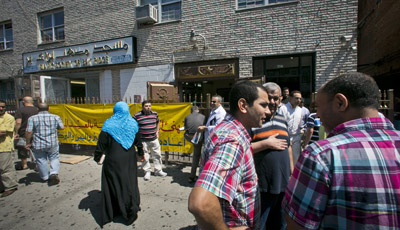
Tín đồ Hồi Giáo sau buổi lễ cầu nguyện hàng tuần ‘Jumu’ah’ ngày Thứ Sáu 16 tháng 8, 2013, tại giáo đường của Islamic Society of Bay Ridge trong khu Brooklyn. Sở cảnh sát New York vẫn theo dõi điều tra cơ sở này từ năm 2003 nhưng chưa bao giờ truy tố về hoạt động khủng bố. (Hình: AP/Bebeto Matthews)
Từ sau vụ tấn công khủng bố 9/11, sở cảnh sát New York đã mở ra hàng chục vụ điều tra các giáo đường, những cơ sở nghi ngờ có thể là tổ chức khủng bố. Biện pháp này vẫn tiếp tục kéo dài qua nhiều năm, tuy nhiên chưa có trường hợp nào cảnh sát truy tố.
Nhưng FBI không thực hiện cách điều tra này vì hành động ấy có tính cách xâm nhập quá đáng vào sinh hoạt của dân chúng.
Với phương pháp điều tra theo dõi của cảnh sát New York, tất cả mọi tín đồ đến giáo đường đạo Hồi đều có thể bị coi là nghi can khủng bố, bị theo dõi, lập hồ sơ lý lịch. Bài giảng đạo trên nguyên tắc được bảo vệ bởi quyền tự do phát biểu theo Tu Chính Án số 1 của Hiến Pháp, nhưng cảnh sát vẫn có thể ghi âm nghiên cứu và thẩm vấn những cá nhân liên hệ.
Mặc dầu có nhiều khiếu nại của các tổ chức Hồi Giáo cũng như đơn kiện của ACLU, cảnh sát New York bênh vực hoạt động của họ nói rằng chiến thuật áy là cần thiết để bảo đảm an ninh cho thành phố. (HC)
Bộ trưởng Y tế VN “mắc” quá nhiều chứng bệnh?


Mass. Man gets Bronze Star 46 years after Vietnam
BEDFORD, Mass. ― Dave Nugent saw the grenade flashes the night in 1967 and knew he needed to get help for his wounded comrades. He grabbed for his rifle but didn’t realize the grenade had blown the fingers off of his land hand. He shot at the enemy with his right hand, then ran to summon assistance. Just this week and now 72, he received his Bronze Star for heroism.
Read the story by Hiroko Sato of the Lowell Sun.

David Nugent. Photo from the Lowell Sun.
Seattle woman arrested for racist soy sauce attack
She told everyone to “go back to China” and sprayed customers with soy sauce.

What the hell? Last weekend in Seattle’s International District, a woman was arrested after she walked into a Chinese restaurant, told everyone to “go back to China,” and assaulted customers — including a baby — with soy sauce and chocolate milk: Woman arrested after restaurant guests covered in soy sauce.
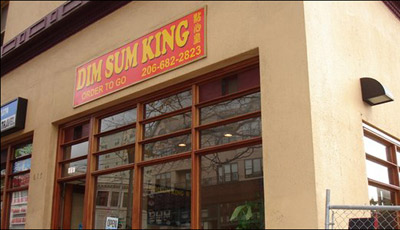
According to witnesses dining at Dim Sum King on Saturday afternoon, a 52-year-old woman burst into the restaurant, told everyone to “go back to China,” started tossing over guests’ plates, spit on a man and then squirted him and his baby with soy sauce. What did that baby ever do to you, lady?
Naturally, they called the cops on her:
Just before 1 pm, officers were called to the Dim Sum King at 6th and Jackson after a 52-year-old woman walked into the restaurant, told everyone to “go back to China,” began flipping over guests’ plates, spit on a man and then squirted him and his baby with soy sauce.
One of the victims called 911, and officers pulled up to the restaurant to find several people standing outside, covered in food.
When officers contacted the suspect—who was carrying a container of chocolate milk – she became very animated and slapped an officer in the arm.
The suspect was arrested and booked on harassment and assault of an officer. Damn, between the racist dog walker and this unruly soy sauce lady, “go back to China” seems to be phrase of the week. From Calgary to Seattle, thanks for making us Asians feel welcome on our own damn continent.
Homes abandoned by riches become rags in Hanoi
From WIRE REPORTS
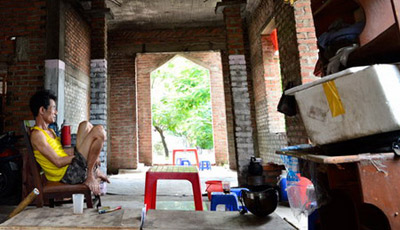
Nguyen Quoc Khanh wore a sad face sitting inside a villa in Hanoi looking out the front door to his empty café on a rainy morning. He has been “borrowing” the half-finished ghost villa and is using it as his temporary home-cafe.

Nguyen Quoc Khanh in a villa abandoned by its owner in Hanoi. The poor man has used it as his temporary home despite its dilapidation and unsafe location. Photo courtesy of Tuoi Tre


The frozen real estate market has given birth to many abandoned buildings, though many are not empty. Instead, many of the city’s poorest and homeless have braved the utility-less conditions and unsafe neighborhoods to have a sturdy roof over their families’ heads. So common is the trend that some people, like Khanh, have been granted permission to open small cafés for free in front of unoccupied houses to try to generate some income – despite the properties not having power or running water.
Khanh told Tuoi Tre newspaper that the house he is living in has been abandoned for 10 years now. “I’ve been here for a long time but never seen the owner.”
The man of around 60 years old from the northern province of Thanh Hoa said he has never been able to afford rent in the capital city since moving to Hanoi several years ago.
He’d been working at construction sites and people kept owing him wages.
Then one day, via a middleman, he was hired to clean the villa in the Van Quan urban area in Ha Dong District, weeding its yards, for $47.
“You cannot imagine how terrible a villa would look after being left for so long. Weeds were all over the place, and vines were climbing up to the third floor. Syringes of drug addicts were everywhere, and garbage was as high as your head.
“There’s also this terrible stink as the house has been used as a public toilet.”
Khanh said it took him and another friend three days to “basically” clean the house, but the owner never showed up with his money, so he decided to stay there.
He said living in the villa, once priced for sale at $806,000, has been no happiness, as people have been used to treating it as dumping site, and there’s no water, power, or doors. Apart from the café, he and his wife have a bicycle as their only other asset, he said. They also fix bicycles and motorbikes for small amounts of money when the opportunity arises.
The couple used old furniture dumped by people for their dining and sleeping places.
At Van Khe urban area in the same district, at least 20 villas and terraced houses have been abandoned by their owners, and some have been used as home by around 20 workers for three years now.
The workers from Hanoi’s outskirts work for a construction company tasked with installing utility equipment $142 to $190 a month and cannot afford proper homes.
A makeshift façade can be seen around a home shared by 10 workers, with each room equipped with only bunk beds, several water bottles and several strings for hanging clothes.
Nguyen Trong Hoang, who shares one house with nine others, said their company helped with bringing over power and water supplies.
They share toilets at the end of the row houses as each does not have its own yet.
“We just have no other choice than living here,” Hoang said. He said the houses lack everything, and they dare not go out at night as the neighborhood is not safe.
Drug use is so prominent they worry about stepping on syringes when they go outside.
But the workers also have some neighbors of the same plight – women from Phu Tho Province who are doing odd jobs in Hanoi. Some have stayed there for seven years, while a young high school graduate arrived recently.
Ngoc Thi Bang, 51, who has lived in the area for five years, said her biggest problems are mosquitoes and thieves.
“Anything left loose will be lost. We don’t even dare to air clothes outdoors.”
Hanoi’s latest statistics showed that around 655 villas and 574 terraced houses in the city have been abandoned with just finished frames or outer parts.
The Mo Lao urban area in the district has the most abandoned houses, but unlike in the other two areas, Mo Lao houses are in better shape and their owners still watch out for them and charge tenants rent.
Le Ngoc Binh, a renter, said he rents a three-story house, but the eatery he opened is not doing well due to the unpopulated neighborhood. He has tried to rent out the second and third stories of the house, but received no responses yet.
Tổng Thống Obama kỷ niệm 50 năm cuộc tuần hành của mục sư King
WASHINGTON (AP) – Tổng Thống Obama hôm Thứ Tư chủ tọa buổi lễ kỷ niệm 50 năm bài diễn văn lịch sử “I Have a Dream”, do mục sư Martin Luther King Jr, đọc ngày 28 tháng 8 năm 1963.

Dân chúng trùm poncho đứng dưới trời mưa nhẹ hạt tham dự buổi lễ. (Hình: AP/Charles Dharapak)
Hai cựu Tổng Thống Bill Clinton và Jimmy Carter có mặt bên Tổng Thống Obama trên thềm đài kỷ niệm Abraham Lincoln tại công trường The National Mall thủ đô Washington. Cùng hiện điên còn có Dân Biểu John Lewis và bà Lynda Bird Johnson Robb.
Dân Biểu Lewis đảng Dân Chủ tiểu bang Georgia là một lãnh tụ tranh đấu dân quyền kỳ cựu. Bà Lynda Bird là ái nữ Tổng Thống Lyndon Johnson, vị tổng thống đã ký ban hành năm 1964 đạo luật nhân quyền Civil Rights Act và năm 1965 đạo luật quyền bầu cử Voting Rights Act.
Tổng Thống Obama trong nhiệm kỳ của mình ít khi trực tiếp nói đến vấn đề chủng tộc, tuy nhiên đã có một vài lần ông kể lại kỷ niệm về những thách thức với ông khi còn là một thanh niên da đen nghèo.
Trong cuộc phỏng vấn của chương trình truyền thanh “Tom Joyner radio talk show” hôm Thứ Ba, Tổng Thống Obama cho rằng “Chúng ta đã đạt được những thành quả lớn về dân quyền và thăng tiến xã hội, nhưng chưa có nhiều tiến bộ về kinh tế, sung túc, công bình và cuộc sống trong đô thị”. Ông kết luận: “Không phải chỉ có một Tổng Thống dân da đen, một người điều hợp chương trình radio talk show dân da đen, mà đã là đủ”. (HC)
The Big Questions for the New Generations of Vietnamese Americans
From WIRE REPORT
The new generations born abroad are not bound by the idea that Vietnam is their destiny. Rather, it’s one of their many destinations.
Ed. Note: April 30 marks 38 years since the United States withdrew from Vietnam. In that time, says author and NAM editor Andrew Lam, connections to the homeland for Vietnamese Americans have evolved, even as their roots in the U.S. deepen. A longer version of this essay originally appeard in the Cairo Review.

Photo Credit: Shutterstock.com/spirit of america
Mẹ Việt Nam ơi, Chúng Con Vẫn Còn đây (Oh Mother Vietnam, We Are Still Here)
The lyrics from this sentimental song come back to me once in a while, especially when I think of the Vietnamese Diaspora and its complicated relationship with its homeland. One bitter evening on April 30, 1976, in an auditorium in downtown San Francisco, my family and I sang it to mark our first anniversary in exile.
Nearly four decades have passed since then. If I were to sing it now, not that I remember the lyrics entirely, I would sing it with a tone full of irony. So removed from that emotional juncture, I wonder to what extent is the song’s declaration still true? Vietnam is accessible now to the Diaspora, but to what extent are we still here for her? Who, in fact, are we?
More than four million Vietnamese have fled or migrated abroad since the end of the Fall of Saigon in 1975. They have re-established themselves elsewhere, scattered on five continents. These days you can find restaurants selling pho, banh mi, and other Vietnamese favorites in South Africa, Brazil, Dubai, and beyond. I myself have relatives living in six different countries on three continents. But the largest numbers of the Diaspora ended up in North America, and the largest portion of that population resettled in California, where my family and I, and most of my relatives, now live.
Ours is an epic filled with irony: traumatized by wars and bound by old ways of life where land and ancestors are worshipped, where babies’ umbilical cords are traditionally buried in the earth as a way to bind them to the ancient land, we relocated to a country known for its fabulous fantasies, high-tech wizardry, and individualistic ambition.
Take, for example, this bus trip I am on. A comfortable bus going south, with the nostalgic music of Trinh Cong Son, sung by the smoky-voiced Khanh Ly, echoing from the overhead speaker. Son was the most famous Vietnamese composer during the Vietnam War, the master of love and antiwar songs, and Khanh Ly the most famous singer. The two old Vietnamese ladies next to me are bragging about their children and their grandchildren, and how well they’re doing, and so on. Behind me, a couple of middle-aged men are humming along with this song of their youth. And up front two kids are playing handheld computer games while their mother talks endlessly on her cell to someone about her restaurant business.
Vietnamese voices rise and fall; I close my eyes and listen. I swear I could be in Hue heading south to Saigon or Dalat.
Except, I am not. I am on the other side of the Pacific, on my way from San José to Orange County, going down Interstate 5 in a Vietnamese-owned bus. It is owned by one of three competing Vietnamese companies, which speaks to the infrastructure of our ethnic community in America.
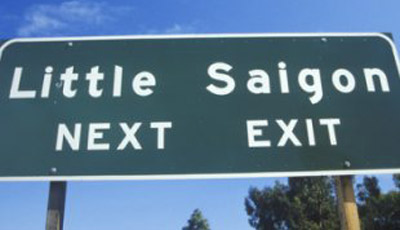
The reason I am on this bus is this: to see for myself the Vietnam War Memorial in Orange County that I’ve heard so much about from my parents. My father, once a high-ranking South Vietnamese officer, was on the advisory committee of this memorial-building endeavor. On one evening a decade or so ago, the Vietnamese in Orange County raised more than $200,000 for the memorial. Well-known Vietnamese singers sang for free and ticket receipts all went into the memorial fund. The result was two larger-than-life statues, one depicting a South Vietnamese, the other an American GI, standing side by side in combat fatigues adjacent to the city hall in Westminster, the heart of Orange County’s Little Saigon.
Standing in front of it, I am of two minds. I feel something akin to patriotism for my long lost homeland stir in my blood as well as a deep sadness for the men who fought and died—and for those who survived but were broken by the experience; I feel, at the same time, a dire need for distance. While I stand there on a Saturday evening, a couple of older women light incense and pray and several older Vietnamese men in army uniforms stand guard nearby. Something somber and heavy in their stance suggests a collective sorrow that causes me to shudder; their eyes—eyes that no doubt saw the worst of the old war—convey anger, hatred, and bitterness. Their faces remind me of my father’s.
It occurred to me then that while one strand of history still defines those men in army uniforms and, of course, my father, another strand of history was redefining me. My father considers himself an exile living in America, part of an increasingly small population; I see myself as an American journalist who happens to make many journeys to Vietnam without much emotional fanfare. For me, Vietnam, my country of birth, and its tumultuous history have become a point of departure, a concern, but no longer home.
The irony is that because he holds Vietnam so dear to his heart, my father cannot return to the country to which he owes allegiance, so long as the current regime remains in power. His is a rage left over from the Cold War that has no end in sight. History, for my father and for those men who still wear their army uniforms at every communal event, has a tendency to run backward, to memories of the war, to a bitter and bloody struggle whose end spelled their defeat and exile. And it holds them static in a lonely nationalist stance. They live in America but their souls are still fighting an unfinished war in Vietnam.
The old passion lives on, but it must now contend with the new integration: the Vietnamese Diaspora, no longer in exile, is steadily finding itself in Vietnam’s orbit. Lan Nguyen, writing for Nguoi Viet, the largest Vietnamese paper in Orange County, noted that “While the younger generation of Vietnamese Americans shares with elders a general concern regarding human rights, democracy, and freedom in Vietnam, they are not as invested in the cause.” Nguyen, who lives in San José, cites language barriers and lack of experience under communism as the factors that help widen the generation gap. “The Vietnamese American youth…often are disillusioned as it seems their every effort to help Vietnam is met with criticism by those older than them. The elders in turn are horrified to see young people organize philanthropic missions to Vietnam.”
The question remains whether the Vietnamese Diaspora can be an effective agent of change and find new ways to influence the future of the country. To do so, it needs to ask tough questions. Is there real freedom for those who give in to their hatred and are ruled by it? Is democracy for Vietnam possible when those who live in America often fail to understand and practice it with their own communities, and the majority of those in Vietnam barely show any interest? And what does it take to move beyond anger and lust for revenge, and create space for constructive discussion and dialogue and spur new political thoughts?
It is true: once the hate is gone, in its place is pain. Those who cling so strongly to hatred, I suspect, are often those who fear what comes after it. But it is true also that many of us have moved on beyond the old rancor, beyond that us-versus-them mentality. We have learned to absorb our pain and grief and are negotiating our positions between East and West, memories and modernity, traditions and individual ambitions, old loyalties and new alliances, such that we are in the process of recreating a whole notion of what it means to be Vietnamese, a definition that is both open-ended and inclusive.
So, Mother Vietnam, in a sense we are still here, but we aren’t who we used to be. The new generations born abroad may still behold that sense of common origin, may still take pride in their heritage, but they are not bound by the idea that Vietnam is their destiny. Rather, it’s one of their many destinations.
A new song is needed, one that describes an individual with multiple affiliations, with additional homelands, someone who shares a sense of common origin but is not bound by collective nationalism. The old umbilical cord, unearthed at last, is transmuted into a new trans-pacific verse, and is an epic in the making.
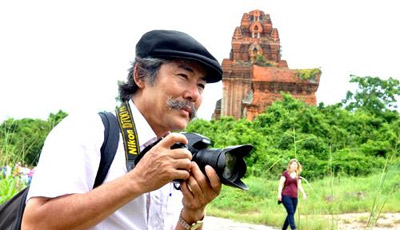
Rural photographer with more than 700 awards
From WIRE REPORT
Coming to photographer very late–but over the past 15 years, photographer Dao Tien Dat in Binh Dinh province has won over 700 national and international awards for photos of humanity and the fates.

Photographer Dao Tien Dat.
Born in Phu My District, Binh Dinh Province, the boy Dao Ngoc Xung (Dao Tien Dat) grew up with fields and did many jobs to earn his living.
In 1980, Dat decided to leave his home to go to the city of Quy Nhon. Then consecutive misfortunes struck Dat while his parents passed away one by one, leaving him in the terrible mood. He realized that the human existence is too fragile.
But during that frustrating time, he accidentally read an article about the life imbued with humanistic aspects of photographer Lewis W. Hine, an American photographer – who broke into factories to reflect the exploitation of child labor. “That article motivated me and urged me to come to photography at the age of 42. I decided to buy an old camera and started shooting,” he said.
In July 1998, he traveled to Kon Tum in the Central Highlands to take his first photos. In that 3-day trip, he grasped many photos of the life of local people.
In 2002, in his first visit to Hoa Thang in Binh Thuan province, the curves of sand on the vast sand dunes in morning light enchanted him. Incidentally, he discovered two women walking up the sand dunes with bamboo frames on their shoulders. So the “Turning Point” was born in a moment of emotion. Two years later, this picture won the gold medal at an international photo contest held in Manila (the Philippines). In the consecutive years, this picture has earned 33 international awards.
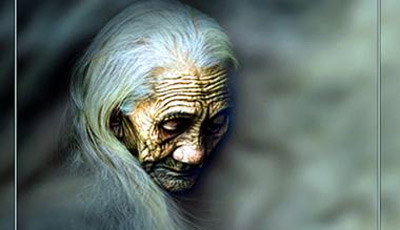
In 2005, during a visit to Cho Lau Town, Bac Binh District, Binh Thuan Province, he bumped into Mrs. Tam, an elderly woman with white hair falling to the ankles. He named the photo of Mrs. Tam as “Time”, which ten won the grand prize in an international photography competition in Italy. In 2006, he returned to Cho Lau to take the photo “Dream of Lifetime.”
This work won many international awards, including the first prize of the Pictorial Print of the Year of the American Photography Association, Photo of the Year medal in Germany, two gold medals, etc.
“Through this picture, I wish to share the greatest dream of human – the wish of immortality. Yet the law of nature is harsh so it is only a dream,” said Dat.
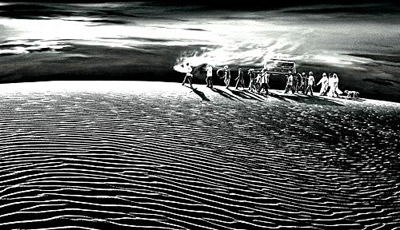
Once he saw a funeral on the sand dunes, silently followed by a dog. The work “Return to Dust” was made and brought him 13 awards including the Gold Medal of the Best of Asia contest in 2006.
In the past 15 years with photography, Dat has won over 700 awards, including 667 international awards. He was appointed many prestigious titles, such as E.VAPA, E.FIAP / b, SAWIEP, Hon EPSM, RISF2, Hon.FtGM…
In 2010, he was honored by the American Photography Association as the No. 1 for black and white photos and small-sized color photos in the Top Overseas PSA Who’s Who in Photography.
Dat is now a member of the Executive Committee of the Vietnam Photographic Artists, Head of the Photographic Artists Branch of the Vietnam Photographic Artists in Binh Dinh province. He was invited as jury member of many local and international photography competitions.
Noting Dat’s dedication throughout many years, Binh Dinh authorities have awarded the A prize of the Dao Tan – Xuan Dieu Arts & Literature Prize for Dat.
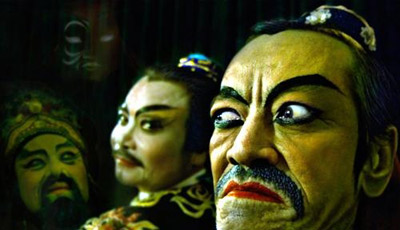
The international award-winning photographs by Dao Tien Dat:

“Turning Point”.

“Return to Dust”

“SOS 2” wins the Best Creative Print of the American Photography Association in 2010.

“In Cold Dew” wins the Best Award for Scenery Photos in the US in 2011.

“Dream of Lifetime”

“Mandarin Faces”.

“Two in One”.

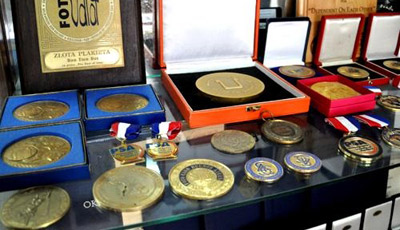
Hundreds of national and international medals and awards of artist Dao Tien Dat.
Hoa Kỳ tham dự hội nghị bộ trưởng quốc phóng ASEAN mở rộng
BANDER SERI BEGAWAN, Brunei (AP) – Đẩy mạnh quan hệ của Hoa Kỳ với châu Á, Bộ Trưởng Quốc Phòng Chuck Hagel hôm Thứ Tư khởi đầu hai ngày hội nghị với bộ trưởng quốc phòng các nước ASEAN tại thủ đô Brunei.

Bộ Trưởng Quốc Phòng Hoa Kỳ Chuck Hagel (trái, giữa hàng đầu) tại hội nghị bộ trưởng quốc phòng ASEAN mở rộng họp ở Brunei hôm Thứ Tư. (Hình: AP/Vincent Thian)
Hội nghị tập trung các giới chức cao cấp quốc phòng của Hoa Kỳ, Trung Quốc, Nhật Bản, Nam Triều Tiên và những cường quốc khu vực khác. Tranh chấp lãnh thổ tại vùng Biển Đông là một trong những đề mục hàng đầu trong chương trình nghị sự.
Trong khi tình hình Syria vẫn là vấn đề đang thu hút mọi sự quan tâm của thế giới, Bộ Trưởng Hagel đã liên lạc qua điện thoại với chính quyền Hoa Kỳ và bộ trưởng quốc phòng các quốc gia đồng minh Âu Châu. Ông cũng hội đàm trực tiếp với bộ trưởng quốc phòng Nam Hàn và Nhật, hai nước Á Châu có mặt trong hội nghị ASEAN mở rộng.
Trước hội nghị, một số bộ trưởng ngoại giao ASEAN đồng ý đưa ra một lập trường thống nhất để thúc đẩy Trung Quốc thương thuyết về một bộ qui tắc ứng xử có tính cách ràng buộc, để giúp ngăn ngừa xung đột trong những vụ tranh chấp lãnh thổ. Theo lời các giới chức Hoa Kỳ, Bộ Trưởng Chuck Hagel có kế hoạch khuyến khích những cuộc thảo luận như vậy khi ông gặp người tương nhiệm Trung Quốc, tướng Thường Vạn Toàn, bên lề hội nghị.
Hội nghị bộ trưởng quốc phòng ASEAN mở rộngsẽ giúp đặt nền tảng làm việc cho hội nghị thượng đỉnh Đông Á được tổ chức vào tháng 10 năm nay, với sự tham dự của các nhà lãnh đạo thế giới trong đó có Tổng Thống Barack Obama. (HC)
Domestic ice cream market heats up
From WIRE REPORT
After fast food, it is the ice cream market now which heats up every day.

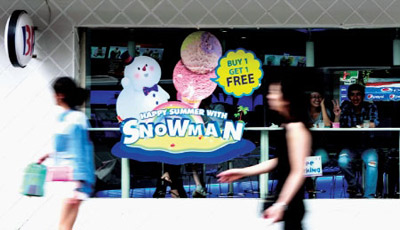
ice cream market, Trang Tien. Photo from VietnamNet Bridge.
Ice cream market – the new destination for investors
In 2012, Nguyen Hieu Liem, Vice President of Anova, specializing in farm produce and real estate, decided to jump into a quite unfamiliar business field to him – making ice cream.
Liem became the President of Ngoi Sao Xanh Company and immediately opened three Baskin Robbins ice cream shops in Sai Gon under a franchise agreement with the US brand. The volume of ice cream sold in the first two months of 2013 was unexpectedly high, equal to the volume of cream planned for the whole year’s sale.
Especially, on Tet days (in February), the sale went so well that Ngoi Sao Xanh had to carry ice cream to Sai Gon by air.
Baskin Robbins ice cream hit the Hanoi market in mid-2013, kicking off the company’s plan to expand its business. The next destinations would be Binh Duong, Dong Nai, Da Nang and Can Tho.
Liem has stated that he would open 50 shops nationwide in the next five years. If the plan is implemented, Vietnam would have one more Baskin Robbins shop a month.
While the fast food market has become noisy with the presence of a lot of the world’s well-known brands in Vietnam, thus creating a “red ocean” battle, the ice cream remains very attractive with fewer competitors.
While more and more Baskin Robbins shops have been opened in Vietnam just within a short time, Haagen-Dazs, developed in Vietnam by International Lifestyles JSC, has been taking cautious steps in the domestic market.
The company has just opened the second shop after the success with the first one on Han Thuyen Street in Sai Gon.
Other ice creams, such as Fanny, Swensen or Bud’s have also taken the first steps to conquer the Vietnamese market.
Fanny, Swensen, Bud’s cũng bắt đầu có những bước đi táo bạo như Baskin Robbins.
High profits expected
Liem believes that Ngoi Sao Xanh would begin making profit by the end of 2013, though he did not expect profits within the first three years of operation. Baskin Robbins, the franchiser, also thinks that should only expect to reap fruits after three years of investment.
Meanwhile, the business in Vietnam was thought to be less optimistic because of the low income per capita. However, the rapid expansion of Baskin Robbins shops has proved that the theory of making profits after three years of investment is not true in Vietnam.
According to Liem, Vietnam’s income per capital remains low, but Vietnamese population is young, while Vietnamese always like new discoveries. The only thing he needs to do is to provide the products fitting Vietnamese taste.
Even Haagen-Dazs which sets up very high price of about VND100,000 per product, also believes that Vietnam is a potential market for it.
In Vietnam, a person with the monthly income of VND10 million is considered a high income earner.
Since its very first days in Vietnam, the ice cream brand has not been targeting the majority of clients, but only the high income earners who always demand high quality products.
Analysts believe that the ice cream market would be heating up more, as the import tariff on ice cream, after reducing from 75 percent to 30 percent, is expected to decrease further.
VN car industry still stuck in reverse
From WIRE REPORT
Viet Nam’s automobile industry had failed to reach its objective of selling cars at prices to suit Vietnamese pockets.

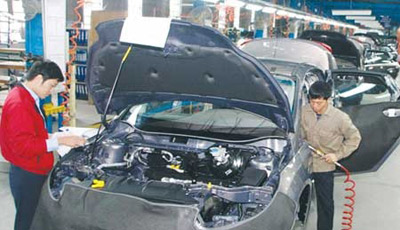
Workers assemble a five-seat car at the Ford Viet Nam Company’s factory in Cam Giang District in the northern province of Hai Duong. According to the Ministry of Industry and Trade, Viet Nam’s automobile industry has failed to sell cars at prices to suit the budgets of domestic consumers.
The remark was made by the Director of the Industry and Trade Ministry’s Heavy Industry Department, Nguyen Manh Quan.
Prices were still high compared with those in other regional countries, Quan said at an online seminar held by Cong Thuong (Industry and Trade) newspaper on Thursday.
“The cost of cars in Viet Nam is about 20 per cent higher than in other ASEAN countries because domestic output is low and most assembly lines are operating at about 50 per cent of capacity,” said Quan.
Viet Nam’s automobile industry involves Toyota, Ford, Nissan and Mercedes.
There are 18 FDI and 38 domestic businesses making and assembling cars. They have a capacity of about 460,000 vehicles a year.
The sector pays more than US$1 billion in taxes annually and creates job for about 80,000 people.
At the seminar, experts said the industry was so sluggish because of the low rate of making parts locally, taxes and fees.
Quan said the localisation rate had risen from 7 to 10 per cent for small car and 35-40 per cent for light-duty trucks, but this was still very low compared with the target.
To buy a car, Vietnamese have to pay eight types of taxes and fees, including import tax, special consumption tax, VAT, vehicle owner registration fee, car registration fee, car number granting fee and road transport fee.
Experts are worried that by 2018, when Viet Nam completely joins in the ASEAN Free Trade Area, the tax on imported cars will be zero.
This means that if the Government does not change its policies, the domestic industry will fail to compete with others in the region.
CEO of Ford Viet Nam and chairman of the Viet Nam Automobile Manufacturers Association Jesus Arias said his members wanted a concrete itinerary for industry development from now until 2018 so that they could set up business plans.
Arias said stable policies helped enterprises to predict outcomes so that they could set up parts suppliers who could join in the global network.
To achieve this, the industry needed to produce a specific number of cars. To make a car, thousands of parts are needed. No car maker can produce all parts by themselves, said Arias.
To develop, a sizable market is needed and proper policies to attract investors.
Head of the Industrial Policy and Strategy Institute Duong Dinh Giam said the Government was determined to develop the car industry.
“Automobile development is an indispensable trend of every nation when average incomes reach $3,000 a year or more. Therefore, we need to take advantage of this trend,” said Giam.
The average income of Vietnamese is estimated to hit $1,900 per head this year, according to a recent report from the General Department of Statistics.
Giam also said the Government had limited the sale of personal vehicles in the past because the traffic system was so inadequate.
However, the Viet Nam Transport Development Strategy approved in February plans to have about 3.2-3.5 million vehicles on the road by 2020, compared to nearly 1.65 million at present.
LỄ HỘI CARNIVAL Ở LONDON
Lễ hội Notting Hill Carnival vừa diễn ra ngày 26 tháng 8 năm 2013 tại London, Anh quốc. Ước tính có hơn một triệu người chứng kiến lễ hội năm nay. Đây được coi là một trong những lễ hội đường phố lớn nhất ở Âu châu Âu. Nó được tổ chức lần đầu tiên vào năm 1964 bởi cộng đồng Afro – Caribbean . (Loạt hình ảnh của Matthew Lloyd / Getty Images)
[toggle title=” “]
[/toggle]
TIN LŨỚT
Việt Nam
- Việt Nam cho đổi tên “Cục Cảnh Sát Biển” thành “Bộ Tư Lệnh Cảnh Sát Biển” đồng thời tên tiếng Anh đổi từ “Vietnam Marine Police” thành “Vietnam Coast Guard.”
- Lực lượng biên phòng tỉnh Nam Ðịnh bắt quả tang một chiếc tàu của Miến Ðiện bán dầu trái phép cho một tàu biển Việt Nam ngay trong vùng biển tỉnh này.
- Một căn nhà trong chung cư Ngô Gia Tự, quận 10, Sài Gòn bốc cháy khiến hàng trăm người dân sống tại đây hoảng hốt tháo chạy.
- Công an đang truy lùng một hung thủ cắt cổ hai người trước cổng trường tiểu học Tân Tạo A, quận Bình Tân, Sài Gòn, rất may hai nạn nhân chỉ bị thương khá nặng.
Cộng Ðồng/Ðịa Phương
- Ủy Ban Quy Hoạch Huntington Beach họp tối Thứ Ba để nghiên cứu việc biến một sân tập bắn cũ, rộng 5 mẫu, thành nơi giải chí công cộng và công viên thành phố.
- Anh Gabriel Michael Castillo, 19 tuổi, con của một lính cứu hỏa, vừa bị bắt hôm Chủ Nhật vì tình nghi đốt cỏ dại ở Yorba Linda và Anaheim, và phải đóng $100,000 tiền tại ngoại.
- Người phụ nữ lái xe bị tử nạn vì đụng gốc cây trong khu con lươn giữa đường ở Laguna Niguel vừa được nhận dạng là bà Christal Schrader, 31 tuổi, cư dân Mission Viejo.
- Cảnh sát Santa Ana vừa bắt giữ một người đàn ông gốc Việt tên Michael Truong Pham, 33 tuổi, cư dân Garden Grove, gây đụng xe chết người rồi bỏ chạy, sau đó gọi báo cho cảnh sát và trở lại hiện trường.
Hoa Kỳ
- Trang mạng HollywoodLife.com nói ABC News nhầm lẫn khi gửi “tweet” rồi sau đó xóa đi, nói rằng Neil Armstrong, người đầu tiên lên mặt trăng qua đời, trong khi cựu phi hành gia này chết từ năm ngoái.
- Thống Ðốc Jerry Brown của California đưa ra kế hoạch tốn $1.1 tỉ trong ba năm, nhằm đưa 8,000 tù nhân ra khỏi nhà tù tiểu bang và gởi họ đến các nhà giam dân sự và địa phương.
- Số vụ chận xét xe ở thành phố New York trong mấy tháng qua giảm xuống đến mức chưa từng thấy trong một thập niên.
- Bé gái 10 tuổi ở Pennsylvania được thay phổi hai lần, vừa trở về nhà sau sáu tháng nằm lại ở bệnh viện nhi đồng Philadelphia.
Thế Giới
- Israel thề sẽ phản ứng “quyết liệt” nếu Syria hay các lực lượng ủng hộ Syria tấn công họ, trong bối cảnh Mỹ có thể can thiệp quân sự vào Syria.
- Một cao ốc thương mãi ở Sao Paulo, Brazil, bị sập trong khi đang xây dở dang khiến ít nhất 6 người chết, 11 người khác được kéo ra khỏi đống đổ nát.
- Bộ trưởng Giáo Dục Liberia nói tất cả gần 25,000 học sinh thi tuyển vào đại học năm nay không có một ai đủ điểm đậu.
- Một đặc sứ của Bộ Ngoại Giao Mỹ sẽ đến Bắc Hàn tìm cách trả tự do cho ông Kenneth Bae, công dân Mỹ bị bắt từ Tháng Mười Một năm ngoái.
25 năm huấn luyện và tu nghiệp sư phạm Việt ngữ
Tiếng Việt giữa thế giới
Trangđài Glassey-Trầnguyễn
1. Chủ đề: yêu nước, giữ nước
Khóa Huấn Luyện và Tu Nghiệp Sư Phạm kỳ 25 (xin gọi tắt là Khóa TNSP 25) do Ban Ðại Diện (BÐD) các Trung Tâm Việt Ngữ miền Nam California tổ chức đã diễn ra trong ba ngày 16 đến 18 Tháng Tám, 2013 tại Trung Tâm Le-Jao Center, Coastline Community College, thuộc thành phố Westminster, California. Năm nay, thầy Vũ Hoàng lại tiếp tục đảm trách vai trò trưởng Ban Tổ Chức (BTC).

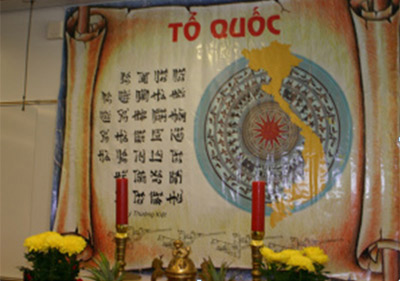
Bàn Thờ Tổ Quốc tại Khoá TNSP. (Hình: Trangđài Glassey-Trầnguyễn)
Nói về chủ đề của Khóa TNSP 25, thầy Nguyễn Văn Khoa, Chủ tịch BÐD chia sẻ, “Chủ đề của khóa Huấn Luyện và Tu Nghiệp Sư Phạm kỳ thứ 25, cũng của năm thứ 25 này là ‘Sứ Mệnh Của Thầy Cô Trong Công Cuộc Chống Ngoại Xâm, ‘ mang mục đích cụ thể rõ ràng: Chúng ta muốn thế hệ con em sau này biết về nguồn cội Việt Nam, biết là đất nước cha ông của chúng ta đang bị quốc gia phương Bắc xâm chiếm. Thân thể bị chém đi từng chút, từng chút, liệu chúng ta có chịu được sự đau đớn như thế mãi không?! Lòng yêu nước là một đặc tính cốt lõi quan trọng nhất, thể hiện bản sắc của một văn hóa và nói lên sức sống của một dân tộc. Ðiều đáng chê bai, khinh chê hơn bất cứ điều sai phạm nào khác của một con người, đứng về phương diện đất nước, là phần tử cõng rắn cắn gà nhà, là bọn bán nước cầu vinh. Các em học sinh học tiếng Việt phải học và biết rõ về điều này.”
Sáng Thứ Bảy, GS Lưu Trung Khảo và nhà văn Trần Phong Vũ đã mở đầu chương trình học với bài nói chủ đề. GS Khảo nhấn mạnh ba điểm chính, “Thứ nhất, dân tộc Việt Nam là dân tộc duy nhất sau hơn mười thế kỷ bị người Tàu đô hộ, mà không bị đồng hóa, vẫn giữ được ngôn ngữ, phong tục tập quán, bản sắc dân tộc để giành lại độc lập tự chủ. Tiếng Việt chính là quốc bảo của dân tộc ta. Thứ hai, từ đầu thế kỷ XX, văn hào Nguyễn văn Vĩnh đã có câu danh ngôn: ‘Nước Nam ta sau này hay hay dở cũng là nhờ ở chữ quốc ngữ.’ Từ đó đến nay, chữ quốc ngữ và tiếng Việt đã vượt biên giới mà lan rộng ra khắp nơi trên thế giới. Nơi nào có cộng đồng Việt Nam cư ngụ là nơi đó có chữ quốc ngữ và tiếng Việt. Thứ ba, trên bàn thờ Tổ quốc tại Khóa TNSP này có bài thơ Nam Quốc Sơn Hà của danh tướng Lý Thường Kiệt:
Nam quốc sơn hà Nam đế cư
Tiệt nhiên định phận tại Thiên thư
Như hà nghịch lỗ lai xâm phạm
Nhử đẳng hành khan thủ bại hư
Tạm dịch:
Non sông Nam quốc sẵn vua rồi
Ðã định rành rành ở sách trời
Tầu khựa cớ sao xâm phạm tới
Rồi đây bay sẽ bị tơi bời.
Liên tưởng đến một dòng sử yêu nước từ xưa đến nay, GS Lưu Trung Khảo nói, “Tầu Khựa là chữ của người sinh viên trẻ Nguyễn Phương Uyên đã dùng máu của chính mình viết nên biểu ngữ Tầu Khựa Cút Khỏi Biển Ðông. Hào khí của tuổi trẻ Việt Nam đang bừng bừng bốc dậy, giúp họ từ bỏ thái độ vô cảm, vượt được nỗi sợ hãi đứng lên cứu nguy đất nước.”
Nhà văn Trần Phong Vũ đã bộc bạch, “Chủ đề của khóa TNSP quá rộng cho một buổi hội thảo chỉ có một tiếng đồng hồ với hai thuyết trình viên.” Tuy biết trước sẽ chẳng nói được hết về chủ đề, nhưng Nv Trần Phong Vũ vốn là một học giả có tài hùng biện, ứng khẩu thành văn. Từ phần nói chuyện của GS Khảo, ông đã dẫn vào phần ứng dụng chủ đề này đối vối các thầy cô giáo ở hải ngoại.
NV Trần Phong Vũ đã nêu lên trường hợp hai nhân vật đều là nhà giáo, ”Ðó là cô Nguyễn Thị Bích Hạnh, chỉ vì khuyên học sinh của mình theo dõi Internet để tìm thêm dữ kiện cụ thể trong khi làm bài nên đã bị đuổi việc phải về nhà làm ruộng. Trường hợp thứ hai là cô Ðỗ Thị Thoan, bút danh Nhã Thuyên, giảng viên ÐH Sư Phạm Hà Nội, người đã được chấm điểm 10 cho luận án tốt nghiệp Thạc sĩ với đề tài ‘Vị trí của Kẻ Bên Lề: Thực hành thơ của Nhóm Mở Miệng từ góc nhìn văn hóa’ từ năm 2010 vừa bị hệ thống truyền thông của chế độ mạt sát, lên án đến nỗi nhà phê bình văn học Phạm Xuân Nguyên đã so sánh vụ này với vụ Nhân Văn Giai Phẩm hơn nửa thế kỷ trước…”
NV Trần Phong Vũ đã ôn lại hai sự kiện điển hình này song song với vụ án phúc thẩm hai em Phương Uyên và Nguyên Kha mới đây, để dẫn vào chủ điểm mà ông muốn đặt vấn đề cho quý thầy cô: “Những nhà giáo và những người trẻ trong nước can đảm đương đầu với chế độ công an trị, dám cất lên tiếng nói lương tâm của mình bất chấp những đòn thù của đảng và nhà nước cộng sản thì chúng ta, những người làm giáo dục trên một đất nước tự do như Hoa Kỳ, chúng ta nghĩ gì và phải làm gì trước hiểm hỏa xâm lược của Trung Cộng hiện nay?” Câu hỏi này chính là một suy tư cần thiết để quý thầy cô tự đề ra cho mình một cách giảng dạy thích hợp.
2. Sống chết với tiếng Việt
Lần đầu tiên tôi được vinh dự theo học Khóa TNSP do BÐD tổ chức là vào hai thập niên trước. Hai mươi năm sau, giáo trình và chủ đề có thay đổi để đáp ứng những nhu cầu giáo dục mới, nhưng rường mối của Khóa TNSP vẫn vậy: nhiệt huyết của quý thầy cô khóa sinh, sự phục vụ hết mình của BTC, tất cả một lòng vì tiếng Việt và văn hóa dân tộc.
GS Trần Huy Bích, một học giả lỗi lạc uyên bác, đã giới thiệu với Thầy Cô về Văn hóa Việt Nam đại cương. Thầy khiêm nhu nói, “Học viên dự các lớp TNSP là những thầy cô giáo đã hy sinh thời giờ, tâm lực… dạy các em nhỏ để giữ gìn tiếng Việt. Tôi rất quý trọng anh chị em, coi tất cả là những người bạn trẻ tuổi của mình. Tôi tới để chia sẻ kiến thức, kinh nghiệm… chứ không muốn dùng từ ‘dạy.’”
Bài học quan trọng nhất về văn hóa Việt Nam, là chúng ta có một nền văn hóa đặc sắc và độc lập, khác với văn hóa Trung Quốc. GS Trần Huy Bích nhấn mạnh, “Một hiểu lầm quan trọng qua nhiều thế hệ là văn hóa Việt Nam đến từ Trung Hoa. Gần đây, nhiều học giả trên thế giới đã tìm ra nguồn gốc của Văn hóa Việt Nam, thuộc nền văn hóa Ðông Nam Á, vốn là một nền văn hóa lớn và lâu đời trên thế giới.” Có nhiều giả thuyết cho rằng, đây là cái nôi của nền văn hóa nhân loại.
Cùng tư tưởng với GS Trần Huy Bích, thầy Nguyễn Văn Khoa, chủ tịch BÐD nói, “Trong quá khứ và ngay cả bây giờ, chúng ta được ai đó cho Việt Nam là một nước nhược tiểu bên cạnh một đất nước vĩ đại là Trung Hoa, nên hãy chấp nhận sự thấp kém ấy đi! Ý nghĩ tiêu cực này hoàn toàn không đúng, 100% không đúng. Hãy nhìn các quốc gia lân bang còn nhỏ bé hơn chúng ta về dân số, về diện tích đất đai, về tài nguyên thiên nhiên mà họ có nói họ là nhược tiểu đâu. Họ đâu có chấp nhận là đàn em của ai và họ có thua kém gì ai đâu! Trong lịch sử, đế quốc Anh, đế quốc Pháp, đế quốc Ðức cũng đâu cần đến một tỷ người để trở thành một cường quốc. Cái ý tưởng hèn kém, nhược tiểu từ đâu đó đưa vào hoặc có lẽ từ giặc‘nội xâm’đưa ra, đều mang dã tâm đưa đất nước Việt Nam vào vòng lệ thuộc. Khi niềm tự hào dân tộc không còn, khi ý chí kiên cường quật khởi của con dân Việt Nam không còn, thì chuyện gì sẽ xảy ra? Các em học sinh học tiếng Việt phải học và biết rõ về điều này.”
Do đó, cũng theo lời thầy Nguyễn Văn Khoa, “Qua khóa học năm nay, ngoài việc các thầy cô trau dồi về chuyên môn, chúng tôi còn mong đợi ở các thầy cô hai điều quan trọng: một là nung đúc lòng yêu nước và hai là nuôi dưỡng niềm tự hào dân tộc. Ðó là hành trang rất cần cho chính thầy cô và cho học sinh của họ.”
Bên cạnh những trách nhiệm quan trọng trong việc hun đúc lòng yêu nước qua bài giảng, các Thầy Cô cũng đối diện với nhiều thử thách mới trong việc giảng dạy Việt ngữ hiện nay. Trong giờ “Phương pháp dạy lớp đặc biệt, ” các thầy cô đã đặt ra câu hỏi về việc hướng dẫn các học sinh tự kỷ. Nhiều thầy cô có kinh nghiệm dạy học sinh tự kỷ tại các trường công đã đưa ra một số nhận xét và gợi ý.
Thầy Lê Kim Hạng, hiệu trưởng của trường Việt Ngữ Văn Lang ở Portland, Oregon, nói, “Với trung bình 650 học sinh thì có khoảng hai ba em có bệnh tự kỷ. Khi các em có phản ứng trong lớp, thầy cô tách em học sinh đó với những em học sinh khác trong lớp và tạm dành cho em đó khoảng không riêng cho đến khi em trở lại bình thường. Ðôi khi có em cần sự quan tâm đặc biệt và tức khắc. Giáo viên nên cố gắng dành thời gian tìm hiểu cá tính từng học sinh để biết cách ứng phó trong những trường hợp như vầy. Phần phụ huynh, đừng ngần ngại chia sẻ bệnh trạng của con em mình với giáo viên trực tiếp đứng lớp và cung cấp chi tiết cách ứng phó khi con em họ có bệnh ứng.”
Nhưng cho dù khó khăn đến đâu, thì sự chung thủy đối với tiếng Việt và văn hóa mẹ vẫn đầy tràn trong quý thầy cô. Thầy Vũ Hoàng, trưởng BTC, xúc động kể lại sự lo lắng của mình khi 3 tuần trước Khóa, mà BTC chỉ nhận được có 88 đơn ghi danh. Làm sao để tổ chức một khóa thứ 25 thành công khi không có khóa sinh? Nhưng, thầy Hoàng nói, “Trời thương! Một tuần trước Khóa, chúng tôi nhận được 228 đơn. Không có gì hạnh phúc hơn cho người tổ chức là các thầy cô ghi danh tham dự. Chúng tôi tổ chức khóa mà không có thầy cô tham gia thì cũng vô nghĩa. Nếu tôi còn ở đây năm tới, tôi sẽ tiếp tục tổ chức khóa.”
Ðáp lại sự tha thiết của BTC, nhất là vị trưởng ban tuy cao tuổi nhưng nhiệt huyết còn tràn đầy như của một thanh niên, rất nhiều quý thầy cô đã phát biểu và quyết tâm, “Em sẽ trở lại năm sau. Và rất mong được gặp mọi người như hôm nay.”
BTC cũng dày công thực hiện đặc san kỷ niệm lần thứ 25 tổ chức Khóa TNSP. Quý độc giả có thể liên lạc BÐD để có được tác phẩm giá trị này: 714 799 0321, hay tavietlcs@yahoo. com.
3. Tương lai của tiếng Việt
Phát biểu trong lễ bế mạc Khóa TNSP 25, TS George Dutton, giáo sư và giám đốc Trung Tâm Ðông Nam Á Học tại đại học UC Los Angeles, đã nói, ”Ở đầu thế kỷ 20, các học giả đặt vấn đề liệu tiếng Việt sẽ tồn tại, hay người ta sẽ dùng tiếng Pháp tại Việt Nam. Lúc đó, tương lai tiếng Việt còn chưa chắc chắn. Nhưng ở thế kỷ 21, chúng ta biết rõ, tương lai tiếng Việt còn rất xa!”
Tại hải ngoại, giữ gìn tiếng Việt là căn cước của việc tu thân, là mẫu số chung cho tất cả những dấn thân cho một Việt Nam tốt đẹp hơn. Nếu mỗi bậc cha mẹ Việt Nam ở bất cứ nơi nào trên thế giới đều đặt việc nuôi dưỡng lòng yêu nước làm đầu, thì chúng ta không bao giờ sợ mất nước. Chính tư tưởng bảo vệ đất nước sẽ là bàn đạp, đưa những người con Việt về chống nạn ngoại xâm, hay đứng ra vận động với thế giới cho sự toàn vẹn lãnh thổ của quê hương mình ở bất cứ nơi nào. Nếu chúng ta lấy văn hiến làm cờ, lấy lịch sử kiên cường làm vũ khí, lấy chính nghĩa làm chiến lược, lấy sự đồng lòng làm thế tấn công, thì sẽ đẩy lùi được bất cứ một quân đội đồ sộ nào. Trận Lĩnh Nam, trận Bạch Ðằng, trận Ngọc Hồi, và bao nhiêu trận khác trong thanh sử đã chứng tỏ sự chiến thắng của lòng quyết tâm và đồng tâm.
Tiếng Việt chính là trung tâm và linh hồn của quá trình tu thân và nuôi dưỡng lòng yêu nước trong khung cảnh hải ngoại ở thế kỷ thứ 21. Thai giáo là thời điểm tốt nhất để bắt đầu gieo hạt mầm yêu nước, và môi trường gia đình cộng đồng là miền đất trù phú nhất để vun trồng những tâm hồn vì nước. Mỗi người dân Việt đóng một vai trò thiết yếu trong việc khẳng định và bảo vệ chủ quyền Hoàng Sa, Trường Sa. Nếu mỗi người dân Việt ở mọi nơi trở nên một thầy cô giáo Việt ngữ, cùng lên tiếng nói chống lại sự xâm lược của Trung Cộng, thì chủ quyền của Việt Nam tại Biển Ðông chắc chắn sẽ được bảo tồn.
Và lẽ phải, công lý, và hòa bình sẽ đến trên quê hương, dân tộc, và mỗi người chúng ta. Chúng ta cùng cầm đuốc với người trẻ, chuyển cho họ vai trò lãnh đạo và đấu tranh, và tiếp tục cùng họ sánh bước. Con em chúng ta học tiếng Việt để giữ nước Việt. Chúng ta cùng dạy tiếng Việt để vững nước Việt với các em.
Chính quý thầy cô là những trang sách thơm tho, đẹp đẽ, và thú vị nhất đối với các em. Chính lòng yêu nước của quý thầy cô là niềm cảm hứng trực tiếp nhất và mạnh mẽ nhất để đưa các em về gần hơn với mảnh đất quê hương thiêng liêng. Sự hy sinh thời gian cuối tuần của thầy cô, công sức dạy dỗ của thầy cô, là những món quà văn hóa đẹp nhất. Xin cám ơn quý thầy cô vẫn luôn miệt mài với sứ mạng giao truyền di sản văn hóa, ngôn ngữ của quê hương lại cho các thế hệ sau.
Nhiệt tình của quý thầy cô là yếu tố quan trọng nhất cho những thành quả của việc giảng dạy Việt Ngữ trong suốt 40 năm qua tại hải ngoại. Xin trân trọng cám ơn các thầy cô đã đảm đang trách nhiệm này với hết tấm lòng. Niềm đam mê giữ gìn và phát huy ngôn ngữ văn hóa Việt Nam nay không chỉ là sứ mạng của riêng cộng đồng chúng ta, mà của cả nền giáo dục Hoa Kỳ và nhiều nước khác trên thế giới.
Kính chúc Ban Ðại Diện, Ban Tổ Chức, quý vị giảng viên và thuyết trình viên, và quý Thầy Cô nhiều sức khỏe để tiếp tục gánh vác trọng trách gìn giữ tiếng nói, văn hóa Việt Nam tại hải ngoại, như một ý thức và hành động yêu nước-giữ nước.
(Nguồn: sangtao@org)
Biện pháp của Obama với Syria: Giới hạn mục tiêu và hành động
Nguyễn Văn Khanh
“Thế nào cũng đánh,” một nhà báo Trung Ðông nói với các đồng nghiệp trong lúc chờ nghe cuộc họp báo hàng ngày của Tòa Bạch Ốc.
“Tin tức dồn dập lắm rồi,” ông bạn đồng nghiệp nói tiếp, kể ra một dọc những lý do khiến ông tin chắc chắn Hoa Kỳ sẽ can dự vào cuộc chiến Syria. Lý do đầu tiên được nói đến là bài phát biểu Ngoại Trưởng John Kerry đọc chiều Thứ Hai ở Bộ Ngoại Giao, trong đó có những đoạn như Washington “có những bằng chứng mà Syria không thể chối cãi” xác nhận quân đội trung thành với Tổng Thống Bashar Al-Assad đã sừ dụng võ khí hóa học giết chết hơn 350 người hôm Thứ Tư tuần trước, đi kèm với câu hành động tàn ác này “đã làm rung động lương tâm nhân loại,” kế đến là câu nói của ông Tổng Trưởng Quốc Phòng Chuck Hagel khi trả lời phỏng vấn đài BBC, cho hay “quân đội đã sẵn sàng” chỉ còn chờ chỉ thị của vị tổng tư lệnh để bắn phát súng đầu tiên.

Phó Tổng Thống Joe Biden, trong buổi nói chuyện tại Houston hôm Thứ Ba, nói rằng chắc chắn chính phủ Syria sử dụng vũ khí hóa học. (Hình: AP Photo/Houston Chronicle, Johnny Hanson)
Mặc dù ông phát ngôn viên Jay Carney nói “tổng thống vẫn đang cân nhắc” những đề nghị được dàn cố vấn đặt trên bàn làm việc, nhưng từ sáng sớm hôm qua (Thứ Ba, 27 tháng 8, 2013) mọi người đều hỏi nhau câu “bao giờ sẽ đánh” hoặc “đánh như thế nào.” Từ sáng sớm nhật báo The Washington Post đã đưa tin tổng thống Hoa Kỳ đang nghiêng về đề nghị thực hiện một cuộc oanh kích “kéo dài chừng 2 ngày,” phá hủy những cứ điểm chiến lược của quân đội Syria. Lúc giữa trưa, bản tin của hãng thông tấn Reuters gửi từ Thổ Nhĩ Kỳ lúc cho biết trong cuộc họp kín ở Istanbul hồi chiều Thứ Hai, đại diện của Hoa Kỳ đã báo cho đại diện lực lượng nhân dân nổi dậy Syria biết là “đừng ngạc nhiên” khi thấy Mỹ và đồng minh cùng thực hiện những cuộc oanh kích hay giội bom nhắm vào các căn cứ quân sự của Syria.
Tin loan tải trên tờ báo uy tín nhất nhì nước Mỹ cũng là tin được nói đến ở Washington D.C. ngay từ những ngày cuối tuần, cho biết 3 mục tiêu mà Washington nhắm tới là phá hủy các đơn vị phòng không và trọng pháo của Syri, đồng thời làm tê liệt hoạt động của không quân nước này, nhưng không đụng tới những kho võ khí hóa học của Damascus. Ðiều khác biệt là tờ Post nói cuộc oanh kích được thực hiện bằng cách bắn hỏa tiễn từ ngoài khơi vào, không quân Hoa Kỳ cũng sẽ tham gia “nếu thấy cần thiết,” trong khi nhà báo J.J. Green của đài CBS lại kể với mọi người tin ông nghe được “từ 2 viên chức cao cấp quốc phòng” là “4 chiến hạm của Hoa Kỳ đang có mặt tại Ðịa Trung Hải sẽ đảm trách việc bắn hỏa tiễn chứ không sử dụng không quân” vì hệ thống phòng không của Syria được xem là “một trong những hệ thống phòng không mạnh nhất và tinh nhuệ nhất Trung Ðông.”
Chưa biết đúng sai như thế nào, nhưng những tin được tung ra từ thủ đô Wahington D.C. đều nói mức độ can dự ở Syria mà Tổng Thống Obama cho thực hiện chỉ là một chiến dịch quân sự ngắn hạn “đánh thật nhanh, kết thúc thật chóng,” nhắm mục đích trừng phạt chứ không nhắm tới mục tiêu lật đổ chính phủ đương thời ở Damascus. Tin chưa kiểm chứng được cho hay trong cuộc họp kéo dài 3 giờ đồng hồ với Hội Ðồng An Ninh Quốc Gia sáng Thứ Bảy tuần trước, Tổng Thống Obama nhấn mạnh ông “không muốn can dự quá sâu ở Syria,” vẫn muốn tìm một giải pháp chính trị để loại trừ ông Al-Assad. Nghe đâu giải pháp này được sự ủng hộ của ông Tổng Trưởng Chuck Hagel và Ðại Tướng Tổng Tham Mưu Trưởng Martin Dempsey, người từng viết bản báo cáo quân sự cho hay nếu tham chiến, “Hoa Kỳ cần phải đưa ít nhất 75,000 binh sĩ vào chiến trường.”
“Con số 75,000 binh sĩ là con số rất lớn,” theo nhận xét của ông William Cohen từng làm việc ở Tòa Bạch Ốc dưới thời Tổng Thống Bill Clinton. “Tôi chẳng bao giờ nghĩ ông Obama sẽ đưa một lực lượng lớn như thế vào Syria,” ông bảo tiếp, “nhưng ai ai cũng hiểu là chính phủ Al-Assad đã vượt lằn đỏ (red line) và Hoa Kỳ phải có phản ứng.” Ông cựu nhân viên Hội Ðồng An Ninh Quốc Gia ủng hộ “một mức độ trừng phạt thật cứng rắn nhưng có giới hạn” vì theo ông giải thích, “chúng ta không nên can dự quá sâu vào nội bộ của Syria, nên tiếp tục lên tiếng ủng hộ lực lượng nhân dân chống độc tài nhưng để cho họ tự giải quyết với nhau.”
Không can dự quá sâu nhưng “trái hỏa tiễn đầu tiên từ ngoài khơi bắn vào Syria chắc chắn sẽ thay đổi cục diện cuộc chiến” là nhận xét của chuyên gia Mark McCoy từng nằm trong ban cố vấn về quân sự cho ứng viên Cộng Hòa Mitt Romney. “Ngay từ ngày đầu phe nổi dậy ở Syria đã lên tiếng yêu cầu Hoa Kỳ can thiệp, từ lâu Tổng Thống Obama đã bị áp lực chính trị buộc phải làm điều này, đây là lúc ông Obama có thể làm hài lòng những người từng gây áp lực với ông, đồng thời chứng tỏ cho người dân Syria biết là ông đứng về phe họ.” Chuyện sau đó là “phe nổi dậy chống ông Al-Assad phải biết nắm lấy lợi thế chính trị do Hoa Kỳ dựng lên để nắm chính quyền.”
Không rõ sau này phe nổi dậy ở Syria có biết cách nắm lấy lợi thế chính trị đó hay không, nhưng câu hỏi ngay lúc này vẫn là: bao giờ tổng thống Hoa Kỳ sẽ loan báo quyết định của ông? Tin mới nhất cho biết “chỉ nội trong vài ngày nữa.” Một vài ngày nữa là lúc nào? Giới thạo tin nói “khoảng cuối tuần, ngay sau khi đoàn thanh tra Liên Hiệp Quốc rời khỏi Damascus.”
Nơi tiết lộ vụ Watergate sắp bị san bằng
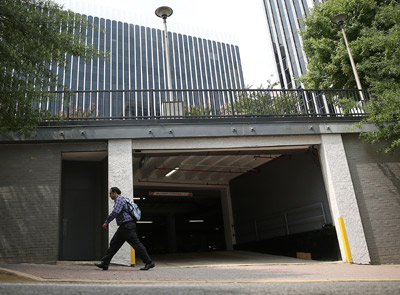
ARLINGTON, Virginia – Trong hình là một người đàn ông đi qua garage khách sạn Watergate, Arlington, Virginia, hôm 27 Tháng Tám.

Ðây là nơi ký giả Bod Woodward của báo Washington Post gặp ông Mark Felt, nhân vật số 2 của FBI và có bí danh là “Deep Throat,” sáu lần để trao đổi tin tức về vụ đảng Cộng Hòa nghe lén đảng Dân Chủ hồi năm 1972 và năm 1973. Chính vụ này làm cho Tổng Thống Richard Nixon phải từ chức một năm sau. Trong những ngày tới, garage này sẽ bị san bằng để lấy chỗ xây thêm nhà. (Hình: Mark Wilson/Getty Images)
Thơ Tăng Giao Hoàng Mai Thảo
Tập dưỡng sinh
Thuận theo quy luật âm dương.
Vận hành cơ thể máu thường lưu thông,
Cơm rau hai bữa no lòng
Ẩm thực thanh đạm, hơn dùng cao lương.
Bình minh thức dậy ra vườn,
Ðồng không hít thở chớ vương vấn sầu,
Vì tiền lo nghĩ đêm thâu,
Vui nghèo khỏe mạnh sống lâu an nhàn.
Ganh đua lắm bạc nhiều vàng,
Tổn hao khí huyết, thuốc thang hằng ngày,
Từ xưa cho đến ngày nay,
Bạc vàng chồng chất có thay mạng người?
Ai ơi sản nghiệp thặng dư,
Mở lòng chia sẻ cho người thiếu ăn,
Ðời này gieo quả thiện căn
Là Bồ-tát hạnh, Thánh Giăng trong đời.