Y viện châm cứu Maum Clinic Acupuncture
Tận tụy hết lòng vì bệnh nhân
Bài: Thái Lâm
Khác với phương pháp chữa bệnh Tây y, phương pháp trị liệu Đông y gồm Châm cứu, Bấm huyệt, Massage kết hợp với thuốc uống bào chế từ dược thảo là một phương pháp được thời gian chứng minh là vô cùng kỳ diệu, lại hạn chế can thiệp quá nhiều lên cơ thể người bệnh, như mổ xẻ, v.v… Ngoài khả năng chữa bệnh như đã biết, phương pháp này còn phù hợp với khả năng chi trả của người bệnh vì ít tốn kém, đồng thời tiết kiệm thời gian điều trị.
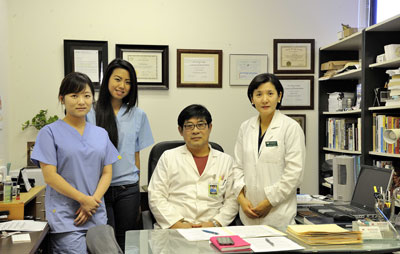
Bác sĩ Choi (ngồi) và các cộng sự. (Hình: Thái Lâm)
Phòng khám Đông y Maum Clinic Acupuncture, đứng đầu là Bác sĩ Jake Chin Choi – dành được trọn vẹn lòng tin yêu của bệnh nhân nhờ sự tận tâm, chu đáo và sự mát tay của Bác sĩ Choi. Theo Đông y, cơ thể con người được vận hành bởi một hệ thống huyệt đạo phức tạp nằm dưới da. Hệ thống này được liên thông, cùng nhau vận hành các chức năng trong cơ thể. Vì lý do nào đó, nếu sự liên thông này bị tắt nghẽn, người bệnh phải chịu đựng những cơn đau từ nhẹ tới ngặt nghèo.
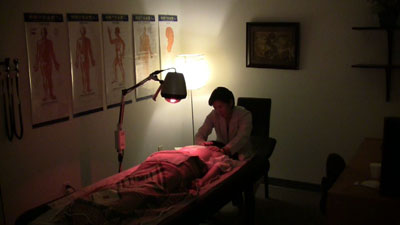
Bác sĩ điều trị bằng Acupressure (Hình: Maum Clinic cung cấp)
Để nối lại sự lưu thông giữa các huyệt đạo đó, Bác sĩ Choi dùng cách Châm – tức dùng kim châm, kích thích các huyệt đạo, kết hợp với Cứu – tức đốt nóng một loại dược thảo đặc biệt, hơ lên vùng huyệt đạo đó. Ngoài Châm Cứu, Bác sĩ còn kết hợp bấm huyệt để nối lại ‘kinh mạch’, chữa bệnh một cách nhẹ nhàng, không gây đau đớn cho bệnh nhân. Bên cạnh đó, điều trị còn được hỗ trợ bởi thuốc uống, được chế tạo từ những nguyên vật liệu cao cấp, nhập cảng trực tiếp từ Hàn Quốc.
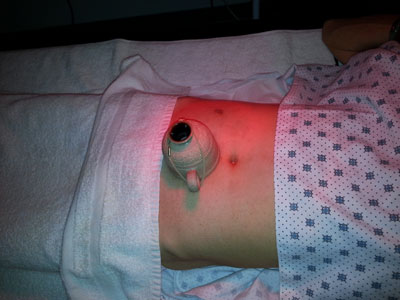
Bệnh nhân qua các phương pháp điều trị khác nhau. (Hình: Maum Clinic cung cấp)
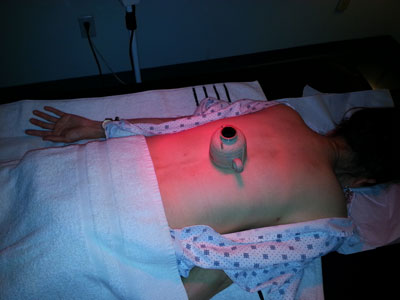
Hành nghề từ năm 1993 đến nay, Bác sĩ Choi đã chữa dứt chứng đau nhức, thấp khớp, đau lưng, đau gối, chấn thương cơ/xương, hen suyễn, viêm xoang, viêm phổi, tim mạch, rối loạn tiêu hóa, suy nhược, mất ngủ, chán ăn, méo mặt, mắt mờ, cao áp, phù thũng, điều hòa kinh nguyệt, rối loạn mãn kinh, kiệt lực, tắt dục, an thai, tay chân tê mỏi, v. v…
Đặc biệt đối với phương pháp Cứu (moxibustion) – Bác sĩ Choi chỉ sử dụng loại dược thảo cao cấp, không sinh nhiều khói, không mùi, không gây khó chịu cho người bệnh trong khi trị liệu.
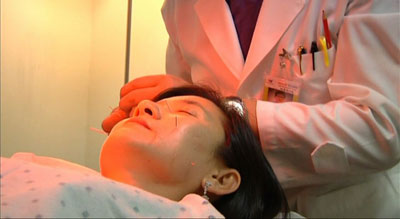
Bác sĩ điều trị bằng châm cứu (Acupuncture). (Hình: Maum Clinic cung cấp)
Ngoài các chứng bệnh vừa kể, phòng mạch Maum Clinic Acupunture còn cung cấp một chương trình điều trị thẩm mỹ có tên là “Kiểm soát cân nặng” – Đây là một chương trình điều trị thông minh và hiệu quả, kết hợp giữa ăn kiêng, luyện tập và giảm stress giúp làm đẹp da, tẩy sạch những vết hằn năm tháng để lấy lại tuổi thanh xuân đã mất.
Ngoài khu vực bào chế thuốc bằng những máy móc hiện đại, hợp vệ sinh, phòng mạch còn được trang bị những phòng điều trị hiện đại, bảo đảm không gian yên tĩnh, ánh sáng dịu, tạo thư thái cho bệnh nhân trong suốt thời gian điều trị.
Mọi chi tiết, xin liên lạc (714) 590-3211.
MAUM CLINIC JW ACUPUNCTURE
8762 Garden Grove #105
Garden Grove, CA 92844
Tel: (714) 590-3211
Website: maumacu.com
Tin Lướt
Việt Nam
- Một phụ nữ bị bệnh viện ở Thanh Hóa trao lầm kết quả xét nghiệm nhiễm HIV. Bệnh viện xin lỗi.
- Một phụ nữ ở Lạc Dương, Lâm Đồng trong rau thơm, lời hàng tỷ đồng mỗi năm.
- Cháy gần 20 phòng trọ của công nhân ở Châu Phú, An Giang. Hàng trăm công nhân chạy tán loạn.
- Người dân xông vào một nhà máy ở Thanh Hóa, nghi gây ô nhiễm môi trường, phát hiện nhiều hóa chất chôn dưới đất.
Cộng Đồng/Địa Phương
- Một y tá làm việc tại trung tâm hồi sức ở Costa Mesa và Newport Beach bị giới chức tiểu bang cáo buộc hành xử sai phạm về mặt chuyên môn.
- 95% thành phố duyên hải Quận Cam được chứng nhận điểm “A” cho chất lượng nước sử dụng trong mùa Hè, trừ Little Corona Beach và Corona del Mar.
- Phiên xử nghi can xả súng thảm sát tại một tiệm hớt tóc ở Seal Beach hồi năm 2011 tạm hoãn đến sang năm.
Hoa Kỳ
- Nữ sinh viên học viện Hải Quân Mỹ, người tố cáo 3 sinh viên khác hãm hiếp mình, sa thải luật sư riêng.
- Chất phóng xạ thoát từ nhà máy Fukushima, Nhật Bản, trong vụ động đất 2011 có thể sẽ trôi dạt xuyên Thái Bình Dương, đến Mỹ vào sang năm.
- Một thiếu nữ ở New York chạy tránh đạn bắn nhau, bị xe đụng chết.
- Darren Manzella, nhân vật chuyên tranh đấu cho quyền lợi người đồng tính trong quân đội Mỹ, qua đời trong một tai nạn xe ở New York.
- Tòa Án ra lệnh cho Bộ Cựu Chiến Binh tuân thủ phán quyết của Tối Cao Pháp Viện khi quyết định quyền lợi của người đồng tính.
Thế Giới
- Ấn Độ phạt 3 năm tù cho một thiếu niên tham gia một vụ hiếp dâm tập thể. Dư luận nói là quá nhẹ.
- Bom vệ đường ở Afghanistan trong 24 giờ qua, 18 người thiệt mạng.
- Giới chức Nam Phi nói đang chuẩn bị cho cựu tổng thống Nelson Mandela xuất viện, nếu các bác sĩ khẳng định tình hình sức khỏe là hoàn toàn bình phục.
- Một báo cáo của Liên Hiệp Quốc nói vũ khí Cuba trên một tàu hàng của Bắc Hàn được chứng minh là vi phạm lệnh cấm vận của Liên Hiệp Quốc.
- Đức Giáo Hoàng tấn phong vị trí quan trọng nhất tại Vatican: Bộ Trưởng Ngoại Giao, trợ lý cao cấp nhất của ngài, cho TGM Pietro Parolin, một nhà ngoại giao kỳ cựu của Tòa Thánh.
Quân đội ‘sẵn sàng tấn công bất cứ lúc nào thích hợp’
WASHINGTON D.C. – Tổng Thống Barack Obama tuyên bố vào trưa Thứ Bảy, 31 Tháng Tám, rằng ông sẽ vận động để có được sự chuẩn thuận từ Quốc Hội trước khi tiến hành bất cứ hành động quân sự nào tại Syria.
“Vài ngày qua, chúng ta đã nghe ý kiến từ các thành viên Quốc Hội, là Quốc Hội muốn có ý kiến.” Tổng thống phát biểu từ Tòa Bạch Ốc. “Tôi hoàn toàn đồng ý với điều này.”
Hoa Kỳ nói rằng dùng vũ khí hóa học là “tội ác chống lại lương tâm;” đã khiến 1,429 dân thường Syria thiệt mạng.
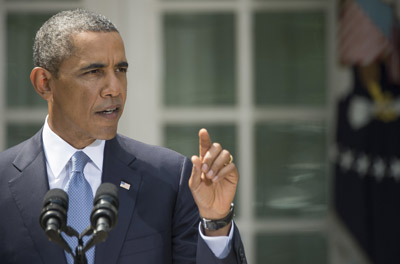
Tổng Thống Obama tại Rose Garden ngày Thứ Bảy, 31 Tháng Tám, 2013. (Hình: GettyImages)
Trong những ngày qua, tàu chiến Hoa Kỳ liên tục đi vào vùng biển Ðịa Trung Hải.
Ông Obama nói hành động sử dụng vũ khí hóa học “tạo ra mối đe dọa nghiêm trọng cho an ninh quốc gia Hoa Kỳ.”
“Bất cứ hành động quân sự nào [từ phía Hoa Kỳ] cũng sẽ được giới hạn về thời gian và tầm vóc.”
Trước thời điểm tuyên bố về nỗ lực đi tìm sự chuẩn thuận từ Quốc Hội, tổng thống nói rằng Hoa Kỳ “được chuẩn bị sẵn sàng để tấn công vào bất cứ lúc nào thấy thích hợp.”
Các cuộc tấn công có thể “có hiệu lực vào ngày mai, hoặc tuần sau, hoặc tháng sau, tính từ thời điểm này.”
TT Obama tuyên bố. Ông nói thêm là ông “đã sẵn sàng để ra lệnh.”
“Sự can thiệp của Hoa Kỳ sẽ không phải là hành động không xác định điểm dừng.” TT Obama phát biểu. “Chúng ta sẽ không đưa quân vào lãnh thổ Syria.”
Ông nói thêm, việc quyết định can dự vào Syria “không có tính nhạy cảm về thời điểm.”
Cùng lúc này, nhiều nhóm nổi dậy tại Syria bày tỏ bất mãn về sự ngập ngừng trong quyết định tấn công phía chính phủ Damascus. Một đại diện của họ nói với NBC News, “Tổng Thống Obama đang gởi ra các thông điệp mâu thuẫn. Ông ấy từng hứa sẽ giúp, nay lại hứa là phải đợi.”
Cùng buổi chiều ngày Thứ Bảy, Ngoại Trưởng John Kerry cũng có cuộc nói chuyện với người đứng đầu liên minh nổi dậy chống chính phủ Syria, nhằm “nhấn mạnh cam kết của Tổng Thống Obama trong việc bắt buộc chế độ Assad phải chịu trách nhiệm” cho những việc họ làm.
Các lãnh đạo phía Cộng Hòa tại Hạ Viện Hoa Kỳ, bao gồm Dân Biểu John Boehner và Dân Biểu Eric Cantor, ra thông cáo báo chí, bày tỏ sự hài lòng đối với quyết định của TT Obama, là đưa vấn đề can thiệp vào Syria sang cho Quốc Hội xem xét.
Quốc Hội Hoa Kỳ hiện còn đang nghỉ Hè, và sẽ trở lại làm việc vào ngày 9 Tháng Chín.
Bài phát biểu của TT Obama diễn ra cùng ngày phái đoàn thanh sát viên Liên Hiệp Quốc rời Syria. Nhiệm vụ của nhóm này là xác định xem có phải chính phủ Syria đã dùng vũ khí hóa học hay không. Một ngày trước đó, Ngoại Trưởng Kerry cũng đã có bài diễn văn nảy lửa, nói rằng Hoa Kỳ có một sự mệnh đạo đức trong việc trừng phạt chế độ của TT Assad.
Ngoại Trưởng Kerry nói rằng, “Lịch sử sẽ lên án chúng ta nếu chúng ta bịt mắt, che tai trước hành động sử dụng vũ khí giết người hàng loạt của kẻ độc tài; là hành động đi ngược lại tất cả mọi cảnh báo, đi ngược lại tất cả mọi hiểu biết căn bản nhất của sự lương thiện.”
Ông kết luận, chế độ của Syria hiện nay là “côn đồ và kẻ sát nhân.”
Sự khó khăn của TT Obama là phải đối mặt với ý kiến chống đối của nhiều dân cử Quốc Hội Hoa Kỳ cũng như công chúng Mỹ; ai cũng thấy cần thật sự cân nhắc việc dính dấp đến các mâu thuẫn ở Trung Ðông, chỉ một thập niên sau cuộc chiến Iraq.
Sự căng thẳng ngoại giao và chính trị vào những giờ phút trước khi có bài diễn văn của TT Obama ngày càng lộ rõ.
Thượng Nghị Sĩ John McCain nói quyết định án binh bất động khi Syria đang chìm trong nội chiến là điều “đáng xấu hổ.”
Từ phía Nga, Tổng Thống Vladimir Putin thì nói ông tin rằng cuộc tấn công bằng vũ khí hóa học “chỉ là một hành động gây hấn của những ai đang muốn kéo các nước khác vào cuộc chiến tại Syria.” Ông Putin nói phía Hoa Kỳ cần trưng tất cả bằng chứng ra trước Liên Hiệp Quốc.
Từ nước Anh, đồng minh thân cận nhất của Mỹ, Nghị Viện bỏ phiếu không chấp thuận can thiệp quân sự tại Syria. Ðây là cản trở lớn nhất đánh vào quyết tâm của TT Obama.
Tuy nhiên, Paris đã gánh đỡ phần nào gánh nặng cho Washington. Tổng Thống Pháp Francois Hollande công khai ủng hộ một hành động quân sự chống lại Assad. Ông nói với tờ Le Monde: Sử dụng vũ khí hóa học là hành động “không thể không bị trừng phạt.”
TT Obama, trong cùng chiều Thứ Bảy, báo cho phía đồng nhiệm Pháp biết là Mỹ đã sẵn sàng cho một hành động quân sự có giới hạn, và cảm ơn “sự cam kết mang tính nguyên tắc của Pháp trong việc duy trì chuẩn mực quốc tế chống lại sự sử dụng vũ khí hóa học.”
Các thanh sát viên Liên Hiệp Quốc làm việc ba ngày tại Syria, đi thanh tra các khu vực giao chiến lớn gần thủ đô Damascus. Họ dùng thêm một ngày nữa để gặp gỡ bệnh nhân tại các bệnh viện chính phủ. Phái đoàn rời Syria vào ngày Thứ Bảy, sang Lebanon. (Ð.B.)
Students made to sweat in accommodation scramble
From VietNamNet Bridge
A typical image of a row of rented rooms for students in Ha Noi. A large proportion of immigrant students have to rent rooms while attending university as dorms cannot not provide enough accommodation.
Trinh Nguyet Minh sits down at the small folded table, wipes the sweat from her face and attentively opens her pamphlet offering advice to first-year university students. The temperature in the 10-sq.m room is 37 degrees Celsius. Some newly-washed clothes hang by the door, drying in the sunlight.
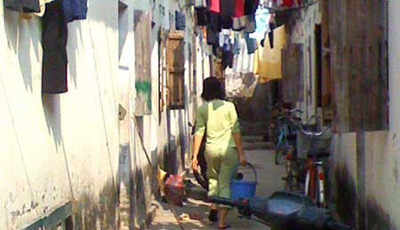
The room feels very stuffy, as it is full of books, shoes, bowls, kitchen equipment and a bulging wardrobe.
Minh moved in here, in Ha Noi’s Thanh Xuan District, last week after a long search for accommodation.
“I spent two weeks exploring lanes all over the city before finding this place, which costs VND1 million (US$47) per month and so fits my budget,” says the 18-year-old girl from northern Hung Yen Province. This amount is nearly half the monthly allowance provided by her parents, who are farmers, she explains.
“It’s not perfect. The room with the metal roof gets really hot on summer days and it is 10km away from my university. However, it doesn’t matter as I will spend most of my time at school and I don’t mind cycling,” she says with the eagerness of a young adult about to start an exciting new adventure fresh from receiving excellent university entrance results.
Minh was not alone in her hard search for lodgings. About 80 per cent of 300,000 first-year students across the country have not been offered a place in their universities’ dormitories. Many are still struggling to seek a room, even though the new school year has already started.
Tran Thanh Binh, former head of the Viet Nam School of Research and Design under the Ministry of Education and Training, says that a housing shortage for tertiary students has existed since the 1990s after universities began to thrive in Viet Nam, especially in big cities like Ha Noi and Sai Gon.
According to the latest reports, almost half of 400 universities and colleges nationwide can only accommodate about 20 per cent of their students. Land for student housing and other support facilities accounts for less than 4 per cent of their areas.
“Limited land funds have led to a substandard educational environment at these universities, including insufficient dormitories,” Binh says, adding that infrastructure is equally as important in education as training programmes and teachers.
Most existing universities were established on sites of less than 10ha and 15 universities hover on as little as 1ha of land. The average living area for a university student in Viet Nam is 35.7sq.m, while the figure in Ha Noi is about 13sq.m and in Sai Gon, 10sq.m. Many of the universities and colleges in the two cities can only offer 5sq.m of space per student. They are struggling to expand their dormitories and upgrade other facilities.
Minh says that the dormitories at the University of National Economy, where she will study, can only provide accommodation for 1,000 of the nearly 18,000 students.
“Undergraduates who come from mountainous or remote areas are prioritised, as are the children of war invalids and martyrs,” she says, noting that she does not belong to any prioritised group.
Making ends meet
Finding a room for rent is just the beginning for students like Minh adapting to life in a big city.
She must also pay an additional cost of VND300,000 ($14) for electricity and water every month, which is much more expensive than back home.
“Everything’s so costly and I fear that the owner may raise prices without reasons or warning, as I’ve heard that that can happen,” she says. “It’s good life experience though, as I pay a lot of attention to what I’m spending. I need to cover the rent and utilities, take care of myself and pay for a billion other tiny things on a fixed fund from my parents.”
“There are many challenges ahead for Minh,” says third-year student Do Thi Truc Anh, 21, from the Ha Noi University.
Anh moved rooms five times during the first six months of her first term. The owner of her first rented house locked the common gate before 10pm even though her part-time job ended at 11pm, while her second house was situated next to a welding workshop and the noise was unbearable. Bad and uncaring landlords also played a role.
Now, Anh plans to move to yet another because a couple of days ago she returned home from school to discover that her laptop had “vanished into thin air” from inside her locked room. Anh confronted the owner of the house and they said they had no idea what happened and refused to take responsibility.
“It’s hard for me to focus on studying when I’m busy worrying about whether I will find another room and the troubles I have to deal with from my current landlords. Each time you move to a new room, you have to re-arrange everything from A to Z and adapt to a new environment, which can be hard,” she flows.
Pham Sy Liem, vice president of the Viet Nam Federation of Civil Engineering Associations, says that the failure of universities to prepare enough land for their students to live on could be seen as a business opportunity to others, especially local households.
“People usually build simple rooms and offer them to students who mostly come from other provinces and prefer to spend a modest sum for rent,” he explains.
“As a market rule, quality and the price of products run parallel. If you pay a low price you will most likely get a poor house.”
Private households often fail to ensure proper conditions for their clients and may not care about their complaints. Professional housing companies, on the other hand, are not interested in investing in the sector because of low profits, Liem claims.
He would like to see more Government’s incentives for investors involved in social housing projects, including those for students.
Binh sees the relocation of universities from inner city areas to the suburbs as urgent in order to ensure there is enough land to develop functional constructions, including dorms.
The model of university towns containing several universities could create a better educational environment and allow them to make full use of new lecture halls, sports facilities, libraries and dorms, he envisions.
“Housing projects for students should not stand separately but in connection with schools, at least in terms of transportation, residency management and convenience. Travel time should be minimised as much as possible.”
To reduce hardships for freshers like Minh, older students like Tran Thi Minh Hue, now in her third year at the Posts and Telecommunications Institute of Technology, joined voluntary student groups.
“We collect information about renting houses, including locations, prices, the pros and cons of each room and take the new house-seekers to visit suitable ones,” she says.
“After several months, students can find a room to rent by themselves via suggestions from classmates or online websites.”
Minh claims that if she could get a place in her school dormitory, her housing spending would reduce at least five times, relieving the burden on her parents.
“Learning at university is totally wonderful if every student gets a place in a dormitory,” Minh says while collecting her now-dry clothes. In the absence of that option though, she is ready to adapt to life in the big city and step out bravely into her new future.
Sơ lược vòng loại các khu vực bóng tròn thế giới (Kỳ 1)
Tư Túc Cầu/Người Việt
Vòng chung kết giải vô địch bóng tròn thế giới – FIFA World Cup 2014 – sẽ diễn ra tại Brazil, từ ngày 12 tháng 6 đến ngày 13 tháng 7, 2014 quy tụ 32 đội tuyển đại diện cho các khu vực sau đây:
– Châu Á (AFC): có tất cả 43 đội tuyển dự tranh vòng loại chọn ra 4 hay 5 đội đến Brazil. Bốn đội đứng đầu hai bảng của vòng thi đấu cuối cùng sẽ chính thức có vé thông hành trong khi hai đội thứ ba của hai bảng sẽ thi đấu hai trận playoffs, đội nào thắng sẽ gặp đội đứng thứ năm của khu vực Nam Mỹ để được vé thứ năm đến Brazil.
– Khu vực Châu Phi (CAF): Gồm 52 đội dự tranh chọn ra 5 đội tuyển tham dự vòng chung kết.
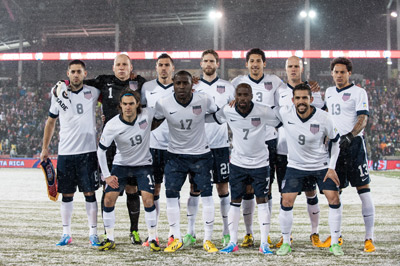
Ðội tuyển Hoa Kỳ trước trận đấu với Costa Rica vòng loại World Cup 2014 khu vực CONCACAF diễn ra trên sân Dick’s Sporting Goods Park, Commerce City, Colorado phủ đầy tuyết ngày 22 tháng 3, 2013. (Hình: Dustin Bradford/Getty Images)
– Khu vực Bắc Trung Mỹ và vùng Caribbean (CONCACAF): Với 35 đội tuyển tham dự tranh ba vé chính thức trong khi đội đứng thứ tư sẽ thi đấu hai trận lượt đi và về với đội tuyển Tân Tây Lan hiện đứng đầu khu vực Châu Ðại Dương. Ðội nào thắng sẽ đến có mặt tại xứ sở samba vào năm tới.
– Khu vực Nam Mỹ (CONMEBOL): Với 9 đội tuyển dự tranh vòng loại cho 4 vé chính thức và đội thứ năm đấu playoff với đội thứ năm của Châu Á.
– Khu vực Châu Ðại Dương (OFC) với 11 đội tham gia. Ðội đứng đầu khu vực này hiện nay là Tân Tây Lan (New Zealand) sẽ tranh playoffs với đội thứ tư của khu vực CONCACAF để tìm vé thứ tư có mặt tại Brazil.
– Khu vực Châu Âu (UEFA): Có tất cả 53 đội dự tranh để chọn ra 13 đội có mặt tại vòng chung kết World Cup năm tới.
Chỉ còn ba tháng nữa (tháng 9, 10 và 11, 2013) là các trận tranh vòng loại World Cup 2014 của các khu vực bóng tròn thế giới chấm dứt. Trước khi bắt đầu đợt thi đấu đầu tiên – 6 tháng 9, 2013 – của ba tháng này, chúng ta lược sơ qua tình hình của các khu vực này và hiện này đội nào đã chính thức có vé đến Brazil và đội nào nhiều hy vọng và đội nào sẽ nằm nhà xem World Cup Brazil qua hệ thống màn ảnh nhỏ và chờ kỳ World Cup 2018 sẽ diễn ra tại Russia.
Khu vực Châu Á: Cuộc chạy đua giữa Jordan và Uzbekistan cho vé thứ 5
Khu vực này đã khởi tranh vòng loại từ tháng 9, 2011 đến nay chính thức có kết quả như sau:
Bảng A: Iran (16 điểm đứng đầu) nắm tay với Nam Hàn (14 điểm, đứng nhì) cùng nắm tay đến Brazil năm tới trong khi đội tuyển Uzbekistan (14 điểm, nhưng thua Nam Hàn hiệu số bàn thắng bại +6/+5) đứng thứ ba còn Qatar và Lebanon trở thành khán giả chờ đợi kỳ World Cup tới tranh tiếp.
Bảng B: Nhật Bản đứng đầu với 17 điểm hơn Australia 4 điểm. Cả hai đội đều tiếp tục cuộc chơi tại Brazil trong khi Jordan đứng thứ ba chỉ 10 điểm còn Oman và Iraq cùng chung số phận với Qatar và Lebanon.
Ngày 6 tháng 9, 2013 tới đây hai đội hạng ba của hai bảng là Jordan và Uzbekistan sẽ gặp nhau trận lượt đi và bốn ngày sau đó, 10 tháng 9, 2013 sẽ đấu trận lượt về.
Dựa theo thành tích qua quá trình tranh tài, giới chuyên môn đánh giá đội tuyển Uzbekistan có thực lực mạnh hơn Jordan rất nhiều cho nên nếu không có bất ngờ nào xảy ra trên sân cỏ có thể Uzbekistan sẽ gặp đội tuyển đứng thứ 5 của khu vực Nam Mỹ qua hai trận lượt đi và về. Và đội nào thắng sẽ chính thức có thông hành thứ 5 đến Brazil.
Khu vực Châu Phi: Cuộc chiến chưa ngã ngũ
24 đội trong số 52 đội tuyển của đại lục này bước vào vòng thi đấu đầu tiên để chọn ra 12 đội cùng với các đội còn lại ra sân tiếp tục ở vòng thi đấu thứ hai. Vòng này được chia ra làm 10 bảng mỗi bảng gồm bốn đội tuyển. Ðội đứng đầu mỗi bảng sẽ tiếp tục cuộc chơi ở vòng thứ ba và năm đội thắng ở vòng này sẽ đại diện cho Châu Phi đến Brazil 2014.
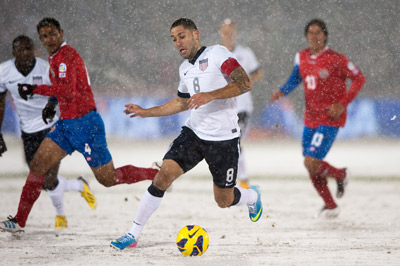
Tiền vệ Clint Dempsey số 8 của Hoa Kỳ dẫn banh qua hai cầu thủ Costa Rica trong trận đấu vòng loại World Cup 2014 khu vực CONCACAF giữa Hoa Kỳ và Costa Rica diễn ra trên sân Dick’s Sporting Goods Park, Commerce City, Colorado phủ đầy tuyết ngày 22 tháng 3, 2013. (Hình: Dustin Bradford/Getty Images)
Vòng thi đấu thứ hai bắt đầu từ ngày 1 tháng 6, 2012 đến ngày 7 tháng 9, 2013.
Hiện tại chỉ có các đội Ivory Coast, Ai Cập (Egypt), Algeria là chính thức có mặt ở vòng thứ ba trong khi bảy bảng khác phải chờ đến hết ngày 7 tháng 9, 2013 mới biết đội nào tiếp tục ra sân cùng với ba đội nói trên ra sân ở vòng cuối cùng.
Mười đội tuyển ở vòng thứ ba cuối cùng sẽ rút thăm bắt cặp gặp nhau ở hai trận lượt đi (diễn ra từ ngày 11 đến 15 tháng 10, 2013) và lượt về (từ 15 đến 19 tháng 11). Năm đội thắng sẽ có mặt tại Brazil vào năm tới.
Khu vực CONCACAF: Hoa Kỳ rất nhiều hy vọng
Với 35 đội tuyển các quốc gia cũng như đảo quốc khu vực này dự tranh từ vòng sơ loại đầu tiên cho đến hiện thời ở vòng cuối cùng của khu vực này – được gọi là vòng hexagonal – chỉ còn sáu đội tuyển gồm Hoa Kỳ, Mexico, Honduras, Jamaica, Costa Rica và Panama lần lượt gặp nhau ở hai trận lượt đi và về. Ba đội đứng đầu vòng này sẽ có vé chính thức đến Brazil trong khi đội đứng thứ tư sẽ đá hai trận playoffs đi và về với đội tuyển Tân Tây Lan, hiện đứng đầu khu vực Châu Ðại Dương (OFC)
Qua sáu trận đấu, Hoa Kỳ, sau khi bất ngờ thua trận ra quân đầu tiên trước Honduras trên sân khách với tỷ số 1-2, sau đó thi đấu thăng hoa lấy lại niềm tin những người ủng hộ với trận thắng Costa Rica 1-0 trên sân Dick’s Sporting Goods Park, Commerce City ngập tuyết, rồi cầm chân Mexico 0-0 ngay trên sân nhà thánh địa của đội này tại thủ đô Mexico, sau đó lần lượt đá bại Jamaica 2-1 trên sân nhà đối phương rồi hạ Panama 2-0 tại CenturyLink Field, Seattle, tiểu bang Washington, và phục thù được Honduras với tỷ số 1-0 tại Sandy, Utah.
Ðược 13 điểm, Hoa Kỳ tạm thời đứng đầu bảng trong khi Costa Rica với 12 điểm xếp thứ nhì, còn Mexico, trước đó được đánh giá là đội mạnh nhất ở khu vực này sẽ dễ dàng có mặt tại Brazil nhưng lại thi đấu thất thường chỉ được 1 thắng 5 hòa, 8 điểm đứng thứ ba trong khi Honduras xếp thứ tư với 7 điểm còn Panama thứ năm, 6 điểm và cầm đèn lái là Jamaica chỉ được hai điểm với hai trận hòa và bốn thua chắc chắn bị loại.
Với bốn trận còn lại: Hoa Kỳ làm khách tại Costa Rica vào ngày 6 tháng 9, 2013 tới đây, bốn ngày sau đón tiếp Mexico trên sân Columbus Crew, Columbus rồi đến 11 tháng 10 gặp Jamaica trên sân Sporting Kansas City và ngày 15 tháng 10, bay đến Panama so tài trận cuối cùng vòng loại World Cup với đội tuyển quốc gia này.
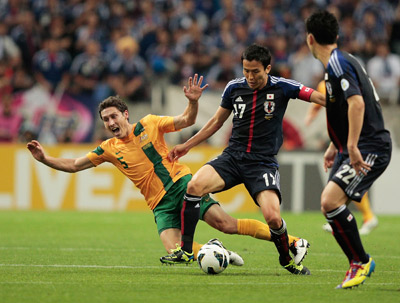
Cầu thủ Mark Milligan của Australia tranh bóng cùng với Makoto Hasebe của Nhật trong trận đấu vòng loại World Cup 2014 khu vực Châu Á diễn ra trên sân Saitama, Saitama, Nhật ngày 4 tháng 6, 2013. (Hình: Adam Pretty/Getty Images)
Trong bốn trận đấu này, đội tuyển Hoa Kỳ chỉ cần thắng một trận, có thêm 3 điểm là gần như cầm chắc chiếc vé lên máy bay đến Brazil năm tới. Hoặc trong trường hợp tệ nhất cũng đứng hạng thứ tư thi đấu với đội tuyển Tân Tây Lan.
Từ trước tới nay, chưa hề có đội tuyển nào trong vòng loại cuối cùng khu vực CONCACAF này được 16 điểm (được gọi là con số 16 kỳ diệu – magic number) mà không được tham dự vòng chung kết World Cup.
Với 12 trận thắng liên tục dưới thời cầm quân của huấn luyện viên Klinsmann trong đó bao gồm các trận đấu mang về chiếc cúp vô địch Gold Cup 2013 và gần đây nhất là trận giao hữu với cuộc lội dòng nước ngược ngoạn mục đá bại Bosnia and Herzegovina 4-3 sau khi bị đội tuyển hiện xếp thứ 13 trên thế giới và là một trong những đội mạnh nhất Châu Âu nhiều hy vọng có mặt tại Brazil năm tới, dẫn trước 2-0 ở hiệp đầu.
Với thành tích như thế, không thể nào có chuyện “lật cáng” khiến cho Hoa Kỳ trắng tay ở bốn trận cuối cùng này để các tuyển thủ ngồi nhà xem World Cup qua truyền hình. Và nếu quả thật chuyện này xảy ra có lẽ huấn luyện viên Klinsman giã từ sự nghiệp cầm quân của mình là vừa.
Ðội thứ hai cũng nhiều hy vọng là Mexico. Dù chỉ được 8 điểm nhưng chưa hề thua trận nào, chắc chắn các tuyển thủ quốc gia này sẽ thi đấu hết sức với bốn trận còn lại để có được chiếc vé đến Brazil nếu không, huấn luyện viên Torre chỉ còn nước khăn gói ra đi.
Chiếc vé thứ ba và vé đá playoff với Tân Tây Lan là cuộc so tài quyết liệt giữa ba đội tuyển Costa Mesa, Honduras và Panama vì ngoại trừ Costa Rica được 11 điểm, hai đội Honduras và Panama chỉ hơn nhau một điểm phù du. Cho đến thời điểm hiện tại vẫn chưa biết trong “mèo nào cắn miêu nào” giữa ba đội nói trên và cả Mexico nữa. Trên sân cỏ vốn có nhiều bất ngờ xảy ra chỉ còn cách là… chờ xem!
Cuối cùng là Jamaica chỉ 2 điểm đành an phận nằm nhà chờ World Cup kỳ tới.
(còn tiếp một kỳ)
Overseas Vietnamese directors and their homecomings
From TUOITRENEWS
Several Viet Kieu (overseas Vietnamese) directors have returned to Vietnam to make films over recent years. Their homecomings, whether successful or not, breathe freshness and novelty to the country’s local film industry.
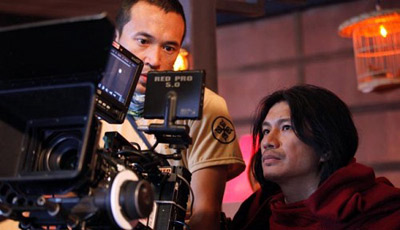
Vietnamese American actor/ director Dustin Nguyen. Photo from Tuoi Tre
Unlike those who founded the Viet Kieu film sector, today’s batch of Vietnamese-origin directors, most of who come from the US, where they have had some experience with Hollywood, integrate better as they target local audiences rather than merely to screen films abroad.
Charlie Nguyen, who was previously known as director of comic skits among overseas Vietnamese communities and a few films such as “Hung Vuong the 18th” and “Chances Are” produced in the US, made his directing debut in his home country with “Dong mau anh hung” (The Rebel) in 2006.
The film, which won notable critical acclaim and breathed novelty into the local insipid film industry back then, took Nguyen more than 10 years to write the script and two years to travel throughout the country for shooting. He even spent almost US$2 million from his family into the film and has debts till now.
The film immediately catapulted him and his younger brother Johnny Tri Nguyen and Dustin Nguyen into stardom.
Victor Vu, whose first film “Spirits” couldn’t get through censorship in Vietnam in 2004, officially marked his homecoming with “Chuyen tinh xa xu” (Passport to Love) five years later. The film struck a strong impression on local audiences for its unique taste.
Meanwhile, though Nguyen Duc Minh’s “Touch”, which hit US screens in 2011 and local screens one year later, didn’t yield high box office revenues, it won considerable critical acclaim. Minh is about to shoot his next film “Ky nu mau va tinh yeu xanh”.
Charlie Nguyen, Victor Vu and Dustin Nguyen said that though they had had lots of opportunities with foreign investors, they still make and distribute films in Vietnam. Some of their films are broadcast in other countries on a limited scale or distributed on DVDs after screening in Vietnam.
Challenges ahead
These overseas Vietnamese directors are also faced with countless challenges making films in their home country.
After the success of his heavily-invested “Dong mau anh hung”, Charlie Nguyen went on to make such comedies as box office record comedies “De mai tinh” (Fool for Love), “Long ruoi” (Big Boss) and “Cuoi ngay keo lo” (Love Puzzles). Though these films earned exceptionally high revenues, they failed to earn critical acclaim.
“Bui doi Cho Lon” (Gangsters of the Cho Lon melting pot), a martial arts, action-packed flick, with which Charlie Nguyen expected to mark his comeback, was banned from screening for featuring many gory, violent fighting and killing scenes.
In 2010, Victor Vu was also faced with the plagiarism accusation regarding the astoundingly striking resemblances between his film “Giao lo dinh menh” (Inferno) and Hollywood flick “Shattered”. Vu was so depressed that he refused to pick up the seven awards for his two films “Bi mat tham do” (Scandal) and heavily-invested “Thien menh anh hung” (Blood Letter) at the 2012 Golden Kite award.
At 50, Dustin Nguyen made his first film called “Lua Phat” (Once upon a time in Vietnam), which he took it to the 2013 Cannes Festival and expected to be a blockbuster. However, the film failed to do so.
Despite the challenges ahead, more overseas Vietnamese film directors are returning home. Victor Vu is shooting his new film titled “Qua tim mau” (The bloody heart), which is adapted from a hit ghost play, after he finished “Co dau dai chien 2” (Bride war 2).
Thien Do’s “Tien chua” and Ham Tran “Am muu giay got nhon” (How to fight in six inch heels) are also waiting to hit local screens. Tran Cong Thanh (Ethan Tran) is shooting his first film “Luu manh dau bep” (The dishonest chef). Nguyen Vo Nghiem Minh, whose “Mua len trau” (The Buffalo Boy) won several international awards, is now busy with his new film project “Nuoc” (Water). Tran Anh Hung, who is famous with “The Scent of Green Papaya”, “I Come With the Rain” and “Norwegian Wood”, adapted from a famed novel by Japanese author Haruki Murakami, also expressed his wish to make a new film in Vietnam.
Within the past 30 years, Ho Quang Minh is the first overseas Vietnamese director to make a film in his home country. His film, “Con thu tat nguyen” (The disabled animal), produced in 1985, is the first of such foreign-element films.
Followed is “Xich lo” (Cyclo) (1995) by Tran Anh Hung), “Bui hong” (The rose bush) (1996), “Ba mua” (Three seasons) (1998) by Tony Bui, and “Mua len trau” (The Buffalo Boy) (2003) by Nguyen Vo Nghiem Minh.
‘Miss Saigon’ returning, stereotypes
By Chris Hewitt, Twin Cities
Have you seen “Mess Saigon?”
Miss Saigon will play at the Ordway Center for the Performing Arts Oct. 8-13, 2013. (Courtesy of the Ordway)
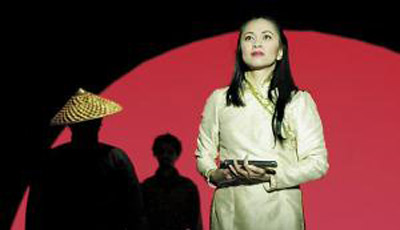
No, not the musical “Miss Saigon,” which plays at the Ordway Center for the Performing Arts from Oct. 8 to Oct. 13, but the messy controversy that has swirled around the show each of the three times it has played in the Twin Cities.
A Broadway smash that ran for 10 years, “Miss Saigon” played in Minneapolis theaters in 1994 and 2004. An updating of the “Madame Butterfly” story, it takes place as the U.S. is about to withdraw from Vietnam and a soldier named Chris, whose affair with a bargirl named Kim has resulted in her pregnancy, leaves with a promise to return.
“Miss Saigon” is a huge spectacle, with songs by the team behind “Les Miserables.” But don’t expect Mu Performing Arts artistic director Randy Reyes to line up for tickets. He has quite a few objections to the musical:
“There is the over-sexualization of Asian women, the narrative of the Asian woman killing herself for a white man, the general romanticization of human trafficking, the idea of an adoption because the United States is supposedly the best place for an Asian-American child to grow up, and all of the ideas that come along with colonialism and privilege,” said Reyes, a Filipino-American.
Reyes can envision script changes that would address those issues, much like playwright David Henry Hwang’s recent revision to make the 1958 Rodgers and Hammerstein musical “Flower Drum Song” more in keeping with the times.
As it stands, Reyes doesn’t think “Miss Saigon” should be performed. At all.
“The show is hurtful to our community, living day-to-day as Asian-Americans,” Reyes said. “If it was set on a plantation, and there was a black slave woman who fell in love with her white slave owner and pined for him and then killed herself for him, the African-American community would be up in arms. People would think more than twice about producing that show. So why is it OK in an Asian-American context?”
Reyes hasn’t always felt that way.
As a student, he said, he saw “Miss Saigon” in London and “loved it.”
“I thought it was great,” he said. “It wasn’t until later that I thought more about my responsibility to the community, that I thought, ‘Wow. That is not a good message to show the world.’ “
The theatricality that initially dazzled Reyes is a big reason “Miss Saigon” keeps returning.
“There’s a lot of excitement about the production among our audience members,” said Patricia Mitchell, president and CEO of the Ordway.
“You can tell from ticket buyers that they are excited to see a show that is by the people who brought us ‘Les Miz.’ They view it primarily as a popular musical theater piece.”
Not that the Ordway is deaf to the complaints of protesters. When the decision was made to bring back “Miss Saigon,” Ordway officials were aware of previous controversies.
“It’s certainly part of the institutional history of the Ordway,” said Mitchell, adding that the show remains compelling because it raises so many issues.
“What issue you focus on depends on the lens through which you look at the piece. If I look at it through my moral and political and philosophical feelings about the war, that tends to be how I see the piece. If you are an Asian or Asian-American actor, you might look at it through a casting lens. If you are an Asian or Asian-American woman, you might look at it through the lens of stereotypes.”
That last lens came up at a “Miss Saigon” informational meeting attended by Reyes and Mitchell.
“There were people there who spoke very movingly of their very personal issues. A woman who identified herself as a Korean-American adoptee spoke up,” Mitchell said. “She had met someone who said to her that she must be the child of a prostitute because why else would a mother give up her child?”
Mitchell said the Ordway is looking at the show as an opportunity to face those sorts of stereotypes and misconceptions. The theater has invited “Miss Saigon” ticket holders to a free conversation about the show.
There will be a question-and-answer session with the cast after at least one performance. And information, providing context for the show and the controversy, will appear in the program and on the Ordway website.
Performer and arts administrator Sandy Agustin, a Filipino-American who was a protester both times “Miss Saigon” was in town, said that’s a good start.
“Wouldn’t it be interesting if there were something in the program that said, ‘We understand this story represents one, outdated perspective,” she said.
“We understand people are offended by some of the stereotypes in this production, but it is our intention to generate dialogue around those stereotypes.’ “
Agustin said she is disappointed “Miss Saigon” is returning, but she isn’t surprised.
“I’m sure there are Asian-Americans who love the show, and the people who are in it are happy to be there,” she said. “It’s hard when something makes a lot of money like that.
“I get tired of it. People say, ‘Sandy, you’re an Asian-American, so of course you’re getting upset about the show.’ But you don’t have to be an Asian-American woman to be upset by this. I’m also half-white. So, this time, let’s say the other side of me is upset. The white side.”
One performer who is happy to be in “Miss Saigon” is Orville Mendoza, the Filipino-American who plays the largest role, a Vietnamese huckster called the Engineer, who guides the audience through the show. Having performed “Miss Saigon” from 1994-2000 on tour and now back with the show, Mendoza may have a deeper experience with it than almost anyone.
“The show deals with difficult subject matter, but at no time have I felt like it was trying to make a statement that all, or even many, Asian people are like these characters. It is about a very small segment of the population,” Mendoza said. “And not all shows depict people in the best light. People don’t look at ‘West Side Story’ and think all Puerto Ricans are gangsters or ‘Cabaret’ and think all Germans are Nazis.”
Mendoza was involved in last year’s controversy at California’s La Jolla Playhouse, where a new musical called “The Nightingale” cast a non-Asian actor as a Chinese man, so he said he understands where protesters here are coming from.
“These questions are still out there, positive and negative. We are still talking about race,” Mendoza said. “I appreciate that people are still talking about the appropriateness of the show. They’re entitled to their opinions, and it is not for everyone’s taste.”
Although Reyes said he wishes theaters would either stop performing “Miss Saigon” or revise it before they do, that does not seem likely to happen. A major London revival is planned for next year, with a possible Broadway followup and, in addition to the four-city tour the Ordway production is a part of, stagings are planned in Houston and Washington, D.C.
Mendoza can’t speak for those other productions, but he said he views the one coming to the Ordway as “a blessing.”
“I think the show can be used as a tool for people to express their feelings — about our show or about the war or about how Asians in the media are portrayed,” Mendoza said. “We want to be provocative and entertaining and raise questions about (the U.S.) involvement in Vietnam. But I give people my word that our intent is not to offend.”
MUSIC REVIEW | Vietnamese pop star Hong Ngoc brings classic showmanship to Mystic Lake Casino
By Todd Wardrope, TC Daily Planet
On August 4, 2013, Vietnamese pop star Hồng Ngọc culminated her international My Life tour in a final performance at Mystic Lake Casino. The main showroom of the casino was near capacity with an audience that spanned kids to senior citizens. There was obvious excitement in the crowd before her five-piece back-up band Strikerz warmed up the room with a few instrumental rock sets. After that, her tour mates performed a few songs with the Strikerz supporting. Trinh Nhat Tuan, Nhat Tinh Anh, and Pham Khanh Hung are all younger gentleman who performed energetic romantic ballads with considerable showmanship. Each of them had their own approach, and though they shared a general visual stlye, I got the sense they were using the opportunity to reach a wider group of fans. Henry Chuc is more established and brought a mature presence to the stage, he took the time to perform more reflective sounding ballads which I imagine appealed more to the older members of the audience.

Hồng Ngọc
Hồng Ngọc, draped in sequins and glitter, joined the group of supporting acts for a routine in which she exchanged duets with each of them. She shared quite a bit of banter in Vietnamese, which was lost on me, but I got the impression that she was expressing the thanks and happiness she felt after performing with them throughout the tour. They left the stage for the time, each of them to return to perform later during her wardrobe changes, and she performed a series of high-energy pop songs which were driven by a range of contemporary Top 40 rhythms. After several of these more energetic songs, she left the stage to change into a less flashy dress. On her return, she changed the show into a set of slower songs which were inspired by a variety of musical styles. Latin, new wave 80’s, and sitar could be heard, adjusted to fit the tempo and mood of her flashy big room show. A final wardrobe change brought her back in a red and sequin outfit and a shift into a slower set of romantic ballads. She brought the show to an end with a rousing, high energy song which was a hybrid of ballad, club music and bass-heavy rock and roll. She got the audience to their feet, many of them standing from their seats to wave and clap to her finale.
Hồng Ngọc is described as “The Lady Gaga of Vietnam,” a moniker that I think is a misnomer. Both of them are international performers, and clearly Hồng Ngọc has an appeal that extends beyond the physical boundaries of Vietnam. She does perform in Vietnamese and the majority of her crowd understood her banter and lyrics, but she does bring a level of showmanship that puts her in a global category. I don’t think the comparison to Lady Gaga is appropriate at all, though. Hồng Ngọc is flashy and energetic, for sure, but her stage persona and presentation is much closer to classic adult contemporary performers such as Cher, Striesand or Neil Diamond. Her duet with Henry Chuc could very easily have performed in a Vegas dinner showroom instead of the Mystic Lake Casino. Her pop sensibilities are much more family-friendly than Lady Gaga or even Katy Perry.
She lost me with most of her ballads, but I could see the audience enjoyed them and were what they wanted to see and hear. Hồng Ngọc is also very verbose in her onstage banter, another thing she shares with her showroom colleagues, but she is an engaging storyteller and always got laughs from the crowd during the substantial breaks. Again, all of the spoken language was lost on me but her body language and performance gave me the impression she was telling “road stories” and a little bit of background for each of her songs. I didn’t get the feeling these breaks slowed the show down, rather they helped create a experience with the artist, similar to what you might get in a more intimate show. Similarly, she also personally helped with at her own merch booth after the show, something I think would be unthinkable for many pop stars of her stature. After the show, her opening acts could be seen moving around the casino and interacting with the guests in a more casual manner. There were no screaming fans, but there was also a much thinner barrier between entertainer and audience.
There were a few minor technical glitches, and she navigated all of these without losing form or tone. Mystic Lake has a pretty nice video monitor set-up, so even when she was performing to the other side of the room, you could watch her moves in detail on the big screen. Hồng Ngọc was an expert at playing to all parts of the room and keeping it interesting for the cameras. She’s been performing all her life and all that experience was on brilliant display at Mystic Lake.
Ngày càng nhiều học sinh Trung Quốc sang Mỹ học Hè
CHICAGO – Tại đại học University of Chicago mùa Hè này, cô Yan Jielin, 17 tuổi, miệt mài đọc các văn kiện của thời Cách Mạng Hoa Kỳ và thuộc lòng những bài thơ của nữ thi sĩ Emily Dickinson.
Niên khóa tới đây, cô Yan sẽ lên lớp 12 tại một trường trung học ở Bắc Kinh. Cô tin rằng những kinh nghiệm có được trong mùa Hè này ở Mỹ sẽ cho cô thêm lợi thế khi phải đấu với nhiều học sinh Trung Quốc khác để được nhận vào một trường đại học hàng đầu của Mỹ. Theo bài viết trên tờ NYT.
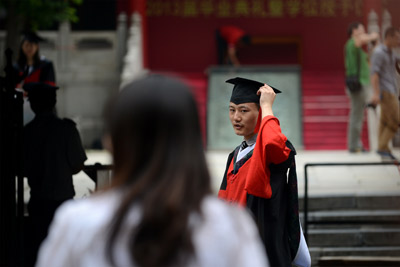
Một sinh viên đại học ở Trung Quốc. Hình minh họa. (Hình: Wang Zhao/AFP/Getty Images)
“Khi đọc các văn kiện đó, tôi thật sự cảm thấy mình hiểu ra những gì xảy ra trong thời kỳ đó,” cô cho hay. “Ðiều này khác hẳn với cách học lịch sử của tôi trước kia.”
Bài viết cho biết, theo một số ước tính, có hơn 100,000 học sinh Trung Quốc, có em chỉ khoảng 10 tuổi, đã đổ sang nước Mỹ mùa Hè này để tìm hiểu đời sống và văn hóa nơi đây. Một số học sinh chuyên cần theo đuổi các chương trình học nhằm cải thiện điểm SAT của mình. Một số khác có chương trình nhàn nhã hơn, tham dự các chuyến du lịch nhóm đến Las Vegas, New York và Disneyland. Cũng có những em khác tham dự các trại Hè ngoài trời.
Sự gia tăng trong số học sinh đến Mỹ vào mùa Hè là điều mới nhất trong dịch vụ giáo dục tại ngoại quốc cho học sinh Trung Quốc, trị giá tới hàng tỉ đô la. Cho đến mãi gần đây, đa số các công ty Trung Quốc giúp học sinh nước này được nhận vào các đại học và các trường trung học tư thục ở Mỹ chỉ chú trọng vào việc rèn luyện chuẩn bị cho học sinh ở ngay tại quê nhà.
Họ chuyên hướng dẫn học sinh thuộc các gia đình giàu có, chịu chi trả các chi phí, về tiến trình để được nhận vào đại học Mỹ.
Vẫn theo bài viết, nay nhiều công ty Trung Quốc đang nhắm vào một khía cạnh khác để khai thác các ước muốn ngày càng phát triển rộng của các bậc cha mẹ tại đây, bằng cách đưa ra các chương trình tìm hiểu về đất Mỹ, với giá từ $5,000 đến $15,000 cho vài tuần lễ sinh sống tại chỗ, thường là bước đầu tiên để tiến với việc học đại học hay có bằng trung học Mỹ- một điều đang được coi là biểu hiện sự danh giá ở Trung Quốc.
Tuy nhiên, điều này cũng tạo ra các câu hỏi là tại sao giới trẻ Trung Quốc phải ra nước ngoài học và – trong một quốc gia đang có quan tâm về tình trạng tham nhũng tràn lan và khoảng cách giàu nghèo ngày càng lớn – về những gia đình có khả năng cho con họ được hưởng những cơ hội tốn kém như vậy.
“Ðây là đặc quyền dành cho những gia đình giàu có, hay ít nhất là những gia đình trên mức trung bình,” theo Zhang Yang, giám đốc đặc trách du học của công ty EIC Group, chuyên về giáo dục ở Bắc Kinh. “Tôi không nghĩ rằng các chuyến đi tham khảo ngoại quốc này là điều mà các gia đình bình thường có thể chi trả nổi.”
Tuy nhiên, cũng có những trường hợp bằng lòng trả tiền cũng chưa chắc được nhận cho đi sang Mỹ tham khảo mùa Hè.
Các gia đình cho con đi theo các chuyến du khảo mùa Hè mắc tiền nhất thường, khoảng $14,000 trở lên, cũng muốn có sự bảo đảm rằng con họ được nhận vào một trong 50 trường đại học đứng hàng đầu nước Mỹ, theo các nhà giáo dục Trung Quốc. Do vậy, việc nhận vào các chương trình này cũng thường gay go.
Một chương trình có hướng dẫn chặt chẽ, giá $14,000, của công ty Elite Scholars of China, chỉ nhận 26 ứng viên trong số 100 người nộp đơn xin theo chương trình du khảo kéo dài 2 tuần ở đại học Wellesley College tại Massachusetts và tiếp theo là một tuần thăm khoảng một chục đại học hàng đầu cùng gặp gỡ giới chức chuyên về tuyển mộ sinh viên ở những nơi này. Những người đi theo chương trình này, thường là những học sinh giỏi và thông minh nhất, bên cạnh điều kiện có khả năng tài chánh, chỉ được nhận nếu đậu cuộc phỏng vấn của công ty, theo Tomer Rothschild, đồng sáng lập viên Elite Scholars of China.
Sự phát triển về các cuộc du khảo mùa Hè ở Mỹ nay đang phát triển rầm rộ, một phần cũng vì một số trường trung học tại Trung Quốc soạn chương trình học đặc biệt cho các học sinh ngay từ đầu cha mẹ họ đã cho biết rằng muốn con mình sang Mỹ học đại học.
Tại trường Trung Học Số 4 ở Bắc Kinh, việc sang Mỹ mùa Hè nay là điều trông đợi hầu như ở mọi học sinh muốn theo học đại học ở Mỹ khi tốt nghiệp, theo Shi Guopeng, phó giám học.
“Các gia đình nếu có khả năng trả tiền cho con mình thì nên làm điều này,” ông Shi nói. “Không tham dự chương trình du khảo vì sợ tốn tiền thì cũng không khác gì không ăn vì sợ mắc nghẹn.” (L.T.)
Khách trong ngày: Trà Lũ, người của Phiếm và Cười
WESTMINSTER – Ngày đầu Thu, nhà văn Trà Lũ đến thăm nhật báo Người Việt và cho biết, cuối năm nay ông sẽ từ Canada sang California ra mắt tác phẩm mới, 600 Truyện Cười.
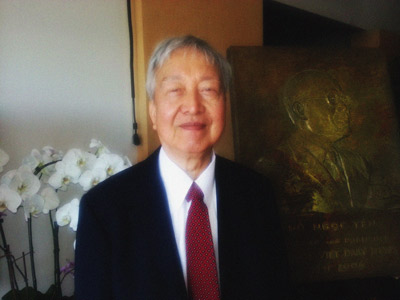
Nhà văn Trà Lũ là tên tuổi và khuôn mặt quen thuộc với không biết bao nhiêu độc giả “mê” đọc chuyện phiếm và chuyện cười của ông. Khởi viết từ năm 1989, nhà văn Trà Lũ xuất bản 14 tác phẩm gồm 11 chuyện phiếm và 3 tập Truyện Cười.
Sách của ông “hot” đến độ in đến đâu là bán hết đến đây, hiện ông chưa nghĩ đến việc tái bản.
Nhà văn Trà Lũ tên thật là Trần Trung Lương, sinh năm 1935 tại Ninh Bình, di cư vào Nam năm 1954. Trước 1975 ông là giáo sư Ðại Học Sư Phạm và Văn Khoa, Viện Ðại Học Sài Gòn. Sau 1975, ông định cư tại Toronto, Canada, là cựu viên chức Bộ Văn Hóa & Công Dân tỉnh bang Ontario, ngoài ra còn là cựu chủ tịch Văn Bút Việt Nam-Canada.
Người đọc có thể thấy tâm tình gắn bó với đất nước của ông, qua việc tựa cuốn sách nào của ông cũng có chữ đất, như Ðất Thiên Ðàng, Ðất Yêu Thương, Ðất Lạnh Tình Nồng, Ðất Quê Ngoại, Ðất Anh Em, Ðất Nhà, Ðất An Lạc, Ðất Thiên Thai, v.v… (T.Đ.)
My Mom and I in Vung Tau, Vietnam
By Kevin Truong, The Gay Men Project
I came out to my mom when I was 26, and then it was never talked about again for years. Literally not a word. Every so often, she would make a comment that maybe it was a phase, to which I would reply it wasn’t, and that’d be the extent of it. I always said my mom accepted it, but she’d never be the type to walk in a gay pride parade with me. Which was fine, it was just how it was.
Photo by Kevin Truong
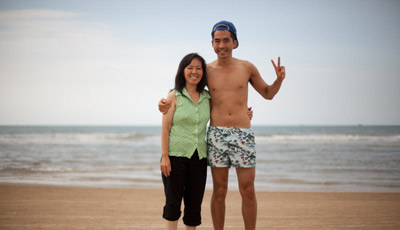
Well, I think that changed in Vietnam, when she went with me to all the shoots I did for the Gay Men Project. Essentially she was my translator for all the Vietnamese men I photographed for the project and participated in all the conversations. Many of you have had that conversation with me, so you know what it’s like, and I didn’t filter anything just because my mom was there.
She recently sent me this email after seeing the blog for the first time (she just got internet at her house), and I wanted to share it, because no matter what happens with the project, whomever I’m able to reach, I now know I’ve reached at least one person–my mom. And really, that may be the most important.
P.S. mom, i will make a book, and i will share it with the world.
“Hey Kevin:
It’s good that you brought home pictures of your friends from Vietnam. Reading June’s story remind me the time we were in Vietnam, and I was glad to see him in person when I read his story. He is an honest person, and his story was good to read. You should made a book of your Gay friends with their consensus, and publish it to share with the world.
If you have more of your Vietnamese friend’s story, I will translate for you. I think it’s fun since I don’t have a job now.
Love, take care. Mom”
I think everyone’s journey to acceptance (of anything in life) is a process, and it’s worth reading this story she wrote for me last year, regarding me being gay:
Luật di trú: Bảo Lãnh Thân Nhân – Mẫu Ðơn I-130 – Phần III
Darren Nguyen Ngoc Chuong, Esq.
Luật di trú Hoa Kỳ là loại luật rất phức tạp, do đó, theo yêu cầu của đa số bạn đọc cần am tường và thấu hiểu về luật này, tòa soạn nhật báo Người Việt mời Luật Sư Darren Nguyen Ngoc Chuong phụ trách mục “Tìm hiểu luật di trú,” đăng hàng tuần trên Người Việt. Luật Sư Darren Nguyen Ngoc Chuong là người Việt Nam đầu tiên và duy nhất tại Orange County, California được Luật Sư Ðoàn Tiểu Bang California công nhận chuyên môn về ngành Luật Di Trú Hoa Kỳ. Hiện nay California có trên 244,000 luật sư nhưng chỉ có 172 luật sư có bằng chuyên môn về Luật Di Trú. Ngoài ra, Luật Sư Darren Nguyen Ngoc Chuong từng phục vụ lâu năm tại Sở Di Trú Hoa Kỳ (INS) nên rất có kinh nghiệm trong việc thiết lập hồ sơ và thường đại diện thân chủ trước các tòa án di trú. Ông là một luật sư đầy kinh nghiệm và uy tín, chuyên trách giải quyết và phục vụ đồng hương Việt Nam về lãnh vực di trú nhiều năm tại California và khắp các tiểu bang Hoa Kỳ.
Bảo Lãnh Thân Nhân – Mẫu Ðơn I-130 – Phần III
Như tôi đã trình bày vào những kỳ trước, những giấy tờ cần thiết để bảo lãnh thân nhân và nêu lên những trường hợp điển hình bảo lãnh cho Anh, Chị, Em cùng Mẹ (hoặc cùng Cha và Mẹ), Con bảo lãnh cho Mẹ hoặc Mẹ bảo lãnh cho Con, và Con bảo lãnh cho Cha hoặc Cha bảo lãnh cho Con. Kỳ này tôi sẽ nêu lên thêm vài trường hợp điển hình khác và những giấy tờ cần thiết cần phải nộp chung với đơn I-130.
Trong trường hợp bảo lãnh diện Vợ Chồng, những giấy tờ cần thiết phải nộp chung với đơn I-130 gồm có:
1. Hôn thú và giấy ly dị (nếu có);
2. Khai sanh của “người thừa hưởng;”
3. Giấy tờ chứng minh “người bảo lãnh” là thường trú nhân hoặc công dân Hoa Kỳ;
4. Một tấm hình 2×2 của “người bảo lãnh” và “người thừa hưởng;” và
5. Ðơn G-325A của “người bảo lãnh” và “người thừa hưởng.”
Hôn thú được dùng để chứng minh sự liên hệ Vợ Chồng. Hôn thú phải có giá trị luật pháp theo luật của nơi “người bảo lãnh” hoặc “người thừa hưởng” ở và hôn nhân đó không trái với public policy (tức là chính sách chung) của Hoa Kỳ. Nếu “người bảo lãnh” hoặc “người thừa hưởng” trước đây đã có hôn thú với người khác, phán quyết ly dị phải được nộp chung với đơn I-130. Phán quyết ly dị được dùng để chứng minh hôn thú của hai Vợ Chồng có giá trị luật pháp. Vì nếu “người bảo lãnh” hoặc “người thừa hưởng” đã có hôn thú với người khác trước đây và chưa ly dị thì hôn thú sau này của “người bảo lãnh” và “người thừa hưởng” không có giá trị luật pháp.
Khai sanh của “người thừa hưởng” được dùng để chứng minh thân thế của “người thừa hưởng.”
“Người bảo lãnh” có thể nộp thẻ xanh, bằng quốc tịch Hoa Kỳ, hộ chiếu Hoa Kỳ, hoặc khai sanh (nếu họ được sanh ra tại Hoa Kỳ) để chứng minh họ là thường trú nhân hoặc công dân Hoa Kỳ.
Trong các hồ sơ bảo lãnh thân nhân, chỉ có diện bảo lãnh Vợ Chồng là phải kèm theo một tấm hình 2×2 của “người bảo lãnh,” một tấm hình 2×2 của “người thừa hưởng,” đơn G-325A của “người bảo lãnh” và đơn G-325A của“người thừa hưởng.”
Quí bạn đọc nên lưu ý, khi Sở Di Trú chấp thuận đơn I-130 có nghĩa là dựa theo luật di trú “người bảo lãnh” hội đủ điều kiện để bảo lãnh cho “người thừa hưởng.” Sự chấp thuận đó không có nghĩa là Sở Di Trú quyết định rằng sự liên hệ gia đình là chân thật. Sự quyết định liên hệ gia đình là chân thật hay không là do lãnh sự Hoa Kỳ. Ngoài ra lãnh sự Hoa Kỳ còn quyết định rằng “người thừa hưởng” có lọt vào một trong những điều luật cấm nhập cảnh Hoa Kỳ hay không.
Bản tin chiếu khán
Theo sự yêu cầu của quí bạn đọc, sau đây là bản thông tin chiếu khán cho tháng 9 năm 2013.
Ưu Tiên 1 – priority date là ngày 15 tháng 9 năm 2006, tức là Ưu Tiên được dành cho những người con trên 21 tuổi chưa có gia đình của công dân Hoa Kỳ.
Ưu Tiên 2A – priority date đã được hiện hành, nghĩa là sau khi hồ sơ được Sở Di Trú chấp thuận và được chuyển sang cho National Visa Center (NVC). NVC sẽ tiến hành thủ tục xin thị thực liền và không cần phải đợi ngày priority date được đáo hạng.
Ưu Tiên 2B – priority date là ngày 15 tháng 2 năm 2006, tức là Ưu Tiên được dành cho Con độc thân trên 21 tuổi của thường trú nhân.
Ưu Tiên 3 – priority date là ngày 22 tháng 1 năm 2003, tức là Ưu Tiên được dành cho Con đã có gia đình của công dân Hoa Kỳ.
Ưu Tiên 4 – priority date là ngày 22 tháng 7 năm 2001, tức là Ưu Tiên được dành cho Anh, Chị hoặc Em của công dân Hoa Kỳ.
Quí vị có thể tự theo dõi bản thông tin chiếu khán cho hàng tháng tại website của Tổ Hợp Luật Sư Nguyen & Luu, Llp tại: http://www.nguyenluu.com/vn/vnbulletin/2013-9%20luatditru_banchieukhan_dienthannhan.html
Ghi chú: Ðể am tường về việc nhập cảnh Hoa Kỳ đầy phức tạp, mời quý vị đón đọc mỗi tuần mục “Tìm hiểu luật di trú” và mục “Giải đáp thắc mắc” trên nhật báo Người Việt phát hành ngày Chủ Nhật ở trang Ðịa Phương, do Luật Sư Di Trú Darren Nguyen Ngoc Chuong phụ trách.
Mọi thắc mắc xin liên lạc: Luật Sư Darren C. N. Nguyen hoặc Luật Sư Thuong T.C. Luu của Tổ Hợp Luật Sư Nguyen & Luu, LLP địa chỉ số 1120 Roosevelt, Irvine, CA 92620. Website www.NguyenLuu.com. Ðiện thoại (949) 878-9888.
Căn bản pháp lý của can thiệp
Lê Phan
Với cuộc tranh cãi về can thiệp hay không can thiệp ở Syria đang được bàn thảo ở cả Quốc Hội Hoa Kỳ lẫn Quốc Hội Anh, câu hỏi vẫn đặt ra là trong trường hợp không có một nghị quyết của Liên Hiệp Quốc cho phép can thiệp thì liệu có căn bản pháp lý nào bên ngoài Liên Hiệp Quốc hay không?
Ðối với một số người hình ảnh những hàng dài thi thể nạn nhân trong đó có rất nhiều em nhỏ, những câu chuyện kinh hồn của nhân chứng, thì chẳng cần có biện minh nào cho can thiệp cả. Nhưng có những người khác thì vẫn còn bị ám ảnh bởi những can thiệp gần đây của Hoa Kỳ và Tây Phương mà kết quả thật không được như ý muốn.
Thực ra, chính từ phản ứng tình cảm đó đang ngày càng đưa đến một khuôn khổ pháp lý đang được phát triển để biện minh cho can thiệp quân sự dựa trên lý do nhân đạo. Ðược gọi là “Responsibility to Protect – Trách nhiệm bảo vệ” mà cái tên tắt tiếng Anh là R2P, khung pháp lý này đã được dựng lên qua những thảm họa nhân đạo hồi thập niên 1990 ở Kosovo và Rwanda.
Như phóng viên pháp lý của đài BBC Clive Coleman giải thích, khung pháp lý mới này dựa trên ba nguyên tắc chính:
*Nhà nước phải bảo vệ nhân dân mình chống lại thảm sát, tội chiến tranh, thanh lọc sắc tộc và tội đối với nhân loại, trong khi, đồng thời, cộng đồng quốc tế cũng có trách nhiệm giúp quốc gia ngăn ngừa những tội ác như vậy.
*Nơi nào có bằng cớ mạnh mẽ về những tội ác như thế này và khi nhà nước không thể hay không ngăn cản được, cộng đồng quốc tế phải tìm đủ mọi phương thức hòa bình nhằm chấm dứt những tội ác đó.
*Nếu tất cả đều đã làm hết rồi mà thất bại thì cộng đồng quốc tế có thể sử dụng võ lực.
Dĩ nhiên, để có danh chính ngôn thuận tối đa, can thiệp quân sự cần phải được cho phép bởi một nghị quyết của Hội Ðồng Bảo An Liên Hiệp Quốc. Hội đồng hiện có một vị thế độc nhất vô nhị là trọng tài chính cho việc sử dụng vũ lực trong công pháp quốc tế. Nhưng không phải lúc nào cũng có thể đạt được một nghị quyết của Hội Ðồng Bảo An. Với quyền lợi của Nga gắn bó với Syria, sẽ hầu như không thể có được đồng thuận để có được một nghị quyết tại hội đồng.
Trong tình thế như vậy, theo một số lập trường, khung pháp lý R2P cung cấp một biện minh cho cộng đồng quốc tế sử dụng vũ lực như là một giải pháp cuối cùng. Thi hành giải pháp này có thể là qua một liên minh vùng hay một cái đã được gọi là “Coalition of the willing,” một liên minh của những quốc gia sẵn sàng tham gia.
Dĩ nhiên là có một số bảo đảm cần thiết nếu muốn sử dụng R2P làm biện minh. Trước hết cần có bằng cớ rõ rệt là đang có một thảm họa xảy ra. Thứ nhì là mọi biện pháp ôn hòa, như ngoại giao, cấm vận, đã được sử dụng mà không đạt được kết quả. Và thứ ba là bất cứ việc sử dụng vũ lực nào cũng phải có mục tiêu rõ rệt để chấm dứt thảm họa và bảo vệ thường dân.
Nói cách khác, đây chỉ là một quyền hành động giới hạn. Tuy nhiên, một số các luật gia tin là một khi tất cả những tiêu chuẩn này đã có, thì lúc đó việc sử dụng võ lực giới hạn và có chủ đích rõ rệt có thể hợp pháp theo khung luật pháp R2P.
Dĩ nhiên can thiệp quân sự trong hoàn cảnh này là tùy vào chính phủ chứ không phải các luật gia. Các chính phủ do đó có nhiệm vụ phải chứng minh là họ có lý do để can thiệp quân sự vào một quốc gia và để chứng minh là họ hành động đúng theo pháp lý.
Nhưng cái gọi là Công pháp Quốc tế không phải như luật pháp quốc gia. Trên trường quốc tế không có một tòa án quốc tế nào có thể đưa ra phán quyết là hành động can thiệp quân sự, nếu đáp ứng được những đòi hỏi trên, là hợp pháp.
Và chính vì thế hiện nay vẫn còn rất nhiều tranh cãi. Luật Sư Geoffrey Robertson, một luật sư về nhân quyền quốc tế, biện minh là chưa bao giờ cần có một nghị quyết của Hội Ðồng Bảo An chấp thuận hành động để ngăn chặn, trừng phạt hay răn đe đối với tội đối với nhân loại. Ông Robertson chỉ ra là trước khi có Liên Hiệp Quốc hay Hội Quốc Liên thì đã có những trường hợp được công nhận rõ ràng để có hành động chống lại hải tặc hay là nô lệ.
Gần đây, ông Robertson chỉ ra hành động của Liên minh NATO nhằm chấm dứt vụ thanh trừng sắc tộc ở Kosovo. Việc đó đã không đòi hỏi một nghị quyết Hội Ðồng Bảo An, và Nga đã không chặn hành động đó. Ông nhắc lại là nếu Nga muốn ngăn cản hành động chống lại Syria vì tội đối với nhân loại qua việc sử dụng vũ khí hóa học để thảm sát dân mình, thì họ phải đưa ra một nghị quyết lên án ở Hội Ðồng Bảo An, như họ đã cố làm ở Kosovo. Lần đó Nga thất bại, chỉ có ba phiếu ủng hộ thành ra hành động của NATO được coi là chính đáng.
Nhưng ông Robertson cũng khuyến cáo là việc sử dụng vũ lực phải thích ứng, và mục đích phải là ngăn cản chế độ Syria đừng sử dụng khí độc nữa. Nó có nghĩa là một số hành động quân sự giới hạn, với đe dọa là sẽ có thêm hành động nữa nếu chính quyền tiếp tục sử dụng khí độc.
Ông khẳng định là “thế giới không thể cấm vũ khí hóa học và rồi bình chân như vại khi một quốc gia dùng nó để hạ sát thường dân.” Ðiều khó, theo ông là làm sao chứng minh được “không nghi ngờ” gì nữa là thủ phạm chính là chính quyền Syria.
Giáo Sư Robert McCorquodale, một chuyên gia về luật quốc tế và luật đối chiếu, thì không đồng ý với lý luận đó. Ông khẳng định “Sử dụng vũ lực bởi một quốc gia trong trường hợp trở thành một đe dọa cho hòa bình và an ninh quốc tế, như ở Syria, nằm dưới Hiến Chương Liên Hiệp Quốc. Hiến chương này đòi hỏi hành động phải được sự chấp thuận của Hội đồng Bảo an để có thể hợp pháp (trừ trường hợp tự vệ).”
Nếu những bằng cơ mạnh mẽ và độc lập về việc sử dụng võ khí hóa học của chính phủ Syria thì việc đó đã vi phạm đủ luật pháp quốc tế để biện minh cho những hành động hợp pháp quốc tế. Và hành động hợp pháp đó không hẳn là quân sự.
Lý luận là can thiệp quân sự có thể chấp nhận được vì những lý do nhân đạo, như là biện minh cho can thiệp ở Kosovo năm 1999, hay là như một phần của trách nhiệm của quốc gia bảo vệ mọi người đã là nạn nhân của tội ác chiến tranh, thảm sát, tội đối với nhân đạo và thanh lọc sắc tộc là một vi phạm trắng trợn và có hệ thống nhân quyền, như biện minh chính cho sứ vụ của Liên Hiệp Quốc ở Darfur năm 2006.
Nhưng cả hai nguyên tắc đó chưa thành công pháp quốc tế, chỉ là một chỉ dấu cho một sự hướng về một công pháp quốc tế tập trung vào con người hơn là quốc gia. Và trong khi sự thiếu hành động của Hội Ðồng Bảo An có thể thật bực tức cho nạn nhân của các hành động bởi các nhà nước, ở Syria và trên toàn thế giới, hệ thống công pháp quốc tế hiện nay được làm bởi các nhà nước để bảo vệ hòa bình và an ninh quốc tế và để ngăn cản sử dụng võ lực đơn phương. Công pháp quốc tế hiện hành do đó nói rằng can thiệp vũ trang sẽ là phạm pháp nếu không có sự cho phép của Hội Ðồng Bảo An, ông McCorquodale kết luận.
Lý luận của hai luật gia ở trên cho thấy là việc can thiệp quân sự vào Syria chắc chắn sẽ gây nhiều tranh cãi. Ðối với chính phủ Hoa Kỳ và chính phủ Anh, thực ra, điều quan trọng chính là làm sao thuyết phục các vị dân cử đồng ý với hành động can thiệp. Thủ Tướng David Cameron đã thất bại vì quá vội vàng và thiếu chuẩn bị. Tổng Thống Barack Obama đã thận trọng hơn.
Healthcare in Vietnam
By Julie Kessler
I am an incredibly lucky traveler in that, despite having traveled to sixty countries, I have never really gotten sick. Perhaps I should rephrase that. I have had the occasional stomach upset while tasting street vendor delicacies in Indonesia, and I once got food poisoning from some bad fruit juice in the former Yugoslavia. And one time I got a fairly nasty exhaust pipe burn on my calf from a rickety old motorcycle I was stupidly riding somewhere up in the hills of Northern Thailand. But nothing more serious than that, and nothing that required a trip to a hospital or even to a clinic — that loud sound you hear is me knocking profusely against the wood desk at which I am sitting.
Photo from Julie Kessler
I was in-house counsel to a surgical facility for several years, and often inadvertently saw plenty of surgical detritus; my brother is a doctor, and my mother’s second career was nursing. To even my surprise, however, I don’t think much about healthcare while traveling overseas. Perhaps it’s blind luck, or perhaps it’s simply magical thinking.
Last month, seven years after my first visit to Vietnam and Cambodia with my then ten-year-old daughter, I took my husband to Vietnam. We started the trip in chaotic Saigon in the south, and traversed the beautiful coast in Nha Trang and the sleepy island of Ninh Van. Then, following the hustle and bustle of Hanoi in the north, we ended up 400 kilometers to the very northwest of the country in the hills of Sa Pa, not far from the Chinese border. The good news is that we had a great time. And no, other than one nasty spider bite of unknown origin on an overnight boat junket in the World Heritage Site of Ha Long Bay in the east of the country at the very end of the trip, no one got sick. The bad news is that we learned that one never, ever wants to get sick anywhere in Vietnam.
There has been incredible economic progress in many sectors of Vietnam since its doors opened to foreign travelers in the mid-1990’s. One sees everywhere the ready appearance of Communism “light,” at least from a market standpoint: business is simply booming and construction in rampant. However, one sector in Vietnam which is far, far behind even that of other emerging nations is its healthcare delivery system.
In a country of approximately 91 million people, as of the end of 2012, there were only 1.2 physicians per 1,000 inhabitants; this reflects virtually no increase since 2008. For comparison purposes, Greece has 6.2 physicians per 1,000 people, and the U.S. 2.4 per 1,000. In several state-built and state-run “hospitals” in Vietnam, especially in the more remote northern regions of the country, there simply are no doctors at all, not even visiting doctors, just a few nurses to tend to a wide variety of the population’s ailments. And in the bigger city hospitals in Saigon and Hanoi, there are precious few nurses as well. But that, of course, is only one part of the problem. Another, perhaps potentially more systemic problem is the rationing of services to those best able to pay bribes to physicians and their staff. One should keep in mind that the average public school teacher (and teaching is considered by many to be a good job) makes the equivalent of $150 per month. Indeed, Vietnam’s GNI for 2012 was the equivalent of $1,400. Many working people, especially those who work for large companies, have state health insurance, at least in theory; in reality, however, it may not provide them with care, or at least not with care that is acceptable.
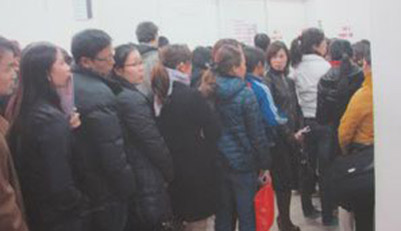
We know a Vietnamese couple who live in Hanoi, both of whom work in tourism. The wife works for a large French hotel chain which provides her with health insurance. When she was about to have their first child, she learned it would be necessary to schedule a Caesarian section. Had she gone to the public hospital for the delivery, she would have had to share a hospital bed with another female patient, and that bed would have been in an unbelievably overcrowded ward. She would have also had to bring several family members to tend to her pre- and post-operatively around the clock, because of the severe nursing shortage. Those family members would not have been given so much as a chair, but would instead have to sleep under the patient’s bed on the floor, usually on a straw mat which they would likewise have to tote along. They would have also been required to bring supplies, including food, water, and other items for the patient. So instead, our friend took his wife to a private hospital where he paid bakshish in an amount equivalent to $300 to the physician (paid in cash in secretly following the successful birth). An additional $200 went to the hospital for use of the operating room and medicines, and $80 went to the semi-private room at $20 per day. Following the birth, our friend was subsequently reimbursed the sum of $25.00 by his wife’s insurer. This was, ostensibly, the amount that would have been paid directly to the public hospital had the delivery occurred there. A friend of the couple had a child two months ago at the same private hospital with the same physician, but this was a normal vaginal delivery. The bakshish to the doctor in that case was “only” $150. However, the friend’s infant was born with a lung infection which required anti-biotics, costing an extra $300, and requiring a three-night stay, for an additional $60.
While the numbers are, of course, minimal by U.S. healthcare cost standards, they are shocking when viewed in light of the average Vietnamese person’s annual income. Clearly there is nothing in a U.S. hospital that costs $20, except perhaps the daily parking charges. However, I have certainly received a reimbursement check from an insurance company in the U.S. for $25, though I think the submitted charges were something like $500 — or perhaps it was $5,000.
In case this story seems hard to believe, take a gander at the photos below, all of which were taken at Bach Mai hospital in Hanoi. Here you see the line to get in to the hospital, a photo of the corridors, and one taken of the wards.
So if you are heading east, pack along a good first aid kit, travel safe, and take a pass on the ever-present motorcycle taxi should you find yourself in Vietnam. And the next time you think to complain about health care delivery in the U.S. in general, or Obamacare in particular — and if you do, you will need to get line right behind me — you may want to take a look at these photos again. Then thank your lucky stars that our health care is as “awful” as it is.
Joe Gannon: Dr. King’s fatally radical vision about Vietnam
By JOE GANNON, GAZETTNET
NORTHAMPTON
Martin Luther King Jr. Photo from MOORE to the POINT.
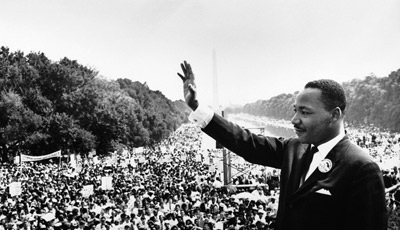
But it was not that speech which got him killed. The speech which most likely did get him assassinated was his “Why I oppose the war in Vietnam” address, delivered April 4, 1967.
In that far less remembered speech, he laid down his mandate as a civil rights leader, and picked up the mantle of a true revolutionary. In that speech he made it clear that his goal was not for Rosa Parks to sit wherever she wanted, but to dismantle foundations on which America stood.
He spoke of the “triple evil … of racism, economic exploitation and militarism.”
Since his death, America sadly has embraced the sanitized King of the 1963 March on Washington, the pastor who wanted nothing more than for “little black boys and girls to join hands with little white boys and girls” in a rainbow version of America. But by 1967 King had come to realize how meager that vision was, and found himself compelled against all advice to issue his unequivocal call for a “radical revolution in values.”
The squandering of resources in Vietnam, and an unconditional surrender in the War on Poverty here at home, made King declare America a “society gone mad on war.”
Standing at the pulpit, King declared the United States “the single greatest purveyor of violence in the world.” He told a country convinced of its moral superiority that it acted like “a policeman of the whole world.” He had the outraged courage to warn that he heard “God telling America ‘You’re too arrogant! And if you don’t change your ways I will rise up and break the backbone of your power and place it in the hands of a nation that doesn’t even know My name!’”
In that speech, King declared his “eternal hostility to militarism” and issued a veiled call to draft resistance when by telling young men to “take a stand” against the war.
All this came not because we were losing in Vietnam; not because we were wrongly involved in someone else’s civil war; not because it was too expensive or making America less safe. No, King’s opposition to the war came from his conviction that it was immoral.
Touchingly, King made it clear his condemnation came from a place of love. “I love America … There can be no great disappointment where there is no great love.” Above all what he wanted was for America “to come home” to its founding ideal that all people are created equal. “Come home America,” he said.
And that love of country pushed him further. Years after the Civil Rights and Voting Rights Acts became law, King was not satisfied and declared his intention to escalate his struggle to include the “glaring contrast of poverty and wealth” in the richest nation on earth. He called out multinational corporations that not only exploited Third World nations, but “profited” from the Vietnam War and so opposed its speedy end.
I believe it was not just the message that got King killed in Memphis on April 4, 1968, at the age of 39, but the medium.
Visit YouTube and listen through 22 minutes and 48 seconds of spine-tingling oratory. You will understand that someone listening in real time — whether James Earl Ray, J. Edgar Hoover or John Q. Public — shuddered, and decided that King must die.
But King lives. Not in our official, non-threatening “remembrances” of him over a three-day weekend in January, but in our current national malaise.
True prophet that he was, King foretold of this malaise in 1967 when he warned that “a nation which spends more money on military defense than programs of social uplift is approaching spiritual death.”
As America had done exactly that for the last 46 years, that spiritual death is upon us. Ringing the bell for the 50th anniversary of his “dream” does little to change the fact that he lived just long enough to see his own dream in tatters.
The Baggage of Racial Bullying
By Theresa Celebran Jones, Hyphen Magazine
A few weeks ago, I saw my big kid off to Kindergarten on the school bus for the very first time. Months ago, she had been in anguish over the idea of going to a new school where she knew nobody, but you wouldn’t have guessed it while we were waiting at the bus stop. In fact, she spent the last weeks of summer barely able to contain her excitement. We had visited the school a few times and met some of the faculty, and each time she’d walk off to play in the front yard of the school and come back ten minutes later with a new friend. She was Ready (with a capital R).
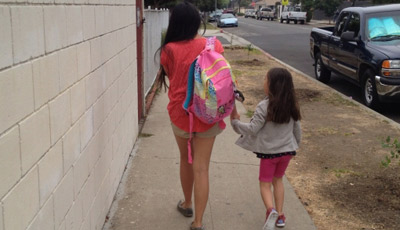
Photo from Hyphen Magazine
I met the day mostly with pride. Our daughter was well-equipped for the change — much more than I would have been at her age. We had already moved cross-country once, and she had been in preschool for three years prior to this. She has always been super friendly and social, and she already had a lot of experience being thrown into a new environment and having to make a whole new set of friends. I figured going off to Kindergarten was old hat for us. It was an important milestone for us, but it was a positive, happy one; at least, that’s what I told myself as I tried to keep the mom-anxiety at bay.
She made it through the first week with the same positive attitude, but then mentioned nonchalantly that a couple of boys — boys whose names she’d mentioned literally every day as being the funniest kids in class — had been mean to her. I tried my best to play it cool, but I did feel my heart beating faster and my blood pressure rising. Why didn’t the teacher tell me? How are we going to handle this? Is it okay to teach her to hit back? And after the kids went to bed that night, I drafted a long, incensed email to the teacher.
My husband and I tend to err on the side of hypersensitivity when it comes to bullying, thanks to our own childhoods. My husband attended middle school in Seoul where, as a mixed kid, he stuck out and frequently got into fights. I spent all of my early years getting beat up on by my cousins, then in elementary school I made a best friend who had gained the title by isolating me from the rest of our classmates and picking on me until I sufficiently felt like I wasn’t allowed to sit with anyone else at lunch.
Coming up in a predominantly white suburb of Connecticut has informed a lot of the decisions I’ve made as a mother. According to Great Schools, my alma mater is currently 82% white, but that number was undoubtedly higher when I graduated 13 years ago. While this experience wasn’t terribly traumatic — I made it out alive and sane, and I still keep in touch with a classmate or two, after all — the racial isolation I experienced wasn’t something I’d choose to put my kids through.
There were no burning crosses out there. I didn’t learn the term “microaggressions” until college, but that was what my childhood was full of. Neighborhood kids telling me my house smelled funny or insisting they couldn’t understand what my parents were asking them, even when they were speaking English. A group of classmates in high school asking crazy inappropriate questions like the size of my dad’s genitalia. Even when these kids were being “nice”, they were being assholes. I had a friend who nicknamed me “Pah” — which stood for “Pretty Asian Hair.” I was catcalled by high school boys and called a chink in the same breath.
My home life made me especially susceptible to bullying. My cousins grew up in the same town and they knew the racial isolation well. I think it was natural for them to deflect the pain onto me. It wasn’t just standard bullying fare either, like picking on me because I was little and I wore glasses. A lot of it was because I was part Chinese, not full Filipino like them. I got the slanty eyes a lot, and the “Let’s see if we can blindfold Theresa with this dental floss” a lot. My family always explained this to me as their way of making me feel included; it was kind of a rite of passage that my older cousins went through with our older older cousins, and they’d insisted I’d feel left out if they didn’t beat up on me.
It wasn’t so much that I wanted to be included, either. In the end, I realized I didn’t want to be accepted by any of these people. I mostly wanted to feel like I had some control and agency. I wanted someone to be on my side and help me feel brave. My parents were not big on teaching or allowing me to speak up in most situations, and when it came to my cousins, their best (only) advice was to ignore them, which was difficult to do when I was at their house almost every day. Their other solution — signing me up for Tae Kwon Do — only opened me up to more ridicule at a time where I wanted to minimize the my exposure to Asian things as much as possible.
I harnessed all of that frustration by going punk in high school, by writing, and by taking a special interest in social justice. Focusing on injustice in the world around me was a way for me to speak out without standing up to my bullies face-to-face. And this fear of speaking up still haunts me as an adult — I still have a recurring theme in my nightmares of needing to scream but not having a voice. And, obviously I’m still passive-aggressively blogging my issues to avoid the discomfort of confronting some of the bullies I still have contact with.
Since the day I was pregnant with my older kid, I promised myself that, as a mom, I wouldn’t go out that way. I would teach my child assertiveness, I would let her know I supported her, and I would make sure she fought back. But it’s tricky to teach skills that I never learned myself. My husband has mostly taken over as the king of being assertive and fighting back, but I find myself occasionally getting in the way by being overly concerned about having a polite, well-behaved child — just like I was when I was young.
At the very least, racial isolation is not something we have to worry about in our elementary school. For one, like Aimee Phan recently wrote in the NY Times, we pay a premium to live in L.A. specifically to avoid that type of thing. But our daughter also attends a magnet school where only 37% of the student body is white, and a whopping 31% of the student body is Asian (as opposed to my old high school’s measly 8%). That said, racial integration isn’t necessarily a remedy to good ol’ garden variety bullying.
I did end up sending a diplomatic email to my daughter’s teacher, to let her know what she said and that I would continue to ask her if the situation improved. My husband and I also had a long talk with our girl, telling her that it was okay to tell people she doesn’t like it when they are being mean to her.
And after a phone call to the teacher to get more information, it didn’t seem to be much of a bullying situation at all, really. In the end, they were boys my daughter chose to play with every day — the teacher even asked if we knew them from before Kindergarten because they acted so familiar with each other — and maybe she just didn’t have the words to tell them, “Hey, I don’t like when you guys say those things or play rough like that.” I may have jumped the gun with my Mama Bear steez, but hopefully my kid gained at least a little of the courage I never had.
– See more at: http://www.hyphenmagazine.com/blog/archive/2013/08/baggage-racial-bullying#sthash.J7WQnkFl.dpuf
Column: Making sure your child is prepared for back-to-school
By Matt Rocheleau, Boston.com
The following is a column from Dr. Huy Nguyen, medical director at the Boston Public Health Commission and a pediatrician at the Dorchester House Multi-Service Center:
Hot summer days have meant hours of fun for the children of Boston. But, cooler mornings, advertisements for backpack sales, and the winding down of summer camps can mean only one thing: the new school year is upon us. While each student has his or her own list of “must have” school supplies, there are a few things that families can keep in mind to ensure that their student goes back to school as prepared, healthy, and as safe as possible.
Photo from Edudemic.

Be Healthy
Before beginning the new school year, check with your pediatrician to confirm that your child is up to date with all recommended immunizations for their age. Vaccines are the proven safe and effective way to protect your children from many serious infections that they may be exposed to in the classroom, school bus, or school yard. Pertussis, the bacteria that causes whooping cough, for instance, infected more than 41,000 Americans in 2012, and caused 18 deaths, mostly in young children. Middle school and high school outbreaks of whooping cough, can be prevented by giving 11- and 12-year old children the Tdap vaccine, to “boost” their immunity when the protection from the vaccines they received as infants and preschoolers is waning.
Another important way to stay healthy is to get the influenza vaccine. Either the flu shot, or the flu nasal-spray vaccine, is the single best way to protect your student and your family from influenza, an infection which causes more hospitalizations and deaths among American children than any other vaccine-preventable disease. All children over 6 months should receive the flu vaccine. Kids under age five years and children with a chronic illness such as asthma or developmental delay, are at high-risk for having severe flu symptoms and should receive the flu vaccine as soon as it is available, usually by mid-September.
Being healthy isn’t just about physical health. Mental health during the school year is also incredibly important. Stressors such as bullying can affect a child’s performance in the classroom and at home. Keep an open dialogue with your child about bullying and seek help should your child experience trouble at school. The Boston Public Schools Bullying Prevention Hotline at (617) 592-2378 is available to provide resources to both parents and kids experiencing bullying in school and also as a means to report instances of teasing.
Be Prepared
It’s not just kindergarteners who may be nervous about starting the new school year. Starting another year, moving to a new classroom and meeting new friends can be as stressful as starting a new job. Help your children mentally prepare by practicing their school routine during the last week of summer vacation. Help set their internal “clock” by getting them to bed early and waking them up according to their daily school routine. Reading a story to your children at the end of a busy day is still one of the best ways to settle them down for bed. In general, 4- to 9-year olds need at least 10 to 11 hours of sleep; older children need about 9 to 10 hours of sleep every night. Well-rested students are more attentive in class and perform better academically.
Be Safe
Whether your child walks, receives a ride, bikes, or drives to school, getting there safely is everyone’s priority. Walkers should be reminded to cross streets at pedestrian crosswalks and to look for walk signals. School bus riders should not cross the street in front of the bus unless they can be seen by the bus driver. Student cyclists should always wear helmets and follow the rules of the road. If your child is driving to school, help your teen to follow Massachusetts’ graduated driving laws designed to keep teen drivers safe when their risk for crashing is greatest: during the first six months of their licensure, at nighttime, and when they are driving with other teenagers in the car. Be a good example and always wear your seatbelt and insist that your children do, too. Talk to your teen about never drinking and driving and never getting into a car with a driver who may be under the influence of alcohol or other substances.
Heading back to school is an exciting time of year, with new teachers and new opportunities. To succeed, our kids need to stay happy and safe– and always, stay kids at heart. With that in mind, let’s do our best to keep them healthy and always ready to learn.
Sinh Hoạt Tuổi Trẻ
Học đường
Đánh giá các trường đại học Hoa Kỳ theo tiêu chuẩn “đáng đồng tiền bát gạo”, tờ Washington Monthly xếp hạng các trường như sau: 1. Amherst College (MA) , 2. CUNY Queens College (NY) , 3. CUNY Bernard M. Baruch College (NY), 4. CA State University-Fullerton (CA), 5. University of Florida (FL) , 6. CA State University-Long Beach (CA), 7. University of Georgia (GA), 8. University of NC-Chapel Hill (NC), 9. Appalachian State University (NC), 10. NC State University-Raleigh (NC). Đây là các đại học công, hầu hết có tỉ lệ thu nhận học sinh khá thấp, nhưng vẫn không “kén” bằng nhiều đại học khác trong cùng tiểu bang.
Đời sống
Thành phố Madison vừa đặt tên Thứ Sáu vừa qua là “John ‘Vietnam’ Nguyen Day”, tưởng niệm một năm ngày mất của thanh niên gốc Việt 19 tuổi tài giỏi nhưng gặp tai nạn và chết đuối ở Lake Mendota. John được biết đến không những về thành tích học tập xuất sắc tại trường lớp, mà còn về các hoạt động xã hội, chính trị mà anh tham gia. Anh có năng khiếu và đam mê về loại văn “spoken word” hay rap. Anh từng viết và trình bày nhiều bài thơ để vận động cho tuổi trẻ và lý tưởng sống. Anh cũng từng đoạt điểm cao nhất khi tranh học bổng của First Wave, với bài dự thi vừa đọc rap, vừa chơi nhạc hiphop và nhảy breakdance. Cha của anh là một cựu chiến sĩ Việt Nam Cộng Hoà.
Sinh hoạt
Hội Sinh Viên Việt Nam tại Đại học Houston tổ chức buổi họp mặt đầu tiên trong niên khoá mới tại phòng Bayou City Room của trường vào 4 giờ chiều Thứ Tư, 4 Tháng Chín.
Hội Sinh Viên Việt Nam tại Đại học South Florica tổ chức buổi họp mặt đầu tiên trong niên học này tại phòng MSC 2707 của trường vào 5 giờ 30 chiều Thứ Năm, 5 Tháng Chín. Buổi họp cũng là thời điểm ghi danh vào chương trình Anh Chị Em và Heart of Vietnam của hội.
Hội Sinh Viên Việt Nam tại Đại học UC Berkeley tổ chức buổi họp mặt đầu tiên cho niên khoá mới tại phòng Dwinelle Hall vào 7 giờ 30 tối Thứ Năm, 5 Tháng Chín. Sẽ có pizza miễn phí và hát karaoke.
Hội Sinh Viên Việt Nam tại Đại học UC Riverside tổ chức buổi sinh hoạt vào vào 1 giờ trưa Thứ Sáu, 6 Tháng Chín, ở một hồ bơi gần trường.
—
Liên lạc: [email protected]