Bản tin không nói rõ là hỏa tiễn Sparrow có bị bắn rơi hay không. Phía Mỹ cho hay không có một hỏa tiễn nào được bắn đi từ các chiến hạm hoạt động trong vùng.


HÀ NỘI 3-9 (NV) .- Kinh tế Việt Nam sẽ tiếp tục suy thoái, thời gian khó khăn sẽ còn kéo dài trong hai năm nữa. Ngân sách đang hết sức gay go và không có nguồn bù đắp vì số lượng doanh nghiệp chết quá lớn.

Đó là nhận định của ông Trần Đình Thiên, một tiến sĩ kinh tế, hiện đang là Viện trưởng Viện Kinh tế CSVN. Ông Thiên đưa ra nhận định vừa dẫn trong cuộc tọa đàm với các thành viên của Hội Doanh nhân trẻ Việt Nam, diễn ra hôm 1 tháng 9, tại Hà Nội.
Nhân vật hiện là Viện trưởng Viện Kinh tế Việt Nam loan báo, trong sáu tháng đầu năm nay, tại Việt Nam, có thêm 25,000 doanh nghiệp đóng cửa, ngưng hoạt động. Ông Thiên tỏ ra tiếc cho những doanh nghiệp này và đó cũng là lý do khiến ông thêm bi quan.
Tình trạng doanh nghiệp Việt Nam đóng cửa, ngưng hoạt động hàng loạt xảy ra từ năm 2011 và kéo dài cho tới nay. Theo ông Thiên, những doanh nghiệp mà nội lực yếu đã chết sớm, không đáng tiếc lắm, bởi đó là quy luật.
Tuy nhiên thật đáng tiếc và rất đáng lo khi từ đầu năm 2013 đến nay, có thêm 25,000 doanh nghiệp nữa “hy sinh”. Viện trưởng Viện Kinh tế CSVN nhận định, những doanh nghiệp mới chết và sắp chết đều là những doanh nghiệp tốt, họ đã cố gắng cầm cự, chống chọi với tình thế song “lực bất tòng tâm”.
Ngoài 25,000 doanh nghiệp đã chết từ đầu năm tới nay, người ta dự đoán, từ nay đến cuối năm, sẽ có thêm khoảng 15,000 – 20,000 doanh nghiệp nữa đóng cửa, ngưng hoạt động.
Trong vài tháng qua, chính quyền Việt Nam đưa ra nhiều số liệu và dự báo, theo đó, kinh tế Việt Nam sẽ bắt đầu hồi phục vào cuối năm nay.
Song bên cạnh những số liệu và dự báo lạc quan này, lại có nhiều số liệu cho thấy, kinh tế Việt Nam đang di chuyển từ bi đát tới… bế tắc.
Việt Nam đang vừa bội chi, vừa thất thu nghiêm trọng về ngân sách. Bảy tháng đầu 2013, bội chi lên tới 102 ngàn tỉ và gần như tất cả các địa phương đều đã thừa nhận, năm nay, thu cho ngân sách sẽ thất thu từ hàng trăm tỉ đến hàng chục ngàn tỉ. Sài Gòn hiện được xem là nơi dẫn đầu về thất thu ngân sách. Chính quyền thành phố này dự đoán, thất thu ngân sách của năm nay sẽ ở mức khoảng 20.000 tỉ đồng.
Trong cuộc tọa đàm với Hội Doanh nhân trẻ Việt Nam, ông Trần Đình Thiên nhận định, doanh nghiệp chết hàng loạt như thế thì lấy đâu ra tăng trưởng GDP! Ông Thiên cho rằng, hệ quả hiện tại có nguồn gốc từ “sự say sưa trong tăng trưởng” nên “chậm nhìn ra những vấn đề phải cơ cấu cho nền kinh tế”.
Viện trưởng Viện Kinh tế Việt Nam gọi 2013 là “đáy tăng trưởng của 13 năm gần đây”. Theo ông ta, “kể từ khi đổi mới, chưa bao giờ kinh tế Việt Nam khó khăn như bây giờ”.
Hồi tháng 4 vừa qua, tại một hội thảo về “Ngân hàng và Doanh nghiệp”, do Phòng Công nghiệp Việt Nam (VCCI) tổ chức, ông Thiên đã từng nhận định: “Có nhiều thứ xấu hơn cả nợ xấu”. Lúc đó, khi hệ thống truyền thông tập trung chỉ trích hệ thống ngân hàng vì đã để “nợ xấu” (nợ không có khả năng thu hồi) quá lớn, ông Thiên cho rằng, quy trách nhiệm cho ngân hàng là đúng, vì ngân hàng sơ suất khi cho chủ đầu tư những dự án nhiều rủi ro vay tiền. Tuy nhiên, theo ông Thiên, chính phủ cũng phải chịu trách nhiệm về tình trạng nợ xấu gia tăng như hiện nay.
Ông Thiên nhắc rằng, đừng quên việc chính phủ từng khuyến khích nhiều doanh nghiệp vay tiền để thực hiện các công trình “đầu tư công”. Rồi sau đó chậm trễ thanh toán tiền cho các doanh nghiệp này, khiến nhiều doanh nghiệp khánh kiệt bởi phải trả lãi cao. Khoản nợ mà chính phủ còn thiếu các doanh nghiệp khi họ đứng ra thực hiện các công trình “đầu tư công” từ 2011 đến giữa năm 2013 được ước đoán là hàng trăm tỉ đồng.
Cũng theo Viện trưởng Viện Kinh tế Việt Nam, “xấu hơn nợ xấu” còn là chuyện, thực tiễn kinh tế từ 2007 đến nay, không có điểm mới nào đáng kể. Xu hướng kinh tế chỉ càng ngày càng xấu.
Tình trạng không thể xác định chính xác tổng số nợ xấu cũng được ông Thiên xác định là “xấu hơn nợ xấu”, bởi khi “không có số liệu đáng tin cậy thì không thể xây dựng chiến lược đúng để giải quyết vấn đề”.
“Xấu hơn cả nợ xấu” còn là tình trạng quá nhiều doanh nghiệp được ông Thiên gọi là “lực lượng chủ lực của tăng trưởng” chết hàng loạt”.
Tuy nà cầm quyền Hà Nội tuyên truyền “kinh tế Việt Nam đang hồi phục và thoát đáy trong năm nay” nhưng Viện trưởng Viện Kinh tế Việt Nam vẫn khẳng định đó là chuyện “còn xa với thực tế”. Theo ông Thiên, đó là “quyết tâm không thể nào thực hiện được” vì hai yếu tố quan trọng nhất là tín dụng và ngân sách nhà nước đều yếu. (G.Đ.)

By By Lauren Cahoon Roberts, Live Science
The waning days of summer herald the time when many young people wave farewell to their parents’ home and head to college, where they’ll face a barrage of challenges and changes, from overwhelming intro classes to inscrutable roommates.

College students may also face challenges to their health, both physical and mental, that may have long-term effects reaching well past their undergraduate years.
“I advise students to maintain a balance,” says James Davidson, assistant vice president for student wellness at the University of Nevada. “Your health is more than the physical condition of your body. There are multiple aspects of wellness to consider… When one area gets out of balance, it usually affects the other aspects of your life, whether you realize it or not.”
Here are some well known, as well as some less familiar health issues that college students face as they embark on higher learning.
STRESS

While many different parts of college life can cause stress, the outcome is the same: Stress is the top factor negatively influencing academic performance, according to a 2012 survey of 90,000 college students. The survey looked at whether students earned a lower grade on an exam, project or in a class; or dropped a class due to stress.
“Stress is the greatest impediment to academic success for most students,” Davidson said. “My advice to students is to monitor their stress levels, and get assistance from your campus counseling and health centers.” [11 Tips to Lower Stress]
BINGE DRINKING

Up to 40 percent of all college students report engaging in binge drinking (typically defined as consuming four drinks on one occasion for women, and five drinks on one occasion for men). The behavior does a number on students’ brains, with research showing that young adults who drink heavily have abnormalities in the gray and white matter of their brains.
Binge drinking has other serious effects. A 2009 study found that 1,800 college students die from alcohol related causes yearly; approximately 600,000 are injured under the influence of alcohol, and nearly 700,000 are assaulted by other students who have been drinking.
While binge drinking has an array of short-term negative effects, it can have more residual effects as well. A survey of 1,972 U.S. college students, interviewed during their college years and again 10 years later, found that some binge drinkers were more likely to experience alcohol dependence and alcohol abuse later in life. They also had poorer job opportunities and a higher risk of dropping out of college.
DEPRESSION

Research shows that college students face heightened levels of depression and anxiety, with freshman often suffering the most from these issues as they adjust to a new environment. The conditions can also lead to increased substance abuse, poor academic achievement and suicide.
Depression often goes unreported by college students, but some studies suggest that students are becoming more comfortable in speaking out about this problem – the rate of reporting depression is increasing, rising by 56 percent between 2005 and 2011.
This increase is “likely a reflection of improvements in psychotropic medications, and greater utilization of mental health care due to declining stigmas around mental health,” said Kevin Readdean, associate director of the Student Health Center at Rensselaer Polytechnic Institute in New York state.
In other words, better medication and less stigma means that more students with depression are able to start and stay in college, which has contributed to increased reporting, he said.
SOCIAL ANXIETY

Most college students experience a brand-new social environment upon entering college, and research confirms that almost all of them experience varying levels of social anxiety and stress.
One recent study that followed the social lives of 53 college women for five years found that social hierarchy was a dominant force in their lives, and that pressure to achieve high social status was prevalent.
The study also found that social stresses were correlated with excessive drinking, and could lead to poorer academic and life outcomes due to a ‘partying’ lifestyle.
WEIGHT GAIN

While many new college students fear the fabled “freshman 15,” the addition of 15 extra pounds is not as common as it’s made out to be.
“Less than 5 percent of students are likely to gain 15 pounds during the freshman year,” said Sareen Gropper, a professor of nutrition at Auburn University in Alabama. “Instead, the typical college freshman gains anywhere from 3 to 5 pounds.”
And what makes the pounds pile on? College students tend to eat morehigh-calorie foods, and fail to get enough physical activity, Gropper said. “Those foods are often consumed late at night while studying, as well as during evening social activities.”
Still, freshman-year weight gain is not inevitable, Readdean told LiveScience. “College students today have more dining hall food choices and information than ever before. With effort and planning, healthy eating can easily be achieved on any meal plan.”
CASUAL SEX

Although many college students engage in casual sex, a recent study of more than 1,800 18-to-25-year-olds who had completed at least one year of college found that the students were not any more promiscuous during their first year of college, than they were in the years prior to college.
Nonetheless, studies show that college students believe their peers are much more sexually active than is actually the case.
Commonplace or not, casual sex comes with health risks, including sexually transmitted diseases, emotional and mental distress, sexual violence and unintended pregnancy.
“Sexually transmitted infections, most of which are treatable, are a key physical health issue for today’s college students,” Readdean said. “Despite access to testing, treatment and prevention options, some college students are not being proactive enough in this area.”
SLEEP DEPRIVATION

Too many college students know the pain of sleep deprivation. One study of 120 university students found that 60 percent had pulled at least one all-nighter during their college careers. Unfortunately, such sleepless nights were correlated with a lower GPA.
A larger study, of 1,125 students, found that 60 percent had poor sleep habits, including delaying both bed and rise times on weekends, as well as taking prescription, over the counter and recreational drugs to alter sleep or wakefulness. These students reported more problems with their physical and psychological health than those with better sleep habits.
“Adjusting to irregular class schedules, a proclivity to pulling all-nighters, and residence hall noise are some of the barriers that may prevent college students from getting good, regular sleep,” Readdean said.
PSYCHOLOGICAL EFFECTS OF DEBT

Tuition rates are higher than ever, causing many students to take on unprecedented amounts of debt. This looming burden in turn causes stress about money and can affect students’ college experience.
A recent study from researchers at Indiana University found that debt-free students engaged in a partying lifestyle, with their social lives taking on more importance than their academic obligations. These students often made social connections that lasted after college. Students with debt, however, were much less likely to party and more likely to spend time studying.
Other research has found that those students with debt are more likely to worry about their financial burden, which leads to anxiety, stress and sleeping problems.
LONG-TERM HEALTH EFFECTS OF A COLLEGE DEGREE

While the health risks that can come with college may seem intimidating, overall, college tends to be good for a person’s body and mind.
Higher levels of education generally correlate to better health, as well economic success and family stability, which can indirectly lead to better health outcomes. People with higher levels of education tend to have improved brain development, less biological aging and better understanding and compliance with healthy behaviors, studies show.
Furthermore, research shows that education is associated with a longer life. According to the National Longitudinal Mortality Study, men who finished college lived 2.5 years longer than college dropouts, while women with a college degree lived 1.1 years longer than their dropout counterparts. The difference was even greater when comparing college graduates to high school dropouts — college graduates live at least five years longer on average than people who did not finish high school.
The study also showed the positive health outcomes extend into the next generation: the mortality rate of children born to college graduates was 4.2 percent, while the mortality rate of those born to women who did not finish college was 6 percent.
Thus, while college life can present some challenges, the research still supports sticking it out at school.
From The Onion
Millions of young Americans are arriving on campuses all over the country to begin their college lives. Here are some useful tips for incoming freshmen to help them successfully navigate undergraduate life and make the most of the next four years:

College is a fresh start, so take a chance and be fun and outgoing for a few weeks before people catch on and realize you’re actually a weird loner.
Dorm rooms have limited space, which means you should choose carefully when deciding which pieces you’d like to bring from your family’s statuary collection.
Winking at your roommate will help break the ice.
The pressure to drink alcohol at college can be a major distraction. Thankfully, as a freshman you are unable to legally drink and won’t have to deal with this pressure for three more years.
Your new eating habits may cause the weight gain known as the Freshman 15, but that should change once you reach sophomore year, when your professors will introduce you to a variety of salads, fresh fruits, and nuts.
Be aware of your surroundings while on campus after dark. Many students have been known to take back the night.
If you’re overweight and don’t like to party, change one of those things about yourself immediately.
Entering a long-distance relationship with your high school sweetheart is a sound decision that you absolutely won’t regret when you’re 28 and looking back on all those amazing late-night Skype sessions.
Be open to meeting people, as the friends you make freshman year are likely to be the friends you have throughout college, then fall out of touch with after graduation, then see every three to seven years after that.
INTO students Lexie Dinh, Anh Nguyen and Cindy Le participate in Brandy Griffin’s English 151 class on Friday, Aug. 30, 2013, in East Hall on Marshall University’s campus. Photo by Mark Webb/For The Herald-Dispatch.
Thanks to an international partnership, more than 150 students from 20 countries have moved onto campus at Marshall University in Huntington, W.Va. They are taking placement tests, enrolling in English classes and immersing themselves in the American education system.
Read the full story by Bill Rosenberger of The Herald-Dispatch.

Bài và hình: Đoàn Vi Hương
Những tông màu make up Mùa Thu thích hợp với phụ nữ Á Đông:
Màu nâu, màu đỏ mận, màu xanh ngọc và màu tím… được dự đoán sẽ là những tông màu gợi cảm nhất dành cho phái đẹp trong mùa Thu – Đông năm nay.
Màu chocolate (nâu nhạt)

Một trong những màu sắc của trang điểm mang cá tính và đặc trưng của mùa thu là màu nâu chocolate. Với màu này, phái đẹp có thể thỏa sức lựa chọn nhiều tông màu khác nhau để trang điểm cho mắt và môi. Những bộ váy hoa cổ điển cùng với làn môi chocolate sẽ biến bạn trở thành người đẹp mùa thu đúng nghĩa.
Màu hồng ngọc

Tông màu đỏ ngọc đem chút ấm áp cho mùa Thu Đông của chị em phụ nữ ở mọi lứa tuổi và hoàn cảnh khác nhau. Bạn không cần thoa phấn quá đậm, hãy chỉ dùng một chút phấn nhẹ nhàng trên mí mắt cùng với viền kẻ mắt đen. Sự đối lập giữa màu sắc nhẹ nhàng, nóng ấm với viền kẻ đen sẽ tạo ấn tượng vô cùng cuốn hút trên đôi mắt của bạn.
Màu nâu trong

Phong cách trang điểm “trong suốt”tạo nên vẻ ngoài mong manh, nhẹ nhàng nhưng cũng rất quyến rũ cho phái đẹp. Bạn có thể dùng phấn nâu trong ở phần xương hõm má và trên phần mí mắt để tạo nên lớp trang điểm tự nhiên nhất. Ngoài ra, màu son nâu nude sẽ là lựa chọn tuyệt vời dành cho gương mặt đã được trang điểm mặt thật đậm và ấn tượng.
Màu tím đất

Nếu có màu sắc nào có thể sử dụng để làm phấn mắt, son môi hay màu má thì chắc chắn đó phải là màu tím đất. Đặc biệt, những phụ nữ có làn da tối màu nên thử lựa chọn màu tím đất để làm phấn má thật khác biệt. Nếu bạn dùng màu sắc này để làm màu son thì màu mắt nên dùng những sắc đậm để giúp lớp trang điểm không quá mờ nhạt.
Màu môi, mắt: biểu tượng của sự quyến rũ

Xuất hiện với vẻ quyến rũ cùng phong cách trang điểm thịnh hành nhất, những người mẫu xinh đẹp tại New York, Milan hay London Fashion Week đã tạo ra một xu hướng make-up độc đáo và quyến rũ cho mùa thu năm nay. Khác với những màu sắc rực rỡ bắt mắt của mùa hè, tông màu quý phái cổ điển lại được sử dụng khá nhiều cho mùa thu, mắt màu khói, tạo ra một sự bí ẩn trong đôi mắt của bạn, môi màu nude nhẹ nhàng nhưng rất quyến rũ, giúp các cô gái trở thành những công nương quý phái và duyên dáng hơn bao giờ hết.
Tuy nhiên, cho dù bạn có make-up và ăn mặc đẹp như thế nào, thì cũng cần một làn da sáng, mịn và săn chắc. Làn da sáng sẽ nổi bật màu make-up của bạn, làn da đẹp sẽ tôn thêm vẽ đẹp và làm cho bạn trông trẻ hơn.
Hãy dưỡng da ban đêm với sản phẩm Tế Bào Gốc Reluma, để có làn da như ý muốn. Chắc chắn càng xài càng đẹp, và “trẻ mãi không già!”
Đặc biệt cho độc giả của Người Việt: khi mua Tế Bào Gốc Reluma (Serum 30 ml) sẽ được tặng 1 Gold Mask.
Youtube: te bao goc lam dep da
Liên lạc: (714) 855-9500 hay (714) 334-4910 (Quỳnh Hương)
I remember the feeling of excitement when it was time to select a college for my daughter, Krissy.

Rhonda Manning studying in college.
My first thought was, “Let the touring begin!”
I attended a small, popular hometown school in Virginia. My alma mater, Hampton University, had a beautiful, historic campus, but I knew it too well. There were no surprises for this Spanish major who also planned to teach.


I graduated in 1977. Boy, how college campuses have changed over the years!
In 2008, during Krissy’s senior year in high school, we toured the University of Miami. I was taken aback as we passed students sprawled on the lawn in bikinis, sun-bathing while studying. That would have caused quite a commotion back in my day. The campus police would have declared this indecent exposure! Very risqué!
The day I moved my daughter into her dorm was an education in itself. At 57, I consider myself pretty “hip” and open-minded. I gasped when I realized I was moving my freshman daughter into a co-ed dorm. My mouth flew open as I watched in amazement young men stroll past females in the halls. During my college days, no freshman ever slept in a building with the opposite sex. That was a privilege reserved for upperclassmen.
A bit shaken, I asked Krissy when her curfew was. She looked at me like I was from the Stone Age.
“There is no curfew, Mom.”
Did she really say that? No curfew? Twenty-four hours of total access? No way!
My open mouth was quickly replaced by a very worried look of confusion and dismay, which she promptly tried to diffuse by suggesting I relax. Oh, and not to worry because they had security guards at the doors to let you in. Comforting.
Our curfew was 11 p.m. on weekdays and 1 a.m. on weekends. Anyone arriving after that had to resort to throwing a rock at a friend’s window. If they were nice, they would open the side door and let you in. (This was way before cell phones!)
We picked up Krissy’s parking permit, and this was when I found out she was going to take her car. Well, I just assumed she wouldn’t be allowed. Only upperclassmen could have vehicles on campus when I went to college. Gee, what did these “newbies” have to look forward to?
Our cafeteria had a limited selection of food. If you didn’t like the food, you had to go off campus (that usually meant finding someone with a car). Not anymore! Instead of trekking off campus in pursuit of a good meal, the major food chains came to the students. They were surrounded by Sbarro’s Pizza, Panda Express, Jamba Juice, and more.
Krissy, a proud Hurricane, graduates this December with a degree in elementary education and an ESE (exceptional student education) degree. Needless to say, her campus experience makes mine look like I was doing hard time!
All that freedom and comfort! Shucks! It almost makes me wish I could do it all over again.
LTS: Bác Sĩ Hồ Ngọc Minh được biết trong cộng đồng người Việt nhiều năm qua với chuyên khoa về hiếm muộn, vô sinh, và lựa chọn trai gái theo ý muốn. Ông đã từng làm nghiên cứu về bệnh hiếm muộn, và các bệnh ung thư của phụ nữ tại National Cancer Institute trực thuộc National Institutes of Health. Bác Sĩ Minh là Board Certified về Obstertrics, Gynecology và Reproductive Endocrinology Infertility.
Phòng mạch tọa lạc trong khuôn viên bệnh viện Fountain Valley, tại 11180 Warner Ave., Suite 465, Fountain Valley, CA 92708. Số phone liên lạc: (714) 429-5848, trang nhà: www.bacsihongocminh.com
BS. Hồ Ngọc Minh
Những tiến bộ mới nhất trong việc chữa trị hiếm muộn không bao gồm đơn thuần những khám phá khoa học mới lạ, mà còn là việc thừa nhận một thực tế, vô sinh nam, hiếm muộn vì quý ông, chiếm đến 50% trường hợp.
Ngày xưa, khi một cặp vợ chồng hiếm hoi, phần thiệt bao giờ cũng về phía người phụ nữ. Quan niệm ấy vẫn còn tồn tại không ít trong cộng đồng Việt Nam chúng ta. Ngày nay một cặp vợ chồng cần phải biết về những kiến thức cơ bản liên quan đến chuyện tình dục, sinh lý của nam lẫn nữ, nhất là các ông nên tránh những nhạy cảm và cần phải can đảm nhận lãnh phần trách nhiệm của mình khi việc xảy ra không như ý muốn.
Cơ bản về sinh lý của quý ông
Tương tự như người phụ nữ, trong cơ thể người đàn ông, hai loại hormone FSH và LH kích thích sự phát triển của tinh trùng. Chỉ khác, thay vì lên xuống theo mỗi chu kỳ kinh nguyệt để kích thích trứng rụng, ở người nam bình thường, hai loại hormone này lúc nào cũng cao. Hai vị FSH và LH kích thích tinh hoàn tiết ra hormone nam testosterone và tinh trùng được sản xuất đều đặn 24 giờ mỗi ngày. Khi một cặp vợ chồng “gần nhau”, tinh trùng được bơm từ tinh hoàn lên trên một bầu chứa (seminal vesicle) nằm sau tuyến tiền liệt hay còn gọi là nhiếp hộ tuyến (prostate gland). Lúc người đàn ông xuất tinh, tinh trùng sẽ được trộn với chất nhờn tiết ra từ tuyến tiền liệt trước khi xuất vào trong âm đạo của người đàn bà.
Những điều cần biết về tinh trùng
1. Bất kể bao nhiêu lần xuất tinh trong ngày hay trong tuần, số lượng tinh trùng không bao giờ xuống cạn đến số không, zero, cả. Trùng bình cứ 4 ngày hàm lượng sẽ trở lại 100%. Vì thế, “giữ lâu” chỉ tăng số tinh trùng già cỗi mà thôi.
2. Chất lượng tinh trùng không bao giờ bảo đảm 100% cả. Trung bình chỉ có 50% tinh trùng được coi làm tạm tạm được, nếu khám nghiệm kỹ, chỉ dưới 10% là hoàn hảo. Vì thế tổng số lượng xuất ra phải cao để đảm bảo cho một số tối thiểu đạt được mục đích cuối cùng.
3. Cho dù chỉ cần một con tinh trùng có thể “tạo ra mùa xuân”, người đàn ông phải xuất ra từ 20 đến 200 triệu con mỗi lần để khoảng dưới 100, vâng, một trăm con, còn sống sót để đến gặp được cái trứng vì sự thất thoát dọc đường.
4. “Cảm tưởng” về “tinh trùng loãng” hay “tinh trùng đặc” thực ra không đúng vì chỉ dựa trên nhận xét về thể tích của chất nhờn tinh dịch tiết ra, không có tỉ lệ thuận với số lượng và nồng độ thật của tinh trùng. Thể tích tinh dịch có thể từ vài giọt cho đến cả chục phân khối (cc, ml), với thể tích trung bình từ 2.5 đến 5 cc (một muỗng cà phê là 5.5 cc).
5. Có khi, nhiều tinh trùng, trên 100 triệu, chưa chắc là sẽ có con dễ dàng, ngược lại, có người tinh trùng dưới mức tối thiểu, 10 triệu, nhưng vẫn có con bình thường, nhờ vào sự giúp đỡ và bù đắp của người phụ nữ mắn con.
Những mối đe dọa đưa đến vô sinh nam
1. Bệnh quai bị, sưng hạch cằm. Bệnh này có thể tấn công vào tinh hoàn. Tuy nhiên, nếu bệnh xảy ra trước tuổi đậy thì, đa số không gây ảnh hưởng lâu dài. Chỉ khi nào bệnh xảy ra ở tuổi thành niên về sau, những tinh trùng non sẽ bị hủy diệt.
2. Chơi thể thao, đá banh, tập võ, là những món thể thao có thể gây thương tích đến tinh hoàn. Những loại thể dục “aerobics”, quá độ, cũng làm tăng nhiệt độ cơ thể, ảnh hưởng đến tinh trùng. Nghiên cứu của trường đại học y khoa USC (University of California School of Medicine) cho biết, những người đi xe đạp đường trường có thể bị hiếm muộn vì liệt dương và ảnh hưởng trầm trọng đến chất lượng và số lượng tinh trùng.
3. Tắm hơi, tắm nước nóng, ngâm mình trong nước nóng cũng tạo ra những nguy hiểm đến tinh trùng.
4. Áp lực đời sống, stress, làm giảm lượng FSH và LH, lẫn hormone nam testosterone đưa đến liệt dương, không thích “chuyện ấy”, và làm giảm số lượng và chất lượng tinh trùng.
5. Cao mỡ, cao máu, cao đường. Những người có lượng mỡ cholesterol tốt HDL thấp, thường bị “yếu sinh lý”. Cao mỡ còn làm tắt nghẽn những động mạch của vùng dưới, cao đường làm hệ thống thần kinh suy yếu, gây ảnh ưởng đến việc “cương cứng” của người đàn ông. Thêm vào đó, những thuốc trị cao mỡ cao máu đều có phản ứng phụ gây ra chuyện liệt dương trong nam giới.
6. Chế độ ăn uống không tốt, thiếu dinh dưỡng. Các loại vitamin A, B complex, B6, C, D, E và chất khoáng calcium, kẽm rất cần thiết cho sức khỏe của tinh trùng. Tuy nhiên, nghiên cứu còn cho biết các chất trên nếu được hấp thụ từ thức ăn có nhiều rau cải, vẫn tốt hơn là từ các lọai thuốc bổ.
Những hiểu biết về vô sinh nam vẫn còn phôi thai, vì từ lâu người ta chú trọng và quy trách nhiệm, lỗi lầm cho người phụ nữ. Những phát hiện mới cho thấy trong vấn đề vô sinh, quý ông cũng phạm nhiều lỗi lầm to lớn. Một thực tế phũ phàng cho biết, trong vòng 20 năm qua, số lượng và chất lượng tinh trùng của đàn ông trên quả địa cầu này, ngày càng tuột dốc thê thảm. Các lý do bao gồm từ áp lực đời sống, bệnh tậtt liên quan đến tình dục, rượu, thuốc lá, thuốc kích thích, bức xạ (radiation) cho đến các độc tố hóa chất ô nhiễm đến từ môi trường.
Đã đến lúc quý ông cần phải hiểu trách nhiệm của mình trong việc chăn gối và sanh con cái, và nhất, phải biết rằng cho dù quý bà có yêu thương, kính nể mình đến đâu đi nữa, mình không phải là người sắt, “Iron Man”, hay người thép, “Man of Steel”!
Ngọc Lan/Người Việt
1.
Tôi chưa từng gặp bạn ngoài đời, cũng chưa từng nói chuyện với bạn qua điện thoại. Tôi chỉ biết bạn, một cách tình cờ, trên Facebook, vào dịp Tết năm ngoái, khi thấy bạn đăng hình gói bánh tét.
Bạn gói bánh tét nhiều lắm, nhiều một cách bất thường. Nhưng không để bán, mà để mang đi tặng. Cho những người nghèo, để họ có cái ăn Tết.
Tôi cảm kích việc làm của bạn, và của những người chung quanh bạn.

Góc học tập của một đứa trẻ mồ côi. (Hình: Dế Mèn)
Đến tối qua, trong lúc ngồi ở tòa soạn cùng vài đồng nghiệp chuẩn bị cho số báo ra ngày hôm sau, tôi lang thang vào Facebook, đọc thấy lời rủ rê của bạn, mà bần thần.
Dịp Vu Lan, bạn đi xuống thăm một ngôi chùa ở tuốt Cai Lậy-Tiền Giang, lại nằm khá xa nơi phố thị. Tên chùa là Kim Phước.
Chùa nuôi khoảng 100 người già cô đơn và trẻ mồ côi. Chùa nghèo, lại cưu mang từng ấy người, nên thức ăn hàng ngày của họ không có gì hơn là rau củ bố thí từ những người bán ở chợ không hết thì họ mang lên chùa cho.
Hai ngày ở chùa, bạn thèm miếng tàu hủ chiên, thèm miếng chao mà không có, bạn chợt nhớ đến thời sinh viên. Thời điểm năm 85-86, mỗi năm chỉ đến dịp 2/9 và 9/1 thì trong phần ăn của sinh viên ký túc xá mới có thêm được lát thịt và miếng trứng vịt. Những ngày đó, bạn đi học mà cứ nôn nao đến giờ về để được ăn cơm có thịt, có trứng.
Bạn nhẩm tính: mỗi miếng tàu hủ giá 2,500đ X 100 miếng = 250,000đ. Nếu có bốn người, mỗi người hùn vô mỗi tháng 250,000 đ (tức khoảng $12) thì mỗi tuần các em bé và cụ già ở đó được ăn tàu hủ 1 lần. Bạn muốn làm điều này trong 1 năm, rồi sau đó tính tiếp. Bạn sẽ mang tiền đến gửi cho lò tàu hủ gần chùa, để mỗi Chủ Nhật họ tự động mang 100 miếng tàu hủ đến, để thêm chất đạm cho những con người cùng khổ.
Nghe mà bần thần là vậy.
Tôi nhắn vào message cho bạn, “Cho mình hùn $100″.
Hiện giờ thì kết quả đã vượt quá mục tiêu lúc đầu bạn đề ra rồi. Tức là người già và em bé đang nương tựa tại ngôi chùa đó sẽ được ăn 1.5 miếng tàu hủ mỗi tuần trong vòng 1 năm, như một phần thức ăn xa xỉ mà trước giờ họ không dám mơ tới.
Có muốn được ăn 2 miếng/tuần hay được ăn thêm 1 năm nữa, thì phải chờ những ngày mai…
Đó mới chỉ là tàu hủ. Muốn có thêm lát thịt mỗi tuần, hãy còn là giấc mơ xa lắm
2.
Cũng trong lúc ngồi chuẩn bị bài vở, tôi đọc mẫu tin Việt Nam “Hơn 100 học sinh bị ép rời lớp vì thiếu đồng phục.” Lại thấy bâng khuâng nhiều nỗi niềm.
Mỗi năm đến ngày tựu trường ở Việt Nam, là mỗi năm có thêm biết bao câu chuyện đau lòng. Đau lòng đến vô lý. Như câu chuyện trên. Các em bị đuổi về chỉ vì mặc quần tây đen đến trường, trong khi đồng phục quy định phải là quần màu xanh đen.
Đen hay xanh đen có làm cho đứa học trò học giỏi lên không, chưa biết. Đen hay xanh đen có làm cho trường lớp nề nếp lên không, chưa biết. Chỉ biết chắc chắn một điều, có những người cha người mẹ lại tất bật kiếm tiền, hay vay mượn để mua chiếc quần khác cho con mình được đến lớp.
Mỗi năm đến ngày tựu trường ở Việt Nam, là mỗi năm có thêm biết bao câu chuyện đau lòng. Chuyện từ những khoản tiền phải đóng, dù là trường công. Tôi vẫn nhớ hình ảnh mắt một đồng nghiệp tôi đỏ hoe, mắt người mẹ của một đứa học trò cũng đỏ hoe, sau buổi hai người nói chuyện với nhau.
Hỏi ra mới biết, đứa học trò thiếu tiền học phí mấy tháng rồi. Cô giáo mời mẹ em đến. Mẹ em nghèo. Cô giáo cũng không khá. Nhưng cô hứa nếu mẹ vẫn cho em đến lớp, đừng bắt em nghỉ, cô sẽ đóng thay phần tiền đó, rồi mẹ em sẽ “trả góp” cho cô từ từ.
Tôi đưa tiền cho đồng nghiệp, “Để chị giúp em một tay.”
Hôm sau đứa học trò lên tìm tôi, “Em cám ơn cô. Mẹ em nói sẽ để dành tiền gánh nước mướn trả lại cho cô.” Tôi nghẹn ứ ngang họng. “Thôi, đừng nghĩ đến chuyện đó em.”
Tôi chưa từng làm cô giáo chủ nhiệm, nên điều tôi làm không có nghĩa lý gì so với nhiều đồng nghiệp của mình.
Hôm nay con tôi trở lại trường, như nhiều đứa trẻ nơi đây. Và, cũng như nhiều bậc cha mẹ nơi này, tôi không phải băn khoăn, lo lắng về chuyện quần áo, sách vở, tiền trường tiền lớp cho con tôi.
Nhưng hơn hết, tôi sẽ không bao giờ phải chứng kiến cảnh một đứa học trò nào tức tưởi chạy về nhà vì mẹ nó chưa có tiền mua cho nó cái quần cái áo theo quy định của trường; hay phải đi về nhà trên đôi chân đất, xách trên tay đôi dép đã bị thầy hiệu trưởng cắt đứt quai vì ba nó chưa có tiền cho nó mua giày bata, như qui định.
“Cũ người mới ta,” chuyện đi mua đồ cũ về xài cũng tốt thôi, ai mà lại chẳng muốn tiết kiệm tiền, nhất là trong tình hình kinh tế khó khăn. Tuy nhiên, có khi bỏ ra $5 mua đồ cũ, mà tiền để sửa chữa nó lại còn nhiều hơn tiền mua cái mới.
Theo kinh nghiệm của nhiều người thì những món hàng sau đây đừng nên mua đồ đã có người dùng trước đó rồi.
1. Nón bảo hiểm (Helmet)

(Hình: Getty Images)
Không phải ngẫu nhiên mà học viện phẫu thuật chấn thương chỉnh hình của Mỹ đề nghị bạn nên mua một cái nón bảo hiểm mới sau bất kỳ vụ tai nạn nào. Điều đó có nghĩa là chiếc nón bảo hiểm bạn đang dùng không còn thích hợp nữa. Mặc dù bên ngoài trông nó vẫn còn tốt, nhưng mà các lớp độn bên trong có thể đã bị bể, bị rách rồi mà bạn không biết, vì vậy nó không còn bảo vệ cái đầu của bạn như ý muốn.
Để cho an toàn, nên mua một chiếc helmet mới có chất lượng với giá khởi đầu từ $20 trở lên.
2. Máy tính xách tay (Laptop)

(Hình: Getty Images)
Bạn có thật sự biết chuyện gì đã xảy ra cho cái laptop cũ mà bạn mua từ trang mạng Craiglist hay không? Đừng quên là vì tính tiện lợi mang đi đâu cũng được mà laptop lại có khuynh hướng dễ bị đổ đồ ăn thức uống lên đó. Chưa hết, những phần quan trọng như “bo mạch chính” (motherboard) có thể bị phá hỏng từ lúc nào rồi.
Thôi thì cứ tiếp tục dùng cái laptop cũ của mình và cân nhắc đến chuyện mua cái mới từ chính hãng, với giá khởi đầu từ $300.
Ngoại lệ, bạn có thể mua máy tính cũ được tân trang lại (refurbished laptop) trong điều kiện có bảo hành của nhà sản xuất.
3. Software
Bạn cũng nên thận trọng khi tìm mua các software cho máy vi tính tân trang (refurbished computer). Các nhà sản xuất software thường đặt ra giới hạn về số lần dùng các programs hoặc số lần tải (loaded) các chương trình ứng dụng. Khi mua, bạn sẽ không biết người bán đã dùng cái “code” đó bao nhiêu lần rồi. Bạn có thể dùng một bản copy của Microsoft Office hay Photoshop vẫn hay hơn là mua một software cũ của ai đó.
4. HDTVs

(Hình: Getty Images)
Các thiết bị điện tử, HDTVs là những thứ hầu như phải có trong mỗi ngôi nhà hiện nay.
Tuy nhiên, nếu bạn cho rằng mình vừa mua được một cái TV cũ màn hình phẳng với giá quá rẻ thì nên suy nghĩ lại.
Kỹ thuật công nghệ ngày nay đạt đến mức rất cao. Vì vậy, chuyện thay hay sửa một cái màn hình HD đôi khi còn mắc hơn là mua nguyên cái TV mới nữa. Theo nghiên cứu của DealNews.com, bạn có thể mua một TV màn hình phẳng từ 55-60 inch với giá khoảng $700.
5. Vỏ xe

(Hình: Getty Images)
Thay vỏ xe thì tốn nhiều tiền, nhưng đừng nên vì thế mà mua vỏ xe cũ. Không chỉ là chuyện cái vỏ xe đó cũ bao nhiêu rồi, mà chuyện bảo trì nó như thế nào lại còn quan trọng hơn.
Một số điều góp phần vào việc làm cho vỏ xe bị hao mòn là việc có bảo trì nó đúng cách hay không. Bánh xe không được bơm đủ, cũng có thể là nguyên nhân làm cho mòn vỏ xe. Ngay cả bánh xe “xơ-cua” chưa bao giờ dùng tới mà không để ý đến áp suất hơi của nó thì nó vẫn mòn như thường.
Tốt nhất vẫn là mua vỏ xe mới, với giá khởi điểm từ $40 trở lên.
6. Ghế trẻ em trên xe (Car Seat)

(Hình: Getty Images)
Cha mẹ nào cũng cân nhắc đến chuyện an toàn cho em bé, nhưng mà họ cũng có quá nhiều thứ phải mua, do vậy mà chuyện mua một cái car seat cũ với giá rẻ cũng nằm trong lựa chọn của họ. Cơ quan an
toàn giao thông quốc gia cho rằng car seat có thể dùng lại được ngay cả khi xe bị vài tai nạn nhỏ.
Nhưng mà tai nạn nhỏ là cái gì? Mắt thường không thể nhận ra cái car seat đó liệu có bị hư hỏng gì bên trong hay chưa. Nên thôi, tốt nhất là mua một cái car seat mới để bảo vệ sự an toàn cho con em chúng ta.
7. Chăn, gối, nệm, khăn trải giường
Rinh về một đống chăn, gối, nệm, khăn trải giường cũ chẳng khác nào tự rước những vị khách mình chưa bao giờ “welcome” như nấm mốc, bọ ve, vi khuẩn, rận rệp, vào nhà. Chắc nhiều người vẫn còn nhớ các bài báo viết về sự hoành hành của rệp không chỉ có ở New York mà nó lan sang cả Chicago, Detroit, Los Angeles, Denver và Cincinnati hồi năm ngoái.
Một tấm nệm mới bạn dùng ít nhất cả mười năm, vì thế đừng tiếc gì mà không mua cái mới toanh với giá khởi điểm từ $300. (N.L.)
By LINA EROH, HUFFINGTON POST
At just three percent of the land mass of the United States, what most surprised me during our time in Vietnam was the diversity of the scenery. From white sand beaches and turquoise water to black rock forests and mountains that hug the clouds, here are some of the most amazing landscapes we came across.
With a coastline of over 2025 miles, it’s no surprise that Vietnam has a ton of beautiful beaches. And when the rest stop during your bus trip looks like this, you don’t have much to complain about.
rest stops in Vietnam are sometimes on beautiful beaches

The biggest beach destination in Vietnam is likely the town of Nha Trang, which boasts all day boat tours and all night parties. If you’re missing Miami while in SE Asia, this is the closest we found. The beach in the main town is pretty nice, but the offshore islands are where you want to head if you’re looking to snorkel or dive. With perfect visibility, good quality coral, and thousands of multicolored fish flitting about, having a great day is easy, especially since the all day island-hopping tour costs approximately $6.
great beach for snorkeling near Nha Trang

But Vietnam’s coastline isn’t all sparkling white sand and clear blue water. Our favorite coastal landscape was the sand dunes around Mui Ne, which come in both red and white varieties. Whether you jump, run, or slide, it’s hard not to let the beauty of the dunes overwhelm you. Stretching for what seems like miles, the dunes are something you’d expect to find in Africa. Instead, they’re here, only a few minutes away from one of the best places in the world to learn to kitesurf.
red sand dunes of Mui Ne

Most countries with a coastline have beaches, but they don’t all have rice terraces, especially ones that look like this.
rice terraces of Sapa

The terraces in Sapa were carved over two thousand years ago by hand and are still inhabited primarily by the Black Hmong tribespeople. These mountain dwellers live off the land, planting and harvesting rice year in and year out in order to sustain their families.
a Black Hmong man takes a break from working in the rice terraces outside of Sapa

Tourists can explore the terraces by taking a multiday trekking tour with a Hmong guide. You’ll stay in homestays run by the local villagers, get knee deep in mud, and appreciate rice way more than you ever have.
Wide view of Sapa’s rice terraces

Further north and to the east of Sapa lies the unexplored Vietnam of the Ha Giang province. You need a permit to stay the night and a camera with lots of battery power to take all of the photos of the immense scenery that surrounds you as you drive by on your motorbike. The most beautiful part of the road, and arguably one of the most beautiful drives in the world, is the leg between Dong Van and Meo Vac. Here the road darts in and out of rock crevices and up and down mountains and valleys.
Windy road in Northern Vietnam

Children in traditional tribal outfits scream “hello” from above and below as they carry double their weight of sticks in bamboo baskets. Men wear high-necked black tunics and matching berets and women wrap electric pink scarves over their hair, giving the game of “I Spot” a whole new meaning.
Rock forest in Northern Vietnam

Perhaps the most quintessential scene of Vietnam is the floating limestone karst formations of Halong Bay. Best seen on a multi-day boat tour, these rocks rise out of the still water and emerge through the mist forming, if you look hard enough, the shape of a descending dragon. At least that’s what the locals tell you, and how Halong Bay gets its name. Kayaking through some of these formations is a must, as is sitting back on your boat tour and letting the scenery and mist envelop you.
Kayaking on Halong Bay

Did you enjoy these photos and stories? Let me know in the comments and visit our site for more information or advice on planning a budget trip to Vietnam.
VietNamNet Bridge
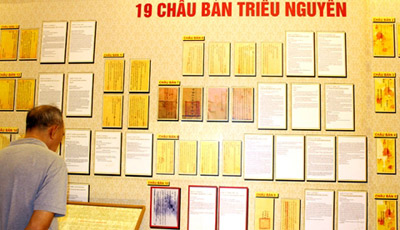
Vietnam is building dossiers to submit to the UNESCO for considering the royal documents of the Nguyen Dynasty – the only preserved administrative documents of Vietnam’s feudal dynasties in the history – as the world’s documentary heritage.
Nguyen Dynasty’s official documents in an exhibition.

The royal documents of the Nguyen Dynasty, starting from the reign of King Gia Long (1802) until the end of the reign of King Bao Dai (1945) are currently preserved at the National Archives Centre I. Most of the documents were signed and approved by the Kings.
Over hundreds of years, the documents have been partly damaged due to climate, wars and poor storage conditions but they have been kept until today and are particularly rare. They express not only the uniqueness of the form but also have the autographs of Kings and valuable information about social and economic issues of Vietnam from the early 19th century to the mid-20th century.
Researchers highly appreciate the values of the documents and hope that they will soon become the national treasures and be recognized by UNESCO as world heritage.
Previously the documents were the original data sources used to compile the historical books and rule books of the Nguyen dynasty. Today, they are the reliable historical sources to help scientists study and rebuild the history of the Nguyen Dynasty in the fields of politics, economics and diplomacy.
The Nguyen dynasty was the last ruling family of Vietnam. Their rule lasted a total of 143 years. It began in 1802 when Emperor Gia Long ascended the throne after defeating the Tay Son Dynasty and ended in 1945 when Bao Dai abdicated the throne and transferred power to the State of Vietnam, with a total of 13 kings: Gia Long, Minh Mang, Thieu Tri, Tu Duc, Duc Duc, Hiep Hoa, Kien Phuc, Ham Nghi, Dong Khanh, Thanh Thai, Duy Tan, Khai Dinh and Bao Dai.
WASHINGTON (USA Today) – Tổng Thống Obama hôm Thứ Ba nói rằng ông tin là Quốc Hội sẽ chấp thuận cho sử dụng vũ lực ở Syria vì chính quyền nước này đã dùng tới vũ khí hóa học chống dân chúng.

Tổng Thống Obama và ban tham mưu an ninh quốc gia họp với giới lãnh đạo Quốc Hội tại tòa Bạch Ốc sáng Thứ Ba về vấn đề Syria. (Hình: Dennis Brack/Getty Images)
Mặc dầu người ta cho rằng cuộc biểu quyết sẽ rất ngang ngửa và rất có thể đề nghị này bị bác bỏ giống như kết quả bỏ phiếu của quốc hội Anh, nhưng Tổng Thống Obama có được sự tán thành của hai nhân vật then chốt: Chủ Tịch Hạ Viện John Boehner và Thượng Nghị Sĩ Cộng Hòa John McCain.
Dân Biểu Boehner, Cộng Hòa Ohio, sau cuộc họp tại tòa Bạch Ốc, tuyên bố: “Sử dụng vũ khí hóa học là một hành động man rợ, phải có sự đáp trả việc làm ấy”. Tuy nhiên ông không cho biết có sẽ yêu cầu các đồng viện dảng Cộng Hòa bỏ phiếu chấp thuận hay không.
Thủ lãnh khối đa số Hạ Viện, Dân Biểu Eric Cantor, Cộng Hòa Virginia, cũng tán thành biện pháp quân sự. Ông nói: “Vì lợi ích an ninh quốc gia Hoa Kỳ có nghĩa vụ ngăn chặn và đáp trả sự sử dụng loại vũ khí giết người hàng loạt, đặc biệt là do từ một quốc gia khủng bố như Syria”. Dân Biểu Cantor nói thêm là ông hy vọng Tổng Thống dùng vũ lực “hợp pháp” và tiếp tục duy trì sự tham khảo với quốc hội.
Tổng Thống Obama và Phó Tổng Thống Joe Biden đã gặp các giới lãnh đạo Quốc Hội ở tòa Bạch Ốc trước khi Tổng Thống lên đường đi Âu Châu. Tối Thứ Hai, Tổng Thống cũng đã thảo luận qua điện thoại với Thủ Tướng Nhật Shinzo Abe.
Tổng Thống Obama sẽ dừng tại Thụy Điển, ở lại Stockholm một ngày trước khi đến St. Petersburg, Nga, dự hội nghị thượng đỉnh G-20. Vấn đề Syria chắc chắn sẽ ở trong nghị trình thảo luận của các nhà lãnh đạo quốc tế tại St. Petersburg. (HC)
From VietNamNet Bridge
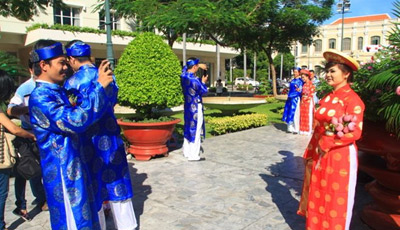
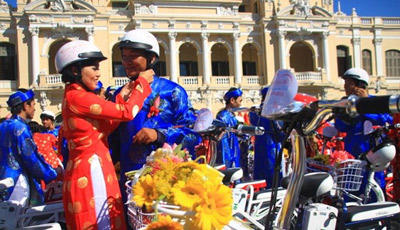
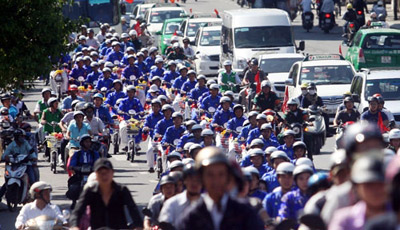
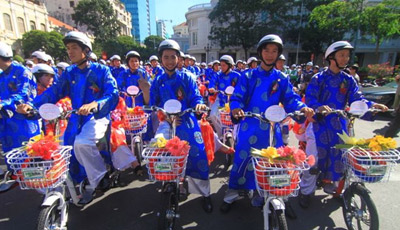
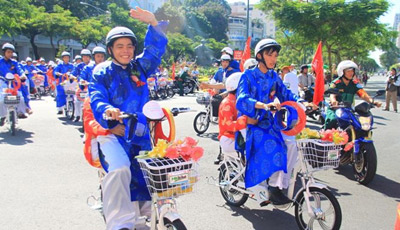
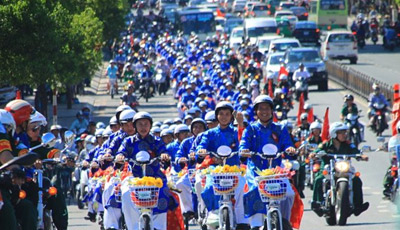
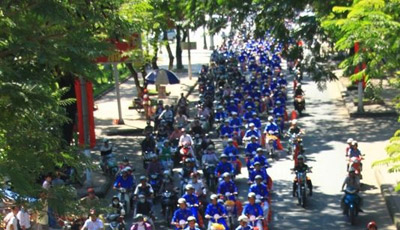
On the morning of September 2, 100 couples dressed in Vietnamese ao dai made a bicycle parade around the center of Ho Chi Minh City before attending the mass wedding ceremony.

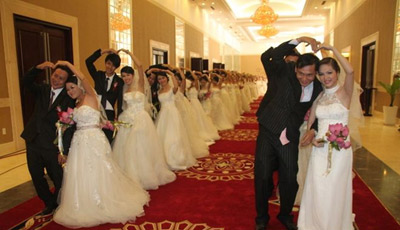
The group wedding ceremony for 100 couples who are workers at Sai Gon’s industrial parks and export processing zones was held by the Center for Support of Sai Gon Workers.

With the theme “Celebrating the beauty of Vietnamese culture,” from early morning 100 couples gathered before the headquarters of the Sai Gon Youth Union to prepare for an electric bicycle parade.

Each couple had to pay only VND1 million ($50) for the wedding party. The remaining cost was covered by the organizers.

The idea of using electric bicycles was considered very carefully by the organizers because it’s a means of saving, efficient and high safety transport. The image of young couples wearing helmets, dressed in traditional dress, the brides holding lotus flowers on electric bikes attracted the attention of many people and foreign tourists.


100 couples paraded through the roads of Pham Ngoc Thach, Dong Khoi, Le Thanh Ton and Nguyen Hue before attended the flower offering at the monument of President Ho Chi Minh.


Before the mass wedding ceremony, the couples participated in a training course on building a happy family, marital psychology and productive health.

100 brides and grooms hand in hand in front of the Sai Gon People’s Committee.

According to the organizers, these were 100 couples who could not afford to hold weddings.


After the flower offering ceremony, 100 couples went to the Tan Binh Grand Palace Convention Center for the wedding party.


This is the sixth time a group wedding ceremony held for poor workers in Sai Gon.


HELSINKI/SEATTLE (Reuters) – Sau hai năm số phận trông nhờ vào Microsoft, hôm Thứ Ba, công ty sản xuất máy điện thoại Phần Lan Nokia, đã đồng ý bán hẳn cho Microsoft với giá 5.44 tỷ euros ($7.2 tỷ).

Tổng Giám Đốc Microsoft, Steve Ballmer, (trái) và Chủ Tịch Hội Đồng Quản Trị Nokia, Risto Sillasmaa, trong cuộc họp báo hôm Thứ Ba ở Espoo, Phần Lan, công bố việc Microsoft mua Nokia với giá 5.44 tỷ eyros. (Hình Markku Ulander/AFP/Getty Images)
Nokia từng là một hãng sản xuất máy điện thoại đứng hàng đầu thế giới, đã không thể cạnh tranh nổi với Apple và Samsung trong lãnh vực điện thoại thông minh, smartphones.
Năm 2007, Nokia chiếm 40% thị phần thế giới về máy điện thoại, đến nay chỉ còn 15% và smartphones chỉ chiếm được 3%.
Sau khi có tin chấp thuận bán cho Microsoft, cổ phiếu của Nokia hôm Thứ Ba tăng 39% lên tới 4.10 euros. Năm 2000 mỗi cổ phiếu Nokia giá 65 euros và năm ngoái đã có lúc xuống tới mức thấp nhất là 1.33 euro. Trị giá vốn hóa thị trường của công ty hiện nay là 15 tỷ euros so với 200 tỷ euros vào thời kỳ phát triển cao điểm.
Ông Stephen Elop, dân Canada, giám đốc phân bộ software của Microsoft, chuyển sang làm ở Nokia năm 2010 và bây giờ trở lại Microsoft ở chức vụ đứng đầu bộ phận dụng cụ di động. Việc này khiến có dư luận báo chí Phần Lan cho rằng Elop đã dóng vai “Con Ngựa thành Troy”.
Trong ba năm Elop cầm đầu Nokia, doanh vụ đi xuống dù ông đã có một quyết định can đảm nhưng gây nhiều tranh cãi là sử dụng hệ Window Phone của Microsoft cho smartphone thay vì dùng software của Nokia hay hệ Android của Google.
Elop có thể sẽ là người thay thế Tổng Giám Đốc Steve Ballmer của Microsoft sắp nghỉ hưu. (HC)
From Thanh Nien News
The demand for dog meat has prompted concern over rabies, as more than a hundred people in northern Vietnam have been bitten by infected dogs in the past two months.

A dog suspected of carrying rabies that was killed after attacking several dogs belonging to a resident of Hanoi’s Soc Son District on August 23. Experts have called for improving vaccination coverage, controlling the illegal dog trade and abandoning the practice of eating dog meat to control rabies in Southeast Asia. Photo by Phan Hau
Authorities in an outlying Hanoi district have set up special taskforces to hunt and catch and kill stray dogs after at least 117 people were bitten by those infected with rabies.
Nguyen Thi Cam, a resident in Soc Son District’s Bac Son Commune, said a stray dog, possibly from a nearby province, wandered by her house, attacking her five-year-old granddaughter on June 29.
“I chased it away with a stick. But it returned several hours later and bit three other people before running away,” she said.
“It looked like a mad dog with red eyes. Its hair stood up on end and it was drooling saliva.”
Following increasing reports of dogs with rabies in Soc Son District over the past several months, experts have called for improving vaccination coverage, controlling the illegal dog trade and gradually banning the trade of dogs for meat to eliminate the transmission of rabies to humans.
But in light of a recent outbreak there, many experts doubt that Vietnam will meet its target of eliminating rabies by 2020 set earlier this year by the Ministry of Agriculture and Rural Development.
In recent weeks, dozens of people have been bitten by stray dogs in Soc Son, which is adjacent to Thai Nguyen Province’s Pho Yen District. Many of the dogs have tested positive for rabies.
According to the ministry’s Animal Health Department, more than 8.8 million people were bitten by dogs allegedly infected with rabies from 1991-2010. More than 3,500 of the cases resulted in fatalities.
Between 1991 and 1996, rabies killed an average of 200-300 people annually. There were 110 fatalities in 2011 and 85 last year.
Rabies, a virus transmitted through saliva, causes acute encephalitis (inflammation of the brain) and is almost always fatal if not treated early.
The disease kills about 55,000 people a year worldwide, according to the World Health Organization, which said that children under 15 are the most common victims.
Soc Son authorities reported that there have been no further cases of humans being bitten by dogs since August 23. All victims have been vaccinated against rabies, while local vets are vaccinating the local dog and cat populations and spraying decontaminants.
Pham Quang Ngoc, a local official, told Vietweek on August 26 that the taskforces have killed 25 stray dogs suspected of carrying rabies.
Traditionally, Vietnamese families have raised dogs to guard their homes or for food. According to the General Statistics Office, there are around 10 million dogs nationwide.
Van Dang Ky, head of epidemiology at the Animal Health Department, said the current rate of vaccination for dogs is only 40 percent, but is expected to reach 70 percent in 2015 and 100 percent in 2020.
Dogging the borders
The Asia Canine Protection Alliance (ACPA) held a conference in Hanoi from August 23-24 to discuss solutions to rabies in the region.
The conference sought to address the illegal transport of dogs for commercial purposes between Thailand, Cambodia, Laos and Vietnam.
ACPA was established by the Change for Animals Foundation, Humane Society International, Animals Asia, and the Soi Dog Foundation.
Tuan Bendixsen, the Vietnam director of Animals Asia, said the key to controlling rabies in the region is cooperation between the region’s four governments, as scientific studies have shown it only takes one dog with rabies to start an epidemic.
The best method to control rabies is to vaccinate at least 70 percent of the dog population in each country, he told Vietweek, adding: “At present none of the four involved countries [has] met this standard.”
Bendixsen called for better management of the dog population in each country, and better control over the movement of dogs both domestically and internationally.
“At present the illegal dog trade from Thailand to Vietnam via Laos and Cambodia presents a big potential risk of rabies outbreaks because these dogs (estimated between 200,000-500,000 dogs per year by Vietnam’s Department of Animal Health) do not have rabies vaccination certificates or veterinary health certificates as required by Vietnam’s quarantine regulations,” he said.
Dogs can fetch up to US$10 in Thailand, but go for around $60 when served in restaurants in Vietnam, CNN reported in June.
Deepashree Balaram, campaign director for the Global Alliance for Rabies Control, told Vietweek that Thailand has banned the export of dogs for commercial purposes, while Laos and Cambodia may fill in consumer demand in Vietnam.
Abandon the habit
With a growing concern that Association of Southeast Asian Nations (ASEAN) countries’ goal of eliminating rabies by 2020 is unreachable, experts have called on people to abandon eating dog meat.
John Dalley, vice president of the Phuket-based Soi Dog Foundation, said dog meat is commonly eaten throughout the world during times of famine, but the practice usually stops afterward.
“There are no reports of dogs being eaten in Vietnam before 1940. It is believed that the practice was introduced by Chinese-trained military personnel during the French and American war years and has remained,” he told Vietweek.
He said Vietnam banned poultry imported from China because of the risk of avian flu and should also ban the import of dogs from regional countries.
“Rabies causes far more fatalities than avian flu and therefore it is essential to ban imports of unvaccinated dogs into Vietnam whether for meat or pets.”
At last week’s ACPA conference, Pornpitak Panlar of the Department of Disease Control under Thailand’s Ministry of Public Health said: “About the dog meat trade, we cannot change culture or habit, but what we should do is stop the smuggling of dogs. Vaccinations and dog population management are also crucial.”
However, many experts said it is necessary to put an end to the habit of eating dog meat rather than solely controlling the trade and improving vaccination coverage.
Lola Webber of Change for Animals Foundation estimated that 13-16 million dogs are consumed in Asia each year.
She said authorities must seize dogs and implement tough penalties to send a clear message to illegal dog traders that this activity will not be tolerated.
“It is worth highlighting, however, that this is not a debate about culture – this is an issue of human health,” she said.
“No country in the world has explicitly legalized the trade of dog meat for human consumption.”
VietNamNet Bridge
Nguyen Van Long from Gia Lai won the Da Nang International Marathon after finishing a 42km race in two hours 56 minutes and 31 seconds at the East Sea Park on Sunday.

Nguyen Van Long from Gia Lai won the Da Nang International Marathon after finishing a 42km race in two hours 56 minutes and 31 seconds at the East Sea Park on Sunday.— Photo vnexpress
His teammate Ly Van Chien came in second with a time of 3hr 20min in an event that drew 174 marathoners.
Pham Quynh Le finished the women’s event in 3hr 27min 50sec, while Nong Thi Nguyet clocked 3hr 48min 28sec to rank second in the division.
“I’m happy to win the race today. We had an advantage today because it was cool and windless. However, the last 21km was a challenge for us when it started getting hot, but I gave my all to win the race with home support,” Long said.
In the half marathon, Le Van Tuan from Dong Nai finished first in 1hr 15min to beat his fellow countryman Nguyen Truong Sinh, who came second in 1hr 16min 16sec.
Pham Thi Binh won the women’s title with a time in 1hr 24min 15sec.
The race, which was held for the first time in Da Nang, drew nearly 400 athletes from 25 countries and territories, while the 5km fun run attracted the participation of over 3,000 people.